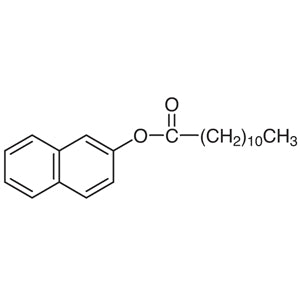
2-Naphthyl Laurate is an ester formed from lauric acid, a saturated twelve-carbon fatty acid, combined with 2-naphthol as its alcohol component. This structure unites a long, lipophilic hydrocarbon tail with an aromatic naphthyl group that is readily detected, making the compound useful both as a synthetic building block and as an analytical substrate. In biochemistry and microbiology laboratories, naphthyl esters of this type are widely recognised as substrates for studying the activity of hydrolytic enzymes, because cleavage of the ester bond releases 2-naphthol, which can be monitored either colorimetrically or fluorometrically.
The property that leads researchers to select 2-Naphthyl Laurate is the chain-length specificity of its acyl group. The comparatively long laurate chain makes this compound a more representative substrate for lipases and medium-chain esterases than short-chain naphthyl esters, allowing investigators to map the chain-length preference of an enzyme by comparing several substrates side by side. The 2-naphthyl group contributes a distinct analytical advantage, since the hydrolysis product can be coupled with a diazonium salt to form an intensely coloured azo dye, producing a strong visual signal.
In Indonesian laboratories, this combination of properties suits work carried out in university research groups, biochemistry teaching laboratories, and institutional facilities engaged in enzyme characterisation. It is typically handled at the bench as part of substrate panels prepared for hydrolase assays, or drawn upon as a non-heterocyclic building block within synthetic chemistry programmes. As a catalogue item from an established international supplier, it fits routine procurement planning for laboratories that require consistent, reproducible reagents across repeated experimental runs.
- Lipase activity assays, where the twelve-carbon laurate chain provides a substrate that better reflects the natural preference of true lipases than short-chain esters.
- Esterase chain-length profiling, in which this compound is compared against shorter and longer naphthyl esters to define an enzyme's acyl chain-length selectivity.
- Colorimetric enzyme detection, because the liberated 2-naphthol couples with diazonium salts to generate an intensely coloured azo dye visible without instrumentation.
- Fluorometric hydrolase measurement, since the released 2-naphthol can be monitored fluorometrically, offering a sensitive route for following reaction progress over time.
- Organic synthesis as a non-heterocyclic building block, where the naphthyl ester functionality serves as a starting point for further chemical transformation work.
| Brand | TCI |
|---|---|
| CAS number | 6343-73-3 |
| Molecular formula | — |
| Purity | — |
| Category | Chemistry > Building Blocks > Non-Heterocyclic Building Blocks |
| Pack sizes | available in the standard catalogue pack sizes offered for this item |
| Physical form | — |
| Storage | store according to the conditions stated on the manufacturer's label and safety data sheet |
- Catalogue number: L0122
Store this product in its original, tightly closed container in a cool, dry, and well-ventilated area, away from heat sources, direct sunlight, and incompatible materials, following the storage conditions specified on the manufacturer's label and safety data sheet. Use clean, dry glassware and dedicated spatulas when weighing or transferring material, and close the container promptly to limit moisture uptake and contamination. Handle the compound in a fume hood where practical, and wear a laboratory coat, safety goggles, and suitable chemical-resistant gloves. Avoid contact with skin and eyes and avoid inhaling any dust generated during handling. Dispose of residues and contaminated consumables in accordance with applicable institutional and local chemical waste procedures.
—
Produk Terkait
-
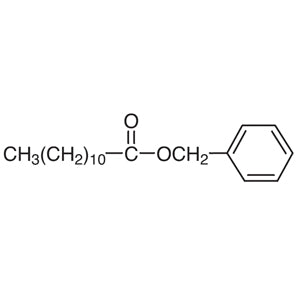
BenzylLaurate TCI L0107
Regular price Rp 2.174.550,00Regular price -
VinylLaurate(stabilizedwithMEHQ) TCI L0090
Regular price From Rp 557.550,00Regular price -
IsobutylLaurate TCI L0084
Regular price From Rp 769.650,00Regular price -
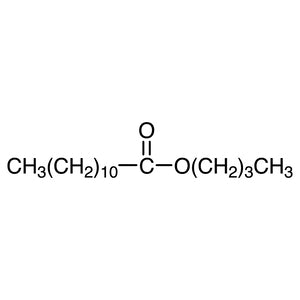
ButylLaurate TCI L0083
Regular price From Rp 477.750,00Regular price -
MethylLaurate TCI L0015
Regular price From Rp 505.050,00Regular price -
IsoamylLaurate TCI L0014
Regular price Rp 903.000,00Regular price -
EthylLaurate TCI L0013
Regular price From Rp 505.050,00Regular price -
AmylLaurate TCI L0012
Regular price From Rp 1.908.900,00Regular price