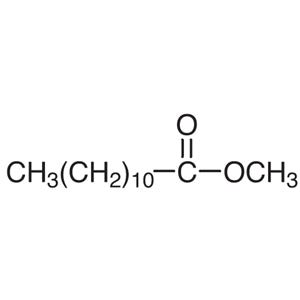
Methyl Laurate is the methyl ester of lauric acid, supplied as a liquid, and it is one of the most frequently encountered members of the fatty acid methyl ester family in laboratory work. The compound is commonly referred to as the twelve-carbon FAME and serves as an important reference point in the analysis of vegetable oil composition, particularly coconut oil and palm kernel oil, both of which are rich in the lauric fraction. Beyond its role as an analytical standard, this material also functions as a non-heterocyclic building block for the synthesis of fatty alcohols, fatty amides, and a variety of nonionic surfactants.
The qualities that make Methyl Laurate such a widely chosen material are its clearly defined structural purity, low viscosity, good storage stability, and highly predictable chromatographic behaviour. In gas chromatography its peak separates cleanly from other fatty esters, which makes it ideal for use both as an identification marker and as a quantification standard. The methyl ester group readily undergoes transesterification, reduction to the corresponding fatty alcohol, or aminolysis to the fatty amide, giving synthetic researchers a broad range of transformation routes to work with. Its strong lipophilic character additionally makes it useful as a carrier solvent in certain reaction systems.
In Indonesian laboratories this combination of analytical reliability and synthetic versatility is especially relevant, since coconut oil and palm kernel oil are dominant local feedstocks whose lauric content must be characterised routinely. Analytical laboratories rely on the compound as a chromatographic reference when profiling these oils, while synthesis and formulation groups draw on the same material as a starting point for oleochemical derivatives, surfactant development, and method development work built around fatty acid methyl esters.
- Gas chromatography reference standard: the well-resolved peak position of this twelve-carbon FAME allows analysts to confirm retention identity and build reliable quantification curves for fatty ester mixtures.
- Vegetable oil composition profiling: because coconut and palm kernel oils are rich in the lauric fraction, this ester serves as the key marker compound for characterising their fatty acid distribution.
- Fatty alcohol synthesis: the methyl ester group is readily reduced to the corresponding fatty alcohol, making this material a convenient and predictable starting point for oleochemical preparation work.
- Fatty amide preparation: aminolysis of the ester group proceeds directly to fatty amides, giving synthetic chemists a straightforward route toward amide-based intermediates and derivatives.
- Nonionic surfactant development: as a non-heterocyclic building block with strong lipophilic character, it supports the preparation and evaluation of surfactant systems in formulation laboratories.
| Brand | TCI |
|---|---|
| CAS number | 111-82-0 |
| Molecular formula | — |
| Purity | — |
| Category | Chemistry > Building Blocks > Non-Heterocyclic Building Blocks |
| Pack sizes | available in standard TCI packaging options; please confirm the size required when ordering |
| Physical form | liquid |
| Storage | keep in a tightly closed original container; the material is noted for good storage stability |
- Catalogue code: L0015
Store Methyl Laurate in its tightly closed original container in a cool, dry, well-ventilated area away from direct sunlight, heat sources, and strong oxidising agents. Glass or otherwise chemically compatible containers are appropriate for this liquid ester, and containers should be resealed promptly after each use to limit exposure to air and moisture. Handle the material in a fume hood or a well-ventilated workspace, and wear standard laboratory personal protective equipment including safety goggles, chemically resistant gloves, and a laboratory coat. Avoid contact with skin and eyes, and avoid breathing vapour or mist. Transfer the liquid using clean, dry glassware to preserve the sample's analytical integrity, especially when it is being used as a chromatographic standard. Label all working aliquots clearly, keep the container upright during storage, and consult the manufacturer's safety data sheet before first use and before disposal of any residues or contaminated materials.
—
Produk Terkait
-
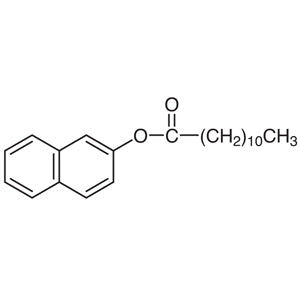
2-NaphthylLaurate TCI L0122
Regular price From Rp 1.696.800,00Regular price -
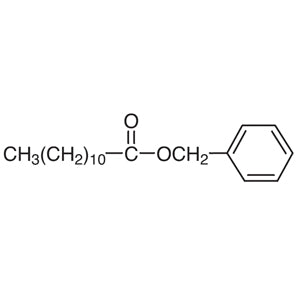
BenzylLaurate TCI L0107
Regular price Rp 2.174.550,00Regular price -
VinylLaurate(stabilizedwithMEHQ) TCI L0090
Regular price From Rp 557.550,00Regular price -
IsobutylLaurate TCI L0084
Regular price From Rp 769.650,00Regular price -
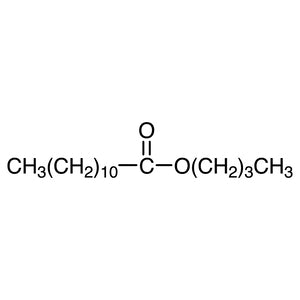
ButylLaurate TCI L0083
Regular price From Rp 477.750,00Regular price -
IsoamylLaurate TCI L0014
Regular price Rp 903.000,00Regular price -
EthylLaurate TCI L0013
Regular price From Rp 505.050,00Regular price -
AmylLaurate TCI L0012
Regular price From Rp 1.908.900,00Regular price