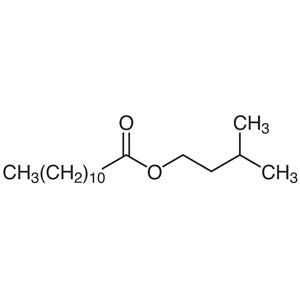
Isoamyl Laurate is an ester formed from lauric acid and isoamyl alcohol, supplied as a liquid, and classified among the branched non-heterocyclic building blocks. The methyl branch on the alcohol portion of the molecule is what sets this compound apart from straight-chain laurate esters, and that structural difference translates directly into a distinctive physical profile, most noticeably in viscosity and in how the material behaves at lower temperatures. In laboratory work, the compound serves as a test material in emollient research, as a model substrate for enzymatic reactions, and as a structural comparator when investigators want to understand how chain branching influences the properties of fatty esters.
The properties that lead researchers to select Isoamyl Laurate are its light, non-greasy character and the even way it spreads on application — qualities that are highly valued in topical formulation research. Branching along the isoamyl chain interferes with orderly molecular packing, so this ester tends to remain liquid and to flow more readily at low temperatures than its straight-chain analogues. Its high solubility in oils and non-polar solvents makes it straightforward to incorporate into the oil phase of an emulsion, while the ester group itself remains available for hydrolysis and transesterification whenever a synthetic design calls for further modification.
Laboratories in Indonesia working on cosmetic science, pharmaceutical formulation, and lipid chemistry commonly encounter this material in bench-scale studies. It appears in university research groups examining topical preparations, in industrial development laboratories screening emollient candidates, and in enzymology work where a branched ester substrate is needed alongside linear references. The liquid form makes it convenient to measure and handle in small-volume experimental work typical of academic and quality-focused laboratory settings.
- Emollient research — the light, non-greasy feel and even spreading behaviour make this ester a useful test material when evaluating sensory performance in topical preparations.
- Model substrate for enzymatic reactions — the accessible ester linkage allows lipase and esterase studies to proceed under controlled conditions with a well-defined branched substrate.
- Structural comparison studies — pairing this branched ester against straight-chain laurate analogues lets researchers isolate the specific contribution of chain branching to physical properties.
- Emulsion oil-phase formulation — high solubility in oils and non-polar solvents means the ester incorporates cleanly into the oil phase without requiring aggressive processing conditions.
- Transesterification and hydrolysis work — the reactive ester group provides a straightforward handle for synthetic modification when building more elaborate target structures from this starting material.
| Brand | TCI |
|---|---|
| CAS number | 6309-51-9 |
| Molecular formula | — |
| Purity | — |
| Category | Chemistry > Building Blocks > Non-Heterocyclic Building Blocks |
| Pack sizes | available in standard TCI research pack sizes; please confirm the current options when ordering |
| Physical form | liquid |
| Storage | keep in a cool, dry place in a tightly closed container |
- Catalogue code: L0014
Store Isoamyl Laurate in a cool, dry location away from direct sunlight and sources of heat or ignition, keeping the container tightly closed to limit exposure to air and moisture. Original supplier packaging or chemically compatible glass containers with secure closures are appropriate; avoid containers that may be attacked by esters. Handle in a well-ventilated area or within a fume hood, and wear standard laboratory personal protective equipment including safety glasses, gloves, and a laboratory coat. Avoid contact with skin and eyes, and clean up any spills promptly using absorbent material. Consult the manufacturer's safety data sheet before use for complete handling guidance.
—
Produk Terkait
-
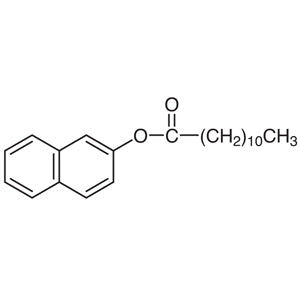
2-NaphthylLaurate TCI L0122
Regular price From Rp 1.696.800,00Regular price -
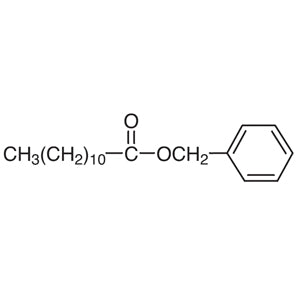
BenzylLaurate TCI L0107
Regular price Rp 2.174.550,00Regular price -
VinylLaurate(stabilizedwithMEHQ) TCI L0090
Regular price From Rp 557.550,00Regular price -
IsobutylLaurate TCI L0084
Regular price From Rp 769.650,00Regular price -
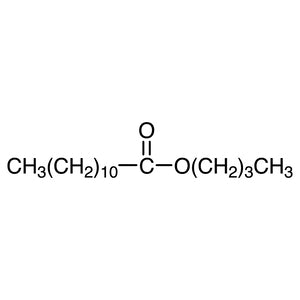
ButylLaurate TCI L0083
Regular price From Rp 477.750,00Regular price -
MethylLaurate TCI L0015
Regular price From Rp 505.050,00Regular price -
EthylLaurate TCI L0013
Regular price From Rp 505.050,00Regular price -
AmylLaurate TCI L0012
Regular price From Rp 1.908.900,00Regular price