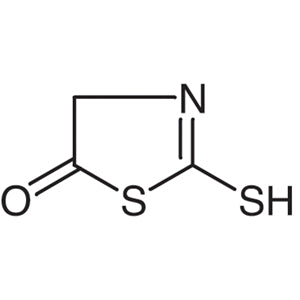
2-Mercapto-5-thiazolidone (TCI M0263) is a five-membered heterocyclic building block that carries both a sulfur atom and a nitrogen atom within a single thiazolidinone ring, together with a mercapto (thiol) group at the two position. The compound belongs to the thiazolidinone scaffold family, a group of structures that has proven highly productive in medicinal chemistry and heterocyclic chemistry, because the ring offers several reactive points that can be functionalised in sequence. In the laboratory it serves as a starting material for constructing substituted thiazolidinone derivatives that are studied for biological activity or used as coordination materials.
The main attraction of this building block lies in the combination of reactive handles it presents in one compact molecule. The thiol group is a strongly nucleophilic and soft donor, the lactam carbonyl group is available for condensation chemistry, and the ring nitrogen atom can be alkylated or acylated. An active methylene group inside the ring allows Knoevenagel condensation with aromatic aldehydes, producing arylidene derivatives in a single, relatively straightforward step. The thiol group also confers the ability to bind soft metal ions, which makes the compound useful as a ligand precursor for coordination work.
The material is supplied as a solid, so weighing at the milligram scale can be carried out conveniently on an analytical balance in ordinary synthetic practice. In Indonesian laboratories this suits university research groups, medicinal chemistry programmes, and heterocyclic synthesis work where small, carefully measured quantities are taken through multi-step routes. Its role is typically that of a core scaffold introduced early in a synthesis and then elaborated through successive functionalisation steps toward the target derivative.
Related TCI products
- TCI A0425 2349-67-9 2-Amino-5-mercapto-1,3,4-thiadiazole
- TCI A1455 16691-43-3 3-Amino-5-mercapto-1,2,4-triazole
- TCI A0956 1750-12-5 4-Amino-3-hydrazino-5-mercapto-1,2,4-triazole [for Determination of Aldehydes]
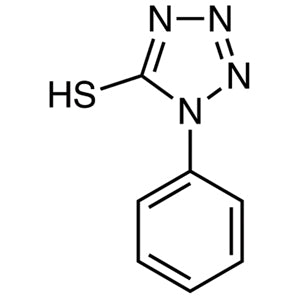
- TCI P0640 86-93-1 5-Mercapto-1-phenyl-1H-tetrazole
- TCI N0326 4845-58-3 2-Mercapto-6-nitrobenzothiazole
- TCI M2100 53723-88-9 (5-Mercapto-1,3,4-thiadiazol-2-ylthio)acetic Acid
- Synthesis of substituted thiazolidinone derivatives: the ring provides several distinct reactive positions that can be functionalised in sequence, giving access to a wide family of target structures from a single scaffold.
- Knoevenagel condensation with aromatic aldehydes: the active methylene group within the ring reacts to form arylidene derivatives in one relatively simple step without elaborate protecting group strategies.
- Medicinal chemistry scaffold studies: the thiazolidinone framework is a well established motif in medicinal chemistry, so this building block supports research programmes screening derivatives for biological activity.
- Preparation of coordination ligands: the thiol group binds soft metal ions, allowing the compound to be used as a precursor when assembling ligands for coordination materials research.
- N-alkylation and N-acylation chemistry: the ring nitrogen atom can be alkylated or acylated, letting chemists introduce additional substituents and diversify the scaffold for structure-activity investigations.
| Brand | TCI |
|---|---|
| CAS number | 6913-23-1 |
| Molecular formula | — |
| Purity | — |
| Category | Chemistry > Building Blocks > Heterocyclic Building Blocks |
| Pack sizes | available in the catalogue pack sizes offered for this TCI catalogue number |
| Physical form | solid, suitable for milligram-scale weighing on an analytical balance |
| Storage | store according to the manufacturer's stated conditions on the product label and safety data sheet |
Store the container tightly closed in a cool, dry, well-ventilated place away from direct sunlight and incompatible materials, following the conditions stated by the manufacturer on the label and safety data sheet. Keep the solid in its original tightly sealed container, or in a clean amber glass bottle with a chemically resistant cap if transferred, and label any secondary container clearly. Thiol-bearing compounds may carry a noticeable odour, so weighing and transfers are best performed in a fume hood. Wear safety glasses, gloves, and a laboratory coat when handling the material, use clean dry spatulas to avoid contaminating the bulk, and close the container promptly after use to limit moisture uptake. Dispose of residues and contaminated consumables through the laboratory's chemical waste procedures.
—
Produk Terkait
-
2-Amino-5-mercapto-1,3,4-thiadiazole TCI A0425
Regular price From Rp 769.650,00Regular price -
3-Amino-5-mercapto-1,2,4-triazole TCI A1455
Regular price From Rp 980.700,00Regular price -
4-Amino-3-hydrazino-5-mercapto-1,2,4-triazole[forDeterminationofAldehydes] TCI A0956
Regular price From Rp 1.670.550,00Regular price -
5-Mercapto-1-phenyl-1H-tetrazole TCI P0640
Regular price From Rp 875.700,00Regular price -
2-Mercapto-6-nitrobenzothiazole TCI N0326
Regular price From Rp 2.016.000,00Regular price -
(5-Mercapto-1,3,4-thiadiazol-2-ylthio)aceticAcid TCI M2100
Regular price From Rp 1.458.450,00Regular price -
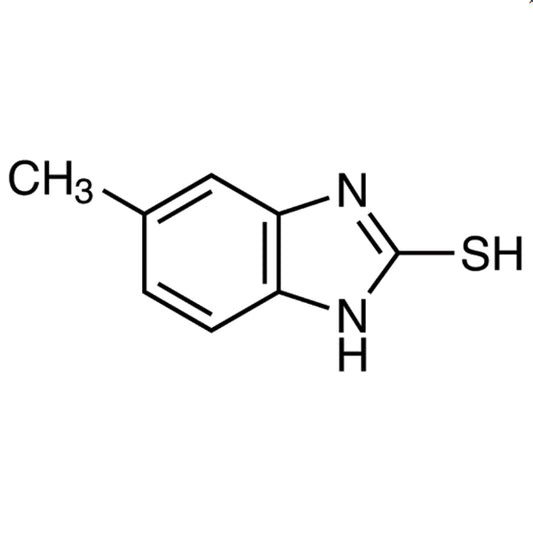
2-Mercapto-5-methylbenzimidazole TCI M1357
Regular price From Rp 1.246.350,00Regular price -
2-Mercapto-5-methoxybenzothiazole TCI M1277
Regular price Rp 6.758.850,00Regular price


![1750-12-5 4-Amino-3-hydrazino-5-mercapto-1,2,4-triazole [for Determination of Aldehydes] - AMI Scientific](http://amiscientific.com/cdn/shop/files/TCI2510A0956.jpg?v=1767080402&width=533)