

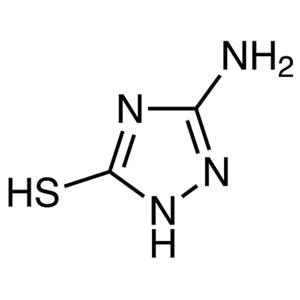
3-Amino-5-mercapto-1,2,4-triazole is a versatile chemical compound widely used in laboratory settings for its role in the synthesis of complex heterocyclic structures. This compound serves as a fundamental building block in organic chemistry, enabling the creation of a wide range of functional molecules. Its unique molecular structure, featuring both amino and thiol groups, allows for multiple reaction pathways, making it an essential reagent in synthetic chemistry. Due to its reactivity and compatibility with various chemical environments, it is highly valued for its adaptability in different experimental conditions.
The chemical properties of 3-Amino-5-mercapto-1,2,4-triazole make it a preferred choice in laboratory research. Its ability to participate in diverse chemical reactions, such as nucleophilic substitutions and condensation reactions, enhances its utility in organic synthesis. The presence of reactive functional groups allows for conjugation with other reagents, expanding its application in drug development and industrial chemical production. Its stability under controlled conditions ensures reliable results, while its reactivity under specific conditions enables the synthesis of complex molecules.
In Indonesian laboratories, 3-Amino-5-mercapto-1,2,4-triazole is commonly used in research related to organic chemistry, pharmaceutical development, and industrial chemical synthesis. Its role in creating heterocyclic compounds is critical for the development of new drugs and materials. Researchers in Indonesia frequently use this compound in studies focused on chemical reactivity and molecular structure, contributing to advancements in both academic and industrial research.
Related TCI products
- TCI A0425 2349-67-9 2-Amino-5-mercapto-1,3,4-thiadiazole
- TCI A1462 45534-08-5 3-Amino-5-methylthio-1H-1,2,4-triazole
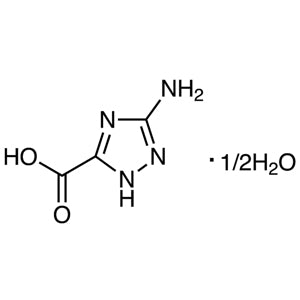
- TCI A1256 3641-13-2 3-Amino-1,2,4-triazole-5-carboxylic Acid Hemihydrate
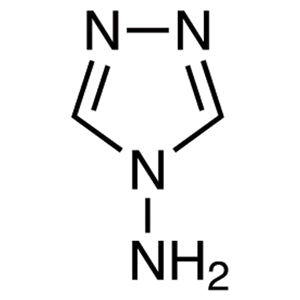
- TCI A1137 584-13-4 4-Amino-1,2,4-triazole
- TCI A0956 1750-12-5 4-Amino-3-hydrazino-5-mercapto-1,2,4-triazole [for Determination of Aldehydes]
- TCI M1224 24854-43-1 3-Mercapto-4-methyl-4H-1,2,4-triazole
- Drug synthesis and development due to its role in creating complex heterocyclic structures essential for pharmaceutical compounds.
- Organic chemistry research as a key building block for synthesizing various functional molecules and chemical intermediates.
- Industrial chemical production for the development of specialized materials and chemical products.
- Heterocyclic compound studies to explore reactivity and structural properties in chemical reactions.
- Research on chemical reactivity and molecular interactions in synthetic chemistry applications.
| Brand | TCI |
|---|---|
| CAS number | 16691-43-3 |
| Molecular formula | — |
| Purity | — |
| Category | Chemistry > Building Blocks > Heterocyclic Building Blocks |
| Pack sizes | Available in standard laboratory quantities as per supplier specifications |
| Physical form | Solid, typically in crystalline or powder form |
| Storage | Store in a cool, dry place away from direct sunlight and moisture |
This compound should be stored in a cool, dry environment to maintain its chemical stability. It is recommended to use airtight containers to prevent exposure to moisture and air, which may affect its reactivity. Due to its potential reactivity under certain conditions, it should be handled with appropriate personal protective equipment, including gloves and safety goggles. Storage should be away from incompatible substances such as strong oxidizers or acids. Regular monitoring of storage conditions ensures the compound remains suitable for use in laboratory applications. Proper labeling and safe handling practices are essential to maintain safety in the laboratory environment.
—
Produk Terkait
-
2-Amino-5-mercapto-1,3,4-thiadiazole TCI A0425
Regular price Rp 822.150,00Regular priceRp 590.100,00Sale price Rp 822.150,00 -
3-Amino-5-methylthio-1H-1,2,4-triazole TCI A1462
Regular price Rp 742.350,00Regular priceRp 534.450,00Sale price Rp 742.350,00 -
3-Amino-1,2,4-triazole-5-carboxylicAcidHemihydrate TCI A1256
Regular price Rp 2.544.150,00Regular priceRp 1.794.450,00Sale price Rp 2.544.150,00 -
4-Amino-1,2,4-triazole TCI A1137
Regular price Rp 1.458.450,00Regular priceRp 1.035.300,00Sale price Rp 1.458.450,00 -
4-Amino-3-hydrazino-5-mercapto-1,2,4-triazole[forDeterminationofAldehydes] TCI A0956
Regular price Rp 1.723.050,00Regular priceRp 1.220.100,00Sale price Rp 1.723.050,00 -
3-Mercapto-4-methyl-4H-1,2,4-triazole TCI M1224
Regular price Rp 1.563.450,00Regular priceRp 1.108.800,00Sale price Rp 1.563.450,00 -
5-Mercapto-1H-1,2,3-triazoleSodiumSalt TCI M0847
Regular price Rp 4.584.300,00Regular priceRp 3.221.400,00Sale price Rp 4.584.300,00 -
3-Mercapto-1,2,4-triazole TCI M0814
Regular price Rp 1.563.450,00Regular priceRp 1.108.800,00Sale price Rp 1.563.450,00


![1750-12-5 4-Amino-3-hydrazino-5-mercapto-1,2,4-triazole [for Determination of Aldehydes] - AMI Scientific](http://amiscientific.com/cdn/shop/files/TCI2510A0956.jpg?v=1767080402&width=533)


