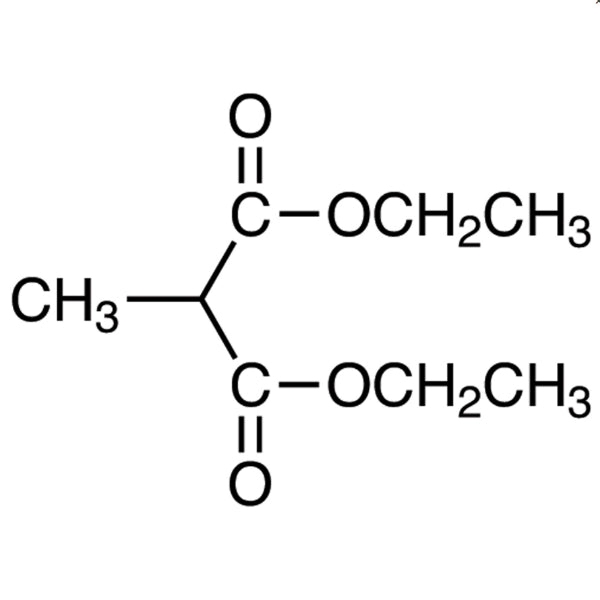
TCI M0366 Diethyl Methylmalonate is the diethyl ester of methylmalonic acid, a malonate derivative that already carries one methyl group on the carbon atom situated between the two ester functions. The compound holds an important position as a non-heterocyclic building block because its active carbon atom is readily deprotonated by base to form a stable enolate, which can then be reacted with a wide range of electrophiles. In other words, it serves as a practical starting point for the synthesis of branched carbon skeletons without requiring a separate methylation step, which frequently gives rise to dialkylation problems.
The characteristic that makes this reagent so widely chosen is the acidity of the hydrogen atom on the carbon positioned between the two carbonyl groups, which allows a carbanion to be generated using relatively simple bases. The doubled ester functionality also opens flexible onward pathways, ranging from hydrolysis and decarboxylation through to reduction and condensation reactions that close heterocyclic rings. Its liquid form means it is easy to measure volumetrically, easy to mix with common organic solvents, and easy to transfer by syringe under air-free conditions.
Because the material is relatively stable in storage, it is comfortable to keep as a stock reagent on the laboratory shelf. In Indonesian laboratories it typically supports synthetic organic chemistry groups in universities and research institutes, along with process development and formulation work in industry, wherever a pre-methylated malonate scaffold shortens a route. Its liquid handling and straightforward storage behaviour suit both routine teaching-scale preparations and multi-step research syntheses.
- Malonic ester type alkylation, where the pre-installed methyl group lets chemists introduce a second substituent cleanly and avoid the dialkylation side reactions common to unsubstituted malonates.
- Construction of branched carbon skeletons, since deprotonation at the central carbon gives a stable enolate that couples with many electrophiles to build quaternary or tertiary centres.
- Hydrolysis and decarboxylation sequences, in which the two ester groups are converted to acid and then lose carbon dioxide to deliver substituted carboxylic acid targets.
- Condensation reactions leading to heterocyclic ring systems, where the dual carbonyl functionality provides the reactive handles needed to close rings with suitable bifunctional partners.
- Reduction chemistry toward diol or alcohol intermediates, because both ester groups can be reduced to give methyl-branched building blocks for further functional group manipulation.
| Brand | TCI (Tokyo Chemical Industry) |
|---|---|
| CAS number | 609-08-5 |
| Molecular formula | — |
| Purity | — |
| Category | Chemistry > Building Blocks > Non-Heterocyclic Building Blocks |
| Pack sizes | available in standard TCI reagent pack sizes; please confirm the packaging option required |
| Physical form | liquid, suitable for volumetric measurement and syringe transfer |
| Storage | store in a closed container under normal reagent storage conditions; relatively stable in storage |
- Catalogue number: M0366
Keep the container tightly closed in a cool, dry, well ventilated area away from heat sources, ignition sources and incompatible materials such as strong bases and strong oxidising agents. The original supplier bottle is the preferred container; where transfer is necessary, use chemically compatible glassware and, for air-free work, transfer by syringe under inert atmosphere. Handle inside a fume hood and wear appropriate personal protective equipment including safety glasses, gloves and a laboratory coat. Label all secondary containers clearly, avoid contact with skin and eyes, and consult the manufacturer safety data sheet before use and before disposal.
—
Produk Terkait
-
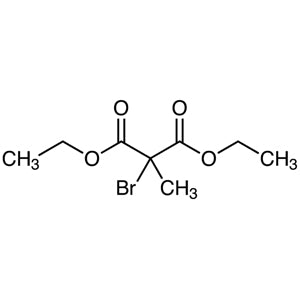
Diethyl2-Bromo-2-methylmalonate TCI D4368
Regular price Rp 2.016.000,00Regular price -
Diethyl2-Ethyl-2-methylmalonate TCI D3630
Regular price From Rp 1.776.600,00Regular price -
DimethylMethylmalonate TCI D6097
Regular price From Rp 1.644.300,00Regular price -
DiethylEthylmalonate TCI E0138
Regular price From Rp 530.250,00Regular price -
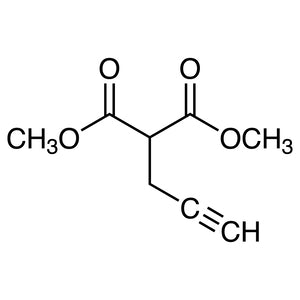
Dimethyl2-Propyn-1-ylmalonate TCI D6072
Regular price From Rp 1.115.100,00Regular price -
DiethylDiethylmalonate TCI D0867
Regular price From Rp 955.500,00Regular price -
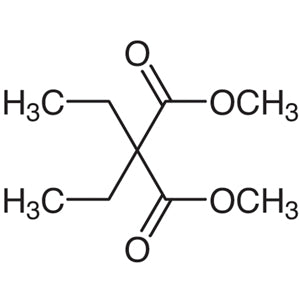
DimethylDiethylmalonate TCI D0292
Regular price Rp 1.510.950,00Regular price -
N,N,N',N'-Tetramethylmalonamide TCI T1891
Regular price Rp 6.625.500,00Regular price