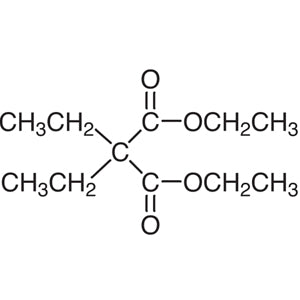
Diethyl Diethylmalonate is a versatile organic compound widely used in laboratory settings for its role in carbon-carbon bond formation reactions. As a key building block in synthetic chemistry, it serves as a valuable precursor in the synthesis of heterocyclic compounds and complex molecules. Its reactivity makes it an essential tool for researchers working on advanced organic transformations. This compound is particularly useful in reactions such as alkylation and enol formation, where its structural properties enable efficient chemical transformations. Due to its stability and reactivity, it is frequently employed in both academic and industrial research environments.
The compound’s molecular structure provides stability and solubility in common organic solvents like ethyl acetate and ethanol, which simplifies its handling and application in various chemical processes. Its good thermal stability allows for safe storage under normal conditions, reducing the risk of degradation. These properties make it a preferred choice for chemists requiring reliable and consistent performance in their experiments. Additionally, its compatibility with a wide range of reagents and reaction conditions enhances its utility in diverse synthetic pathways.
In Indonesian laboratories, Diethyl Diethylmalonate is commonly used in chemical research, particularly in the development of new compounds and the study of reaction mechanisms. Its availability and performance make it a staple in both academic and industrial research settings. The compound supports a wide range of chemical investigations, contributing to advancements in organic synthesis and related fields. Its role in enabling complex reactions and its compatibility with standard laboratory practices ensure its continued use in scientific research across Indonesia.
- Organic synthesis reactions benefit from Diethyl Diethylmalonate due to its ability to form carbon-carbon bonds efficiently, making it ideal for creating complex molecular structures.
- Alkylation processes often utilize this compound as a reactive intermediate, allowing for the introduction of alkyl groups into target molecules with high yield.
- Enol formation reactions rely on its stability and reactivity, enabling the formation of enol intermediates that are crucial in various synthetic pathways.
- Heterocyclic compound synthesis is supported by its role as a building block, facilitating the creation of ring structures essential in pharmaceutical and industrial applications.
- Thermal stability allows for its use in controlled temperature reactions, ensuring consistent results in both research and development settings.
| Brand | TCI |
|---|---|
| CAS number | 77-25-8 |
| Molecular formula | — |
| Purity | — |
| Category | Chemistry > Building Blocks > Non-Heterocyclic Building Blocks |
| Pack sizes | Available in standard laboratory quantities |
| Physical form | Liquid |
| Storage | Store in a cool, dry place away from direct sunlight |
Diethyl Diethylmalonate should be stored in a cool, dry place, away from direct sunlight and sources of heat. It is recommended to use sealed containers made of glass or high-density polyethylene to prevent contamination and evaporation. Due to its reactivity, it should be handled in a well-ventilated area, ideally with a fume hood, to minimize exposure. Avoid contact with incompatible substances such as strong oxidizing agents. Proper labeling and storage conditions ensure the compound remains stable and safe for use in laboratory settings. Regular inspection of storage containers is advised to maintain optimal conditions and prevent any potential degradation.
—
Produk Terkait
-
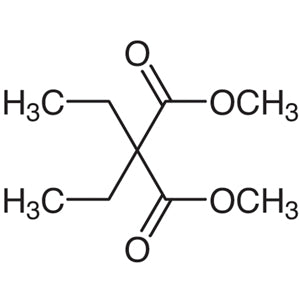
DimethylDiethylmalonate TCI D0292
Regular price Rp 1.510.950,00Regular price -
DiethylEthylmalonate TCI E0138
Regular price From Rp 530.250,00Regular price -
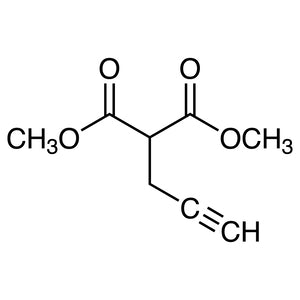
Dimethyl2-Propyn-1-ylmalonate TCI D6072
Regular price From Rp 1.115.100,00Regular price -
DiethylMethylmalonate TCI M0366
Regular price From Rp 637.350,00Regular price -
DimethylMethylmalonate TCI D6097
Regular price From Rp 1.644.300,00Regular price -
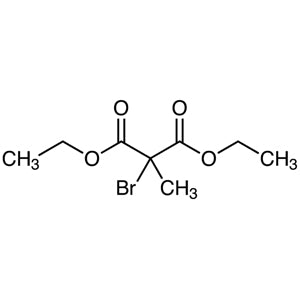
Diethyl2-Bromo-2-methylmalonate TCI D4368
Regular price Rp 2.016.000,00Regular price -
Diethyl2-Ethyl-2-methylmalonate TCI D3630
Regular price From Rp 1.776.600,00Regular price -
DiethylAllylmalonate TCI A0231
Regular price From Rp 2.068.500,00Regular price