TCI D3630 Diethyl 2-Ethyl-2-methylmalonate is the diethyl ester of malonic acid in which the central carbon has been fully substituted by an ethyl group and a methyl group. The compound is classified as a non-heterocyclic building block, and its role in the laboratory is to supply a two-carbonyl unit that already carries a fully formed quaternary carbon centre. Because the central carbon no longer bears any acidic hydrogen, the material behaves differently from an ordinary malonate, which makes it particularly useful when a chemist wants to introduce a branched group that cannot undergo epimerisation or further unwanted alkylation.
The property that makes this compound an attractive choice is the pair of ester groups arranged on a single carbon, which allows them to be processed either simultaneously or in a stepwise fashion. Both esters can be hydrolysed to the corresponding substituted malonic acid, which then undergoes controlled decarboxylation to give a branched carboxylic acid, or they can be reduced to a diol. The ethyl and methyl groups on the quaternary carbon provide steric hindrance that stabilises the product against racemisation and imparts a distinctive three-dimensional shape. These characteristics are widely exploited in molecular design work where a defined, non-epimerisable branch point is required.
In Indonesian laboratories, a reagent of this type is typically kept as a general-purpose synthetic building block in organic synthesis and medicinal chemistry groups at universities, government research institutes, and industrial R&D units. It is normally drawn on at the bench scale for multi-step preparations, method development, and the assembly of branched intermediates, where the researcher needs a well-defined starting material whose reactive positions are already fixed and predictable rather than one requiring an additional substitution step in-house.
- Branched carboxylic acid synthesis — double ester hydrolysis followed by controlled decarboxylation converts the fully substituted malonate directly into a carboxylic acid bearing the ethyl and methyl branch.
- Quaternary carbon centre installation — the central carbon is already fully substituted, so the branch point is delivered intact without requiring an additional and often difficult alkylation step at the bench.
- Preparation of branched diols — both ester groups can be reduced together, giving a diol product that retains the sterically hindered ethyl- and methyl-substituted carbon as its structural core.
- Stepwise diester manipulation — because the two esters sit on one carbon, they can be addressed sequentially, allowing chemists to build differentiated intermediates from a single, readily handled precursor.
- Medicinal and molecular design chemistry — the hindered quaternary centre resists racemisation and contributes a defined three-dimensional shape, which is valuable when shaping candidate molecules and their analogues.
| Brand | TCI (Tokyo Chemical Industry) |
|---|---|
| CAS number | 2049-70-9 |
| Molecular formula | — |
| Purity | — |
| Category | Chemistry > Building Blocks > Non-Heterocyclic Building Blocks |
| Pack sizes | available in the standard TCI catalogue pack sizes for this catalogue number; please confirm the required pack size when ordering |
| Physical form | — |
| Storage | store in a tightly closed original container in a cool, dry, well-ventilated place away from ignition sources and incompatible materials |
- Chemical class: Diethyl ester of a fully substituted malonic acid (non-heterocyclic building block)
Keep the material in its original tightly closed TCI container and store it in a cool, dry, well-ventilated area, away from heat, direct sunlight, open flames, and strong oxidising agents. As an organic ester, it should be kept in chemically compatible glass or the supplier's original packaging rather than transferred to unsuitable plastics, and containers should be resealed promptly after each use to limit moisture uptake and vapour release. Handle in a fume hood using safety glasses, gloves, and a laboratory coat, avoid inhalation of vapours and contact with skin and eyes, and always consult the manufacturer's safety data sheet before use. Dispose of residues and contaminated materials through the laboratory's chemical waste route.
—
Produk Terkait
-
DiethylMethylmalonate TCI M0366
Regular price From Rp 637.350,00Regular price -
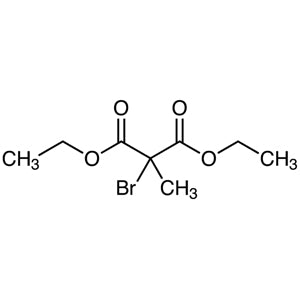
Diethyl2-Bromo-2-methylmalonate TCI D4368
Regular price Rp 2.016.000,00Regular price -
DimethylMethylmalonate TCI D6097
Regular price From Rp 1.644.300,00Regular price -
DiethylEthylmalonate TCI E0138
Regular price From Rp 530.250,00Regular price -
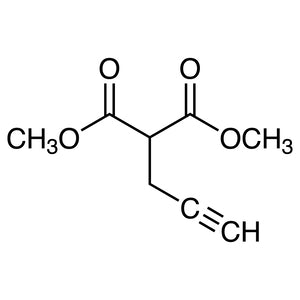
Dimethyl2-Propyn-1-ylmalonate TCI D6072
Regular price From Rp 1.115.100,00Regular price -
DiethylDiethylmalonate TCI D0867
Regular price From Rp 955.500,00Regular price -
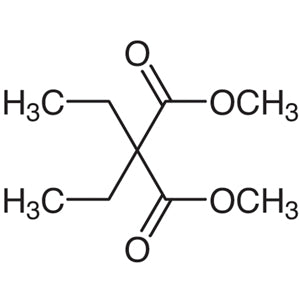
DimethylDiethylmalonate TCI D0292
Regular price Rp 1.510.950,00Regular price -
N,N,N',N'-Tetramethylmalonamide TCI T1891
Regular price Rp 6.625.500,00Regular price