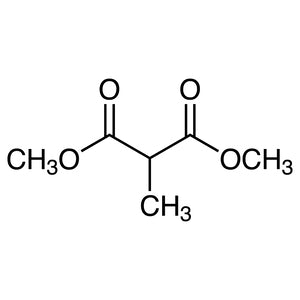
Dimethyl Methylmalonate is a chemical compound widely used in laboratory settings as a fundamental building block in organic synthesis. It plays a crucial role in various chemical reactions, particularly in the formation of complex organic molecules. Its simple molecular structure makes it a versatile reagent, enabling chemists to create a wide range of compounds through substitution and addition reactions. This compound is especially valuable in the development of heterocyclic structures and other complex chemical entities, making it an essential tool in synthetic chemistry.
The reactivity and chemical stability of Dimethyl Methylmalonate under controlled conditions make it a preferred choice for many laboratory applications. It is highly reactive towards strong bases and organic solvents, which allows it to participate in a variety of chemical transformations. Its ability to undergo multiple reaction pathways ensures its reliability in producing desired chemical structures. These properties make it a key component in both academic and industrial research environments, where precision and reproducibility are paramount.
In Indonesian laboratories, Dimethyl Methylmalonate is extensively used in chemical research, particularly in pharmaceutical and materials science fields. It is commonly found in research institutions and universities where organic synthesis is a core activity. Its role in creating new compounds and improving existing ones has made it a valuable resource for scientists working on drug development and advanced material synthesis. The compound's versatility and effectiveness contribute to its widespread use in both teaching and research laboratories.
- Organic synthesis applications benefit from Dimethyl Methylmalonate due to its reactivity and ability to form complex structures through various reaction mechanisms.
- Pharmaceutical research utilizes this compound for the development of new drugs, as it can be used in the synthesis of bioactive molecules and heterocyclic compounds.
- Material science studies employ Dimethyl Methylmalonate to create polymers and other advanced materials with specific chemical properties.
- Teaching laboratories use it as an educational tool to demonstrate fundamental chemical reactions and synthetic pathways.
- Analytical chemistry applications rely on its stability and reactivity to test reaction conditions and optimize synthetic processes.
| Brand | TCI |
|---|---|
| CAS number | 609-02-9 |
| Molecular formula | — |
| Purity | — |
| Category | Chemistry > Building Blocks > Non-Heterocyclic Building Blocks |
| Pack sizes | Available in various quantities as per standard laboratory supply |
| Physical form | Liquid |
| Storage | Store in a cool, dry place away from direct sunlight and incompatible materials |
Dimethyl Methylmalonate should be stored in a cool, dry environment to maintain its chemical stability. It is recommended to keep it in a tightly sealed container to prevent exposure to air and moisture. The compound is reactive towards strong bases and organic solvents, so it should be stored away from such substances. Suitable containers for storage include glass or high-density polyethylene (HDPE) bottles with appropriate closures. In laboratory settings, it is important to handle the compound with care, using appropriate personal protective equipment such as gloves and safety goggles. Regular monitoring of storage conditions ensures the compound remains effective for its intended applications.
—
Produk Terkait
-
DiethylMethylmalonate TCI M0366
Regular price From Rp 637.350,00Regular price -
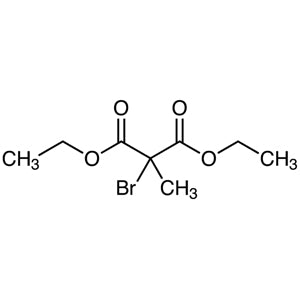
Diethyl2-Bromo-2-methylmalonate TCI D4368
Regular price Rp 2.016.000,00Regular price -
Diethyl2-Ethyl-2-methylmalonate TCI D3630
Regular price From Rp 1.776.600,00Regular price -
DiethylEthylmalonate TCI E0138
Regular price From Rp 530.250,00Regular price -
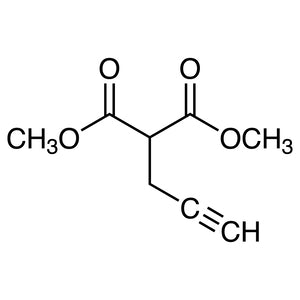
Dimethyl2-Propyn-1-ylmalonate TCI D6072
Regular price From Rp 1.115.100,00Regular price -
DiethylDiethylmalonate TCI D0867
Regular price From Rp 955.500,00Regular price -
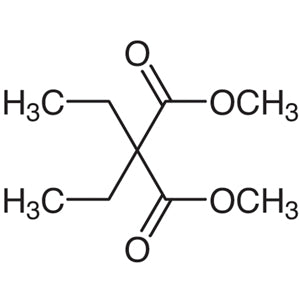
DimethylDiethylmalonate TCI D0292
Regular price Rp 1.510.950,00Regular price -
N,N,N',N'-Tetramethylmalonamide TCI T1891
Regular price Rp 6.625.500,00Regular price