
![1378825-86-5 3-Methyl-3-(2-oxopropyl)-2,4,7-trioxabicyclo[3.3.0]octane - AMI Scientific](http://amiscientific.com/cdn/shop/files/TCI2510M1978.jpg?v=1767125853&width=1946)
![1378825-86-5 3-Methyl-3-(2-oxopropyl)-2,4,7-trioxabicyclo[3.3.0]octane - AMI Scientific](http://amiscientific.com/cdn/shop/files/TCI2510M1978.jpg?v=1767125853&width=1445)
TCI M1978 3-Methyl-3-(2-oxopropyl)-2,4,7-trioxabicyclo[3.3.0]octane (CAS 1378825-86-5) is an organic building block built around an oxygenated bicyclic framework that carries a ketone side chain. The 2,4,7-trioxabicyclo[3.3.0]octane portion is a bridged acetal system that stores oxygenated functionality in a protected form, while the 2-oxopropyl unit supplies a carbonyl group that is ready to react. In the laboratory, molecules of this kind are useful when a chemist wants to work on one part of a molecule first while holding another part unreactive until the right stage of a synthetic sequence.
The characteristic that makes this compound attractive is the clear separation of reactivity between its two halves. The ketone group can undergo the reactions typical of carbonyls, such as nucleophilic addition, reductive amination, condensation, or enolate formation, while the bicyclic acetal framework generally survives neutral to basic conditions and only opens under aqueous acidic conditions. This pattern gives researchers stepwise control without having to install and remove additional protecting groups. The rigid bicyclic skeleton also presents a three-dimensional geometry different from that of flat aromatic building blocks, which broadens the structural space a synthetic programme can explore.
In Indonesian laboratories, a reagent of this type is normally found in university research groups, government research institutes, and industrial R&D units that carry out multi-step organic synthesis rather than routine testing. It is typically ordered in small research quantities for specific synthetic routes, method development work, or postgraduate research projects, and is handled by chemists already familiar with anhydrous technique and carbonyl chemistry. Because it is a specialty building block rather than a bulk chemical, requirements are usually planned around a defined project.
Related TCI products
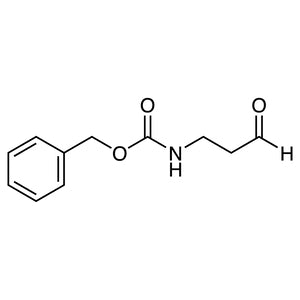
- TCI P3040 65564-05-8 Benzyl (3-Oxopropyl)carbamate
- TCI O0434 5617-74-3 3-Oxabicyclo[310]hexane-2,4-dione
- TCI D4414 1829-60-3 Dimethyl 7-Oxabicyclo[2.2.1]hepta-2,5-diene-2,3-dicarboxylate
- TCI C1334 5617-70-9 6,6-Dimethyl-5,7-dioxaspiro[2.5]octane-4,8-dione
- TCI B5595 711-02-4 Bicyclo[2.2.2]octane-1,4-dicarboxylic Acid
- TCI D5200 57280-22-5 4,4-Dimethyl-3,5,8-trioxabicyclo[5.1.0]octane
- Multi-step organic synthesis: the compound lets chemists react the exposed ketone first while the bicyclic acetal framework remains untouched, giving controlled sequencing without extra protection steps.
- Carbonyl derivatisation chemistry: the 2-oxopropyl side chain readily undergoes nucleophilic addition, reductive amination, condensation, and enolate formation, making it a convenient entry point for building larger structures.
- Protected diol or polyol chemistry: the bridged acetal stores oxygenated functionality in masked form and can be released later under aqueous acidic conditions when the synthetic route requires it.
- Three-dimensional scaffold exploration: the rigid bicyclic skeleton offers non-planar geometry that differs from flat aromatic building blocks, helping researchers explore alternative spatial arrangements in target molecules.
- Academic and industrial research methodology: the material suits postgraduate projects and R&D programmes where a defined, well-characterised building block is needed for reproducible route development and synthetic method studies.
| Brand | TCI |
|---|---|
| CAS number | 1378825-86-5 |
| Molecular formula | — |
| Purity | — |
| Category | Chemistry > Building Blocks > Non-Heterocyclic Building Blocks |
| Pack sizes | available in standard TCI research-scale packaging; please confirm the required size when ordering |
| Physical form | — |
| Storage | keep in a closed original container under the conditions stated on the manufacturer's label and safety data sheet |
- Chemical name: 3-Methyl-3-(2-oxopropyl)-2,4,7-trioxabicyclo[3.3.0]octane
Store the product in its original tightly closed container, kept in a cool, dry, well-ventilated area away from direct sunlight, heat sources, and strong oxidising or acidic materials, since acidic conditions can open the acetal framework. Use chemically compatible glass or manufacturer-supplied containers, and reseal promptly after each use to limit moisture uptake. Handle inside a fume hood while wearing safety glasses, gloves, and a laboratory coat. Always consult the manufacturer's safety data sheet before use, and follow institutional procedures for labelling, spill response, and chemical waste disposal.
—
Produk Terkait
-
Benzyl(3-Oxopropyl)carbamate TCI P3040
Regular price Rp 3.287.550,00Regular price -
3-Oxabicyclo[310]hexane-2,4-dione TCI O0434
Regular price From Rp 1.565.550,00Regular price -
Dimethyl7-Oxabicyclo[2.2.1]hepta-2,5-diene-2,3-dicarboxylate TCI D4414
Regular price From Rp 1.193.850,00Regular price -
6,6-Dimethyl-5,7-dioxaspiro[2.5]octane-4,8-dione TCI C1334
Regular price From Rp 875.700,00Regular price -
Bicyclo[2.2.2]octane-1,4-dicarboxylicAcid TCI B5595
Regular price Rp 4.957.050,00Regular price -
4,4-Dimethyl-3,5,8-trioxabicyclo[5.1.0]octane TCI D5200
Regular price From Rp 743.400,00Regular price -
3-(Oxiran-2-yl)-7-oxabicyclo[410]heptane(mixtureofisomers) TCI V0195
Regular price From Rp 3.870.300,00Regular price -
Methyl7-Oxabicyclo[410]heptane-3-carboxylate(mixtureofisomers) TCI M3665
Regular price From Rp 1.220.100,00Regular price
![5617-74-3 3-Oxabicyclo[3.1.0]hexane-2,4-dione - AMI Scientific](http://amiscientific.com/cdn/shop/files/TCI2510O0434.jpg?v=1767131917&width=533)
![Dimethyl 7-Oxabicyclo[2.2.1]hepta-2,5-diene-2,3-dicarboxylate (CAS 1829-60-3) - TCI D4414 - AMI Scientific](http://amiscientific.com/cdn/shop/files/TCI2510D4414.jpg?v=1767107531&width=533)
![6,6-Dimethyl-5,7-dioxaspiro[2.5]octane-4,8-dione (CAS 5617-70-9) - TCI C1334 - AMI Scientific](http://amiscientific.com/cdn/shop/files/TCI2510C1334.jpg?v=1769180339&width=533)
![Bicyclo[2.2.2]octane-1,4-dicarboxylic Acid (CAS 711-02-4) - TCI B5595 - AMI Scientific](http://amiscientific.com/cdn/shop/files/TCI2510B5595.jpg?v=1767092548&width=533)
![4,4-Dimethyl-3,5,8-trioxabicyclo[5.1.0]octane (CAS 57280-22-5) - TCI D5200 - AMI Scientific](http://amiscientific.com/cdn/shop/files/TCI2510D5200.jpg?v=1767108500&width=533)
![106-87-6 3-(Oxiran-2-yl)-7-oxabicyclo[4.1.0]heptane (mixture of isomers) - AMI Scientific](http://amiscientific.com/cdn/shop/files/TCI2510V0195.jpg?v=1767145750&width=533)
![41088-52-2 Methyl 7-Oxabicyclo[4.1.0]heptane-3-carboxylate (mixture of isomers) - AMI Scientific](http://amiscientific.com/cdn/shop/files/TCI2510M3665.jpg?v=1767128633&width=533)