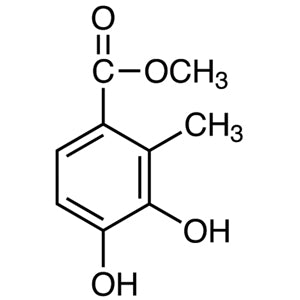
Methyl 3,4-Dihydroxy-2-methylbenzoate is a chemical compound widely used in laboratory settings for its versatility in organic synthesis. This building block plays a crucial role in constructing more complex molecular structures, particularly in the development of aromatic compounds and bioactive molecules. Its presence in various chemical reactions, such as oxidation, reduction, and substitution, makes it a valuable tool for researchers and students alike. Due to its structural stability and moderate reactivity, it can interact effectively with a range of reagents, enabling the creation of diverse chemical products.
The compound's unique molecular structure, featuring two hydroxyl groups and one methyl group, contributes to its reactivity and functional versatility. These functional groups allow it to participate in multiple chemical transformations, including esterification, hydrolysis, and reactions with alkali metals. This makes it an ideal candidate for applications in organic chemistry and biochemical research. Its ability to form ester derivatives and undergo hydrolytic reactions further enhances its utility in synthetic pathways.
In Indonesian laboratories, Methyl 3,4-Dihydroxy-2-methylbenzoate is commonly used by chemists and students for the synthesis of aromatic compounds and bioactive substances. Its availability and cost-effectiveness make it a popular choice for both educational and research purposes. Its role in supporting chemical experimentation aligns with the needs of local scientific communities, contributing to the advancement of chemical research in the region.
Related TCI products
- Organic synthesis applications benefit from its structural versatility, allowing the creation of complex aromatic compounds and bioactive molecules.
- It is suitable for esterification reactions due to its hydroxyl groups, which can form ester derivatives under appropriate conditions.
- Hydrolysis reactions can be facilitated by its functional groups, making it useful in breaking down complex molecules into simpler components.
- It supports substitution reactions, enabling the modification of molecular structures for various chemical applications.
- Its reactivity with alkali metals makes it a valuable component in reactions requiring nucleophilic substitution and functional group transformations.
| Brand | TCI |
|---|---|
| CAS number | 740799-82-0 |
| Molecular formula | — |
| Purity | — |
| Category | Chemistry > Building Blocks > Non-Heterocyclic Building Blocks |
| Pack sizes | Available in various quantities as per supplier specifications |
| Physical form | Solid, crystalline |
| Storage | Store in a cool, dry place away from direct sunlight and moisture |
Methyl 3,4-Dihydroxy-2-methylbenzoate should be stored in a cool, dry environment to maintain its chemical integrity. It is recommended to use airtight containers to prevent exposure to moisture and air, which may affect its stability. The compound should be kept away from direct sunlight and sources of heat to avoid degradation. In laboratory settings, it is important to handle the compound with appropriate personal protective equipment, such as gloves and safety goggles, to ensure safety during handling. Proper labeling of storage containers is also essential to prevent accidental exposure and ensure safe access. Regular inspection of storage conditions can help maintain the quality and usability of the compound for ongoing research and experimentation.
—
Produk Terkait
-
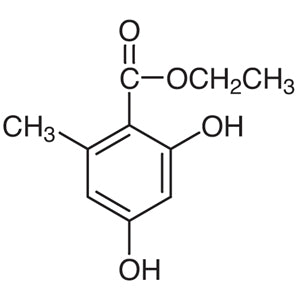
Ethyl2,4-Dihydroxy-6-methylbenzoate TCI C1316
Regular price From Rp 2.650.200,00Regular price -
tert-Butyl4-Formylbenzoate TCI B5414
Regular price From Rp 4.797.450,00Regular price -
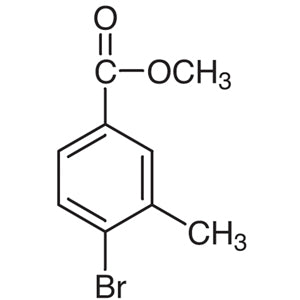
Methyl4-Bromo-3-methylbenzoate TCI B2256
Regular price From Rp 903.000,00Regular price -
Methyl2-Benzoylbenzoate TCI B1231
Regular price From Rp 903.000,00Regular price -
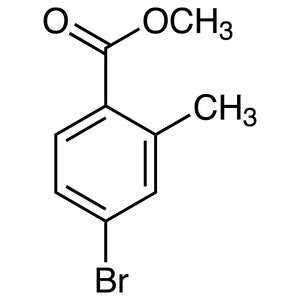
Methyl4-Bromo-2-methylbenzoate TCI M3630
Regular price From Rp 1.936.200,00Regular price -
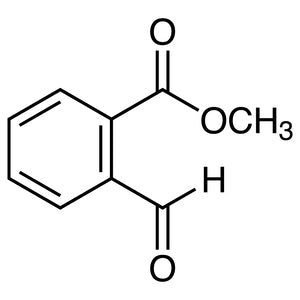
Methyl2-Formylbenzoate TCI M3552
Regular price From Rp 3.392.550,00Regular price -
Methyl3-Formylbenzoate TCI M3500
Regular price From Rp 1.829.100,00Regular price -
Methyl4-Isopropylbenzoate TCI M3307
Regular price From Rp 1.803.900,00Regular price