Methyl 4-Bromo-3-methylbenzoate is a chemical compound widely used in organic synthesis reactions within laboratory settings. It belongs to the category of non-heterocyclic building blocks, making it a versatile reagent for the creation of more complex chemical structures. This compound features an aromatic ring with bromo and methyl substituents, which contribute to its reactivity and utility in various synthetic pathways. Its role as a foundational material allows chemists to explore new compounds and functional groups in a controlled environment.
The compound's chemical properties make it a preferred choice in laboratory applications. It exhibits good solubility in organic solvents such as ethyl acetate and chloroform, which facilitates its use in purification and reaction processes. Its reactivity in electrophilic substitution and reduction reactions further enhances its value in synthetic chemistry. However, it is sensitive to high temperatures and oxidizing agents, requiring careful handling to maintain its stability and effectiveness.
In Indonesian laboratories, Methyl 4-Bromo-3-methylbenzoate is commonly used in organic chemistry research, particularly in academic institutions and research centers. It plays a key role in the development of new compounds and the study of chemical transformations. Its availability and reliability make it a standard reagent in both educational and industrial research settings.
Related TCI products
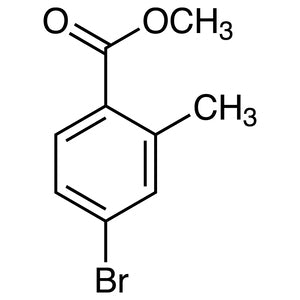
- TCI M3630 99548-55-7 Methyl 4-Bromo-2-methylbenzoate
- TCI M2546 131001-86-0 Methyl 2-Bromo-3-methylbenzoate
- TCI M2543 99548-54-6 Methyl 3-Bromo-2-methylbenzoate
- TCI M2542 79669-50-4 Methyl 5-Bromo-2-methylbenzoate
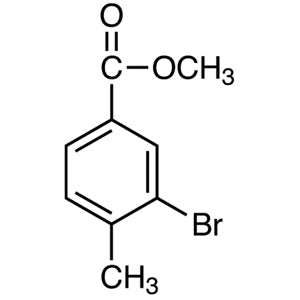
- TCI M2181 104901-43-1 Methyl 3-Bromo-4-methylbenzoate
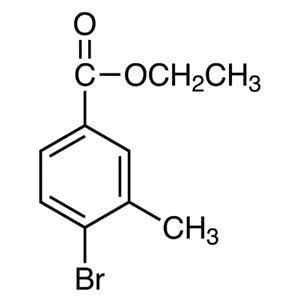
- TCI E1036 160313-69-9 Ethyl 4-Bromo-3-methylbenzoate
- Organic synthesis reactions benefit from this compound's reactivity and structural versatility, allowing for the creation of complex molecules.
- It is ideal for electrophilic substitution reactions due to its bromo group, which can be replaced through various synthetic strategies.
- In pharmaceutical research, it serves as a building block for the development of new drug compounds and medicinal agents.
- Its solubility in organic solvents makes it suitable for chromatographic separations and purification techniques.
- It is frequently used in educational settings to teach fundamental concepts in organic chemistry and synthetic methods.
| Brand | TCI |
|---|---|
| CAS number | 148547-19-7 |
| Molecular formula | — |
| Purity | — |
| Category | Chemistry > Building Blocks > Non-Heterocyclic Building Blocks |
| Pack sizes | Available in various quantities as per supplier specifications |
| Physical form | Solid (as per standard chemical properties) |
| Storage | Store in a cool, dry place away from light and oxidizing agents |
This compound should be stored in a cool, dry environment to prevent degradation. It is advisable to keep it in airtight containers to minimize exposure to moisture and air. Due to its sensitivity to high temperatures and oxidizing agents, it should be handled with care and stored away from incompatible substances. Laboratory personnel should wear appropriate personal protective equipment when working with this material. Regular monitoring of storage conditions is recommended to ensure the compound remains stable and suitable for use. Proper labeling and safe storage practices are essential to maintain laboratory safety and the integrity of the chemical.
—
Produk Terkait
-
Methyl4-Bromo-2-methylbenzoate TCI M3630
Regular price From Rp 1.988.700,00Regular priceRp 1.405.950,00Sale price From Rp 1.988.700,00 -
Methyl2-Bromo-3-methylbenzoate TCI M2546
Regular price From Rp 1.351.350,00Regular priceRp 960.750,00Sale price From Rp 1.351.350,00 -
Methyl3-Bromo-2-methylbenzoate TCI M2543
Regular price From Rp 1.749.300,00Regular priceRp 1.239.000,00Sale price From Rp 1.749.300,00 -
Methyl5-Bromo-2-methylbenzoate TCI M2542
Regular price From Rp 505.050,00Regular priceRp 368.550,00Sale price From Rp 505.050,00 -
Methyl3-Bromo-4-methylbenzoate TCI M2181
Regular price From Rp 1.167.600,00Regular priceRp 831.600,00Sale price From Rp 1.167.600,00 -
Ethyl4-Bromo-3-methylbenzoate TCI E1036
Regular price From Rp 848.400,00Regular priceRp 609.000,00Sale price From Rp 848.400,00 -
tert-Butyl4-Formylbenzoate TCI B5414
Regular price From Rp 4.849.950,00Regular priceRp 3.407.250,00Sale price From Rp 4.849.950,00 -
Methyl2-Benzoylbenzoate TCI B1231
Regular price From Rp 955.500,00Regular priceRp 683.550,00Sale price From Rp 955.500,00