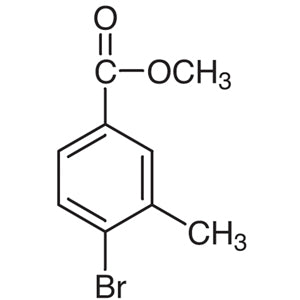
Ethyl 4-Bromo-3-methylbenzoate is a chemical compound widely used in organic synthesis reactions, particularly in the formation of aromatic compounds and their derivatives. This reagent plays a crucial role in laboratory settings as a building block for the synthesis of complex molecules with aromatic or heteroaromatic structures. Its versatility makes it a valuable component in various synthetic pathways, especially those involving electrophilic substitution reactions. The compound's ability to act as an electron donor or a substrate in such reactions enhances its utility in synthetic chemistry.
The compound's stable molecular structure and predictable chemical behavior make it a preferred choice for researchers. It exhibits consistent reactivity under controlled conditions, allowing for precise control over synthetic outcomes. This reliability is essential in laboratory environments where reproducibility and accuracy are paramount. Its chemical properties are well-documented, enabling chemists to anticipate reaction pathways and optimize experimental conditions effectively.
In Indonesian laboratories, Ethyl 4-Bromo-3-methylbenzoate is commonly used in research across multiple disciplines, including pharmacology, organic chemistry, and the synthesis of bioactive compounds. Its relevance stems from its ability to participate in bromo substitution reactions on aromatic rings, making it a key reagent for the development of new compounds with specific functional groups. Its application is particularly valuable in the study of aromatic substitution mechanisms and the design of novel synthetic routes.
Related TCI products
- TCI B2256 148547-19-7 Methyl 4-Bromo-3-methylbenzoate
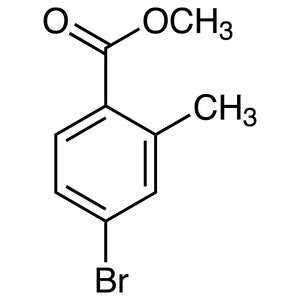
- TCI M3630 99548-55-7 Methyl 4-Bromo-2-methylbenzoate
- TCI M2546 131001-86-0 Methyl 2-Bromo-3-methylbenzoate
- TCI M2543 99548-54-6 Methyl 3-Bromo-2-methylbenzoate
- TCI M2542 79669-50-4 Methyl 5-Bromo-2-methylbenzoate
- TCI M2181 104901-43-1 Methyl 3-Bromo-4-methylbenzoate
- Organic Synthesis: Ethyl 4-Bromo-3-methylbenzoate is ideal for creating aromatic compounds with bromo and methyl substitutions, supporting the development of new pharmaceuticals and materials.
- Pharmacological Research: The compound is used to synthesize bioactive molecules, aiding in the discovery of new drugs and therapeutic agents.
- Heteroaromatic Compound Synthesis: Its reactivity makes it suitable for reactions leading to heteroaromatic structures, which are common in medicinal chemistry.
- Electrophilic Substitution Studies: The compound's role as a substrate allows for detailed investigation of substitution mechanisms in aromatic systems.
- Teaching and Training: It serves as an educational tool for students and researchers to understand synthetic pathways and reactivity patterns.
| Brand | TCI |
|---|---|
| CAS number | 160313-69-9 |
| Molecular formula | — |
| Purity | — |
| Category | Chemistry > Building Blocks > Non-Heterocyclic Building Blocks |
| Pack sizes | Available in various quantities as per standard laboratory supply |
| Physical form | Solid, crystalline |
| Storage | Store in a cool, dry place away from light and moisture |
Ethyl 4-Bromo-3-methylbenzoate should be stored in a cool, dry environment, away from direct light and moisture. It is recommended to use airtight containers to prevent exposure to air and humidity, which could affect its stability. As a chemical reagent, it should be handled with care, using appropriate personal protective equipment such as gloves and safety goggles. It is important to ensure proper ventilation in the laboratory when working with this compound. Avoid contact with skin and eyes, and follow standard laboratory safety protocols to minimize risk. Its chemical nature requires careful handling to maintain its integrity and ensure safe use in experimental procedures.
—
Produk Terkait
-
Methyl4-Bromo-3-methylbenzoate TCI B2256
Regular price From Rp 903.000,00Regular price -
Methyl4-Bromo-2-methylbenzoate TCI M3630
Regular price From Rp 1.936.200,00Regular price -
Methyl2-Bromo-3-methylbenzoate TCI M2546
Regular price From Rp 1.298.850,00Regular price -
Methyl3-Bromo-2-methylbenzoate TCI M2543
Regular price From Rp 1.696.800,00Regular price -
Methyl5-Bromo-2-methylbenzoate TCI M2542
Regular price From Rp 452.550,00Regular price -
Methyl3-Bromo-4-methylbenzoate TCI M2181
Regular price From Rp 1.115.100,00Regular price -
tert-Butyl4-Formylbenzoate TCI B5414
Regular price From Rp 4.797.450,00Regular price -
Methyl2-Benzoylbenzoate TCI B1231
Regular price From Rp 903.000,00Regular price