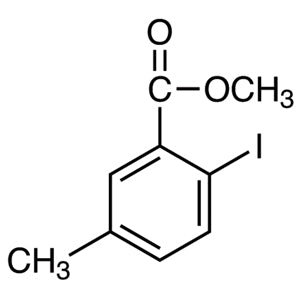
TCI M3019 is Methyl 2-Iodo-5-methylbenzoate, a benzoate ester carrying an iodine atom at the 2-position and a methyl group at the 5-position. The compound is a non-heterocyclic building block designed specifically for syntheses that rely on the reactivity of the carbon–iodine bond. In the organic synthesis laboratory, aryl iodides occupy a privileged position because they are the most reactive aromatic halides toward transition-metal insertion, which makes this compound a frequent first choice when a researcher needs coupling reactions that proceed under mild conditions with dependable outcomes.
The property that makes this compound valuable is the relative weakness of the C–I bond compared with C–Br or C–Cl, so couplings can be run at lower temperatures and with more economical catalyst loading. Placing the iodine ortho to the ester group is a particularly useful substitution pattern, because the proximity of the two groups facilitates intramolecular cyclization to form ring systems such as lactones, isocoumarins, and other fused frameworks. The methyl group at the 5-position contributes mild electron-donating character while also serving as a steric and electronic marker on the ring.
In Indonesian laboratories, this building block is used in university and institutional research groups working on methodology development, medicinal chemistry intermediates, and materials-oriented synthesis. It suits work where a reliable, well-defined aryl iodide handle is needed to assemble more elaborate aromatic scaffolds step by step. The predictable reactivity of the iodide also makes it a practical teaching and optimization substrate when a group is establishing or validating cross-coupling conditions in-house.
Related TCI products
- Palladium-catalyzed cross-coupling reactions — the highly reactive C–I bond undergoes oxidative addition readily, allowing Suzuki, Sonogashira, Heck, and related couplings to proceed under milder thermal conditions than the corresponding bromide or chloride would require.
- Intramolecular cyclization to fused ring systems — the iodine positioned ortho to the ester group brings the two reactive centres close together, favouring ring closure to lactones, isocoumarins, and other fused aromatic frameworks in a single operation.
- Medicinal chemistry intermediate synthesis — the compound serves as a substituted aromatic core that can be elaborated selectively at the iodinated position, letting chemists build analogue series around a fixed benzoate and methyl substitution pattern.
- Methodology development and catalyst screening — its predictable and well-behaved reactivity makes it a dependable model substrate when a laboratory is evaluating new ligands, catalyst systems, or reaction conditions for aryl halide activation.
- Construction of non-heterocyclic aromatic scaffolds — as a building block it supplies a pre-functionalized benzoate framework, sparing researchers the separate steps of installing the ester and the halide handle before the key bond-forming reaction.
| Brand | TCI (Tokyo Chemical Industry) |
|---|---|
| CAS number | 103440-52-4 |
| Molecular formula | — |
| Purity | — |
| Category | Chemistry > Building Blocks > Non-Heterocyclic Building Blocks |
| Pack sizes | available in standard TCI research-scale packaging; please confirm the required size when ordering |
| Physical form | — |
| Storage | keep in the tightly closed original container, in a cool, dark, well-ventilated place |
- Chemical name: Methyl 2-Iodo-5-methylbenzoate
Store the material in its original tightly closed container in a cool, dry, and well-ventilated area, protected from direct sunlight and away from heat sources. Organoiodine compounds are generally kept shielded from light to limit gradual degradation, so amber glass or the supplier's original packaging is preferred over clear containers. Handle in a fume hood using safety glasses, chemically resistant gloves, and a laboratory coat, and avoid inhalation of dust or vapour and contact with skin and eyes. Keep the container closed when not in active use to prevent moisture uptake and contamination, transfer with clean dry spatulas or glassware, and consult the manufacturer's safety data sheet before first use. Dispose of residues and contaminated materials through the laboratory's designated chemical waste stream.
—
Produk Terkait
-
tert-Butyl4-Formylbenzoate TCI B5414
Regular price From Rp 4.797.450,00Regular price -
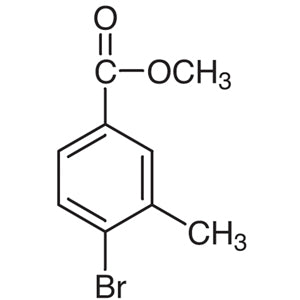
Methyl4-Bromo-3-methylbenzoate TCI B2256
Regular price From Rp 903.000,00Regular price -
Methyl2-Benzoylbenzoate TCI B1231
Regular price From Rp 903.000,00Regular price -
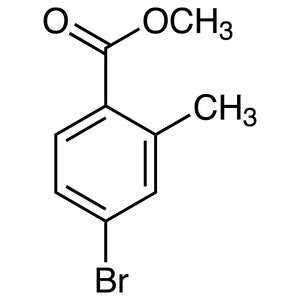
Methyl4-Bromo-2-methylbenzoate TCI M3630
Regular price From Rp 1.936.200,00Regular price -
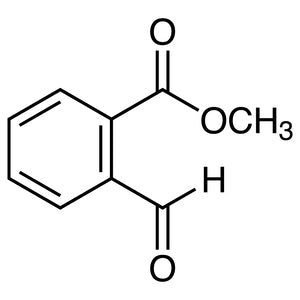
Methyl2-Formylbenzoate TCI M3552
Regular price From Rp 3.392.550,00Regular price -
Methyl3-Formylbenzoate TCI M3500
Regular price From Rp 1.829.100,00Regular price -
Methyl4-Isopropylbenzoate TCI M3307
Regular price From Rp 1.803.900,00Regular price -
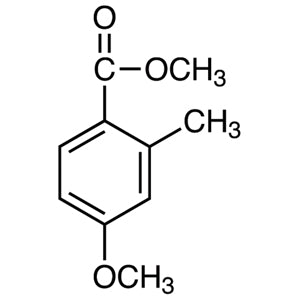
Methyl4-Methoxy-2-methylbenzoate TCI M2889
Regular price From Rp 1.246.350,00Regular price