TCI M3083 is Methyl 4-Bromo-3-fluorobenzoate, CAS number 849758-12-9, a fluorinated building block based on a benzene ring that carries three functional handles at once: a methyl ester, a bromine atom, and a fluorine atom. This arrangement of substituents makes it a highly practical intermediate for organic synthesis laboratories, particularly in programmes that require the stepwise construction of aromatic molecules. Halogenated benzoate esters are among the most frequently used starting materials in medicinal chemistry and materials science, because each group can be transformed separately using well-established methods that are easy to reproduce in any laboratory.
The strength of this compound lies in three reaction points that complement one another. The bromine atom at position 4 is an ideal partner for palladium-catalysed cross-coupling reactions, such as Suzuki-Miyaura coupling with boronic acids, Sonogashira coupling with terminal alkynes, or Buchwald-Hartwig amination, allowing researchers to extend the molecular framework in a directed manner. The fluorine atom at position 3 is relatively inert towards these coupling conditions, yet it exerts a marked electronic influence on the ring. The methyl ester, meanwhile, serves as a protected carboxyl group that can be hydrolysed, reduced, or converted into an amide once the coupling steps are complete.
In Indonesian laboratories, this building block is typically used in university research groups and industrial R&D units working on organic synthesis, medicinal chemistry, and materials development. It suits multi-step synthetic routes in which an aromatic core must be assembled progressively, as well as method development and teaching work at the postgraduate level. Because the reactions it supports are standard and well documented, the material fits readily into laboratories that already run routine palladium-catalysed coupling chemistry.
Related TCI products
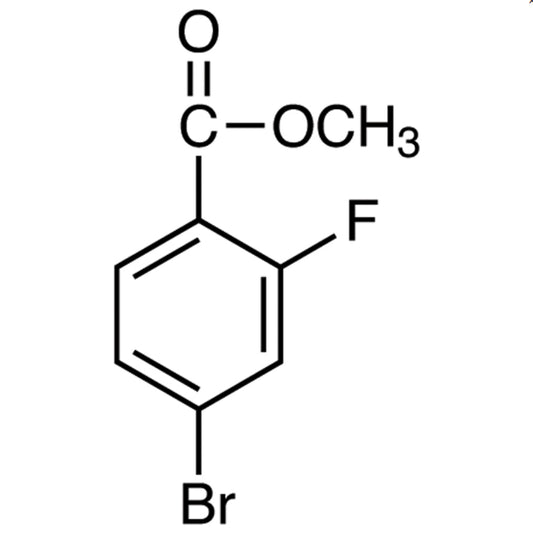
- TCI M3229 179232-29-2 Methyl 4-Bromo-2-fluorobenzoate
- TCI M3101 6942-39-8 Methyl 2-Bromo-5-fluorobenzoate
- TCI M3018 82702-31-6 Methyl 3-Bromo-4-fluorobenzoate
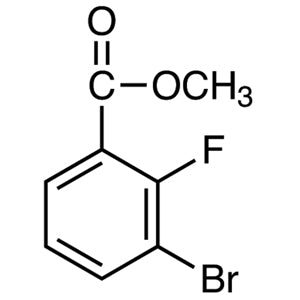
- TCI M2711 206551-41-9 Methyl 3-Bromo-2-fluorobenzoate
- TCI T2094 122894-73-9 Ethyl 2,3,4,5-Tetrafluorobenzoate
- TCI P1419 4522-93-4 Ethyl Pentafluorobenzoate
- Suzuki-Miyaura cross-coupling: the bromine at position 4 reacts cleanly with boronic acids under palladium catalysis, letting researchers install biaryl systems while the ester and fluorine remain intact.
- Sonogashira coupling with terminal alkynes: the aryl bromide handle allows direct introduction of alkyne fragments, a common step in building conjugated aromatic scaffolds for materials research programmes.
- Buchwald-Hartwig amination: the carbon-bromine bond serves as the site for palladium-catalysed carbon-nitrogen bond formation, giving access to aniline-type intermediates for medicinal chemistry libraries.
- Medicinal chemistry intermediate synthesis: the fluorine substituent modifies the electronic character of the aromatic ring, a property routinely exploited when designing and optimising candidate compounds.
- Ester group transformations: the methyl ester acts as a protected carboxyl function that can be hydrolysed, reduced, or converted into amides after the coupling sequence has been completed.
| Brand | TCI (Tokyo Chemical Industry) |
|---|---|
| CAS number | 849758-12-9 |
| Molecular formula | — |
| Purity | — |
| Category | Chemistry > Building Blocks > Fluorinated Building Blocks |
| Pack sizes | as listed on the manufacturer's packaging and product documentation |
| Physical form | — |
| Storage | — |
- Catalogue number: M3083
- Chemical name: Methyl 4-Bromo-3-fluorobenzoate
Store the container tightly closed in a cool, dry, well-ventilated area, away from direct sunlight, heat sources, and incompatible materials. Keep the product in its original manufacturer-supplied container, or in a clean, chemically resistant, clearly labelled vessel if transferred. Handle inside a fume hood while wearing safety goggles, chemical-resistant gloves, and a laboratory coat. Avoid inhalation of dust or vapour and contact with skin and eyes. Always consult the manufacturer's Safety Data Sheet before use, and follow institutional procedures for chemical waste disposal.
—
Produk Terkait
-
Methyl4-Bromo-2-fluorobenzoate TCI M3229
Regular price From Rp 1.510.950,00Regular price -
Methyl2-Bromo-5-fluorobenzoate TCI M3101
Regular price From Rp 2.411.850,00Regular price -
Methyl3-Bromo-4-fluorobenzoate TCI M3018
Regular price From Rp 955.500,00Regular price -
Methyl3-Bromo-2-fluorobenzoate TCI M2711
Regular price From Rp 2.411.850,00Regular price -
Ethyl2,3,4,5-Tetrafluorobenzoate TCI T2094
Regular price From Rp 903.000,00Regular price -
EthylPentafluorobenzoate TCI P1419
Regular price From Rp 1.035.300,00Regular price -
MethylPentafluorobenzoate TCI P1418
Regular price From Rp 928.200,00Regular price -
Methyl2-Fluoro-5-nitrobenzoate TCI M3115
Regular price Rp 1.803.900,00Regular price