TCI M3115 Methyl 2-Fluoro-5-nitrobenzoate is an organic synthesis raw material belonging to the fluorinated building block class, combining three useful functional groups on a single benzene ring: a methyl ester, a fluorine atom, and a nitro group. This combination makes it a versatile intermediate for synthetic chemists building multi-stage molecular frameworks. In the laboratory, the compound is commonly used as a starting point for preparing benzamide derivatives, benzimidazoles, and a range of heterocyclic scaffolds that form the backbone of pharmaceutical active ingredient and agrochemical research.
The property that makes this material so sought after is the reactivity of the fluorine atom, which sits ortho to the ester and is activated by the nitro group, allowing nucleophilic aromatic substitution to proceed efficiently with amines, alcohols, and thiols under relatively mild conditions. The nitro group itself can be reduced to an amine to open further cyclisation routes, while the methyl ester is readily hydrolysed to the carboxylic acid or converted into an amide. These three transformation pathways can be carried out sequentially and under control, giving chemists a high degree of flexibility in designing synthetic routes.
In Indonesian laboratories, this building block typically supports university and institutional research groups working on medicinal chemistry, heterocyclic synthesis, and the development of new active compounds. It is generally handled at bench scale in organic synthesis laboratories, where it serves as a reliable entry point for multi-step sequences. Its predictable reactivity and well-defined role in route design make it a practical choice for researchers who need a dependable fluorinated intermediate for method development and scaffold construction work.
Related TCI products
- TCI M2535 329-59-9 Methyl 4-Fluoro-3-nitrobenzoate
- TCI T2094 122894-73-9 Ethyl 2,3,4,5-Tetrafluorobenzoate
- TCI P1419 4522-93-4 Ethyl Pentafluorobenzoate
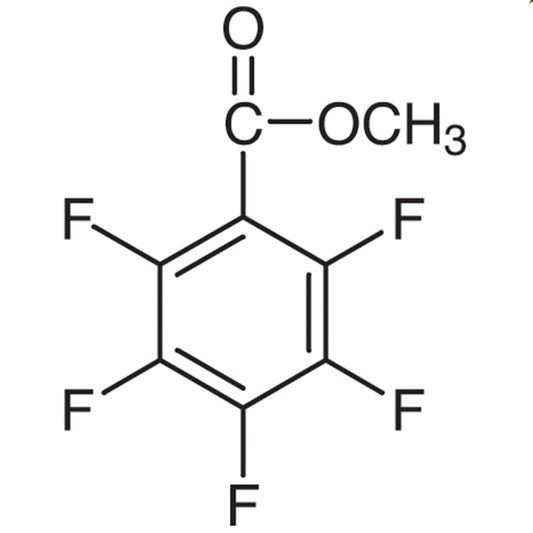
- TCI P1418 36629-42-2 Methyl Pentafluorobenzoate
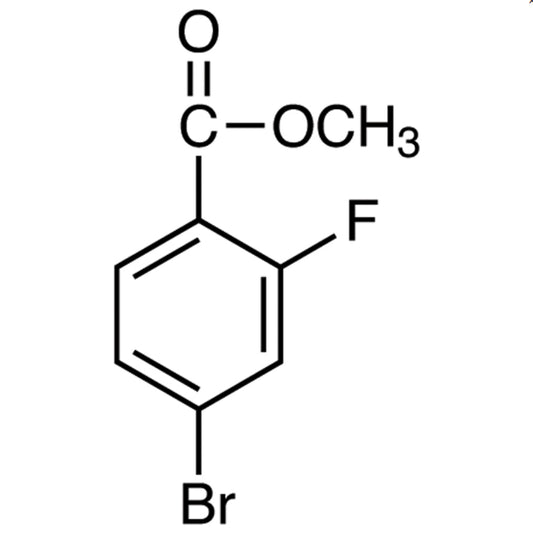
- TCI M3229 179232-29-2 Methyl 4-Bromo-2-fluorobenzoate
- TCI M3102 85953-29-3 Methyl 2-Chloro-4-fluorobenzoate
- Nucleophilic aromatic substitution studies — the fluorine ortho to the ester and activated by the nitro group is displaced efficiently by amines, alcohols, and thiols under relatively mild conditions.
- Benzimidazole scaffold synthesis — reduction of the nitro group to an amine opens cyclisation routes toward benzimidazole frameworks widely studied in pharmaceutical active ingredient research programmes.
- Benzamide derivative preparation — the methyl ester is readily converted into amides, giving direct access to benzamide derivatives used across medicinal chemistry investigations.
- Heterocyclic framework construction — three orthogonal functional groups on one ring allow sequential, controlled transformations that build layered heterocyclic scaffolds for agrochemical and pharmaceutical work.
- Multi-step synthetic route development — the methyl ester can be hydrolysed to the carboxylic acid, providing chemists flexibility when planning and optimising extended synthesis sequences.
| Brand | TCI (Tokyo Chemical Industry) |
|---|---|
| CAS number | 2965-22-2 |
| Molecular formula | — |
| Purity | — |
| Category | Chemistry > Building Blocks > Fluorinated Building Blocks |
| Pack sizes | available in standard research-scale laboratory pack sizes; please confirm the currently listed options when ordering. |
| Physical form | — |
| Storage | keep in a cool, dry place in the tightly closed original container. |
- Catalogue code: M3115
Store this product in its tightly closed original container in a cool, dry, well-ventilated place away from direct sunlight, heat sources, and moisture. Keep it separated from strong oxidising agents, strong bases, and reducing agents, and use chemically compatible glass or manufacturer-supplied containers for any transfer or subdivision. Handle the material inside a fume hood while wearing safety goggles, nitrile gloves, and a laboratory coat, and avoid generating or inhaling dust. Weigh out only the quantity required for the experiment and reseal the container promptly to limit exposure to air and humidity. Always consult the manufacturer's Safety Data Sheet before first use, label all working solutions clearly, and dispose of residues and contaminated consumables through the laboratory's chemical waste stream in accordance with applicable regulations.
—
Produk Terkait
-
Methyl4-Fluoro-3-nitrobenzoate TCI M2535
Regular price From Rp 823.200,00Regular price -
Ethyl2,3,4,5-Tetrafluorobenzoate TCI T2094
Regular price From Rp 903.000,00Regular price -
EthylPentafluorobenzoate TCI P1419
Regular price From Rp 1.035.300,00Regular price -
MethylPentafluorobenzoate TCI P1418
Regular price From Rp 928.200,00Regular price -
Methyl4-Bromo-2-fluorobenzoate TCI M3229
Regular price From Rp 1.510.950,00Regular price -
Methyl2-Chloro-4-fluorobenzoate TCI M3102
Regular price From Rp 955.500,00Regular price -
Methyl2-Bromo-5-fluorobenzoate TCI M3101
Regular price From Rp 2.411.850,00Regular price -
Methyl4-Bromo-3-fluorobenzoate TCI M3083
Regular price From Rp 2.411.850,00Regular price