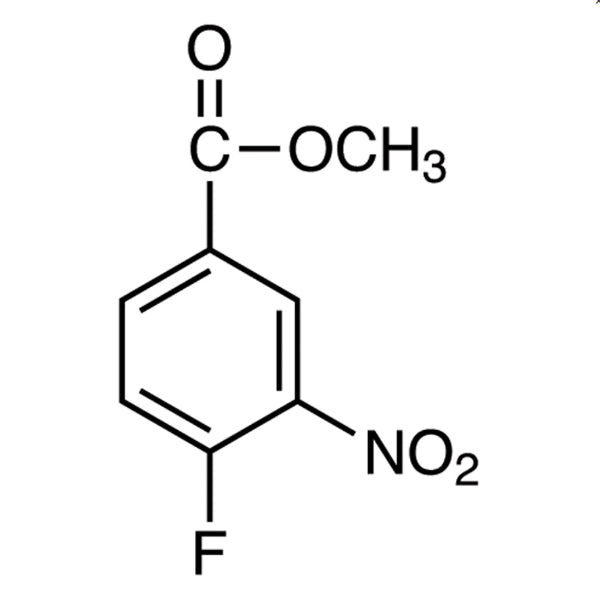
Methyl 4-Fluoro-3-nitrobenzoate is a chemical compound widely used as a building block in the synthesis of complex organic compounds. It plays a crucial role in laboratory settings by serving as a versatile intermediate in various chemical reactions, including substitution, reduction, and nucleophilic reactions. Its unique molecular structure makes it an essential component in the development of new compounds, such as pharmaceuticals, industrial chemicals, and analytical reagents. Due to its chemical stability and reactivity, it is a preferred choice for researchers aiming to create functional molecules with specific properties.
The compound contains both fluorine and nitro groups, which contribute to its high reactivity and polarity. These functional groups significantly influence its chemical behavior, making it suitable for targeted synthesis applications. The presence of the fluorine group enhances the molecule’s polarity, which can be advantageous in reactions requiring specific solubility or reactivity characteristics. Its chemical stability under controlled conditions further supports its use in a wide range of synthetic processes.
In Indonesian laboratories, Methyl 4-Fluoro-3-nitrobenzoate is extensively used in organic chemistry research, particularly in academic and research institutions. Its availability and chemical properties make it a highly sought-after material for both educational and industrial applications. Researchers in Indonesia rely on this compound for its reliability and effectiveness in producing compounds with specific functional groups and desired properties.
TCI brochures (PDF)
- Fluorination Reagents, Fluorinated Building Blocks 2026-03-18 · p. 20
Related TCI products
- TCI M3115 2965-22-2 Methyl 2-Fluoro-5-nitrobenzoate
- TCI T2094 122894-73-9 Ethyl 2,3,4,5-Tetrafluorobenzoate
- TCI P1419 4522-93-4 Ethyl Pentafluorobenzoate
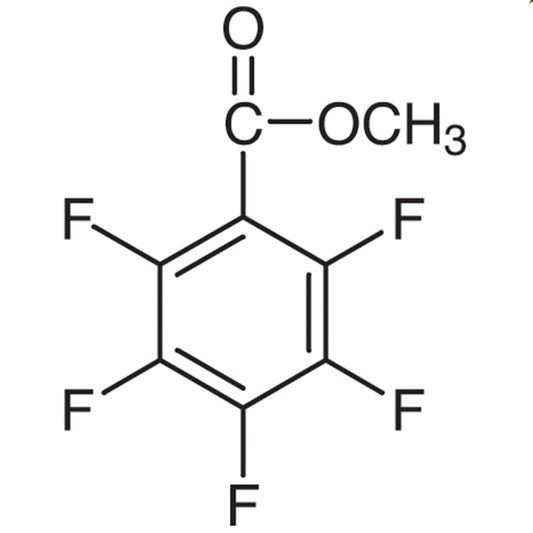
- TCI P1418 36629-42-2 Methyl Pentafluorobenzoate
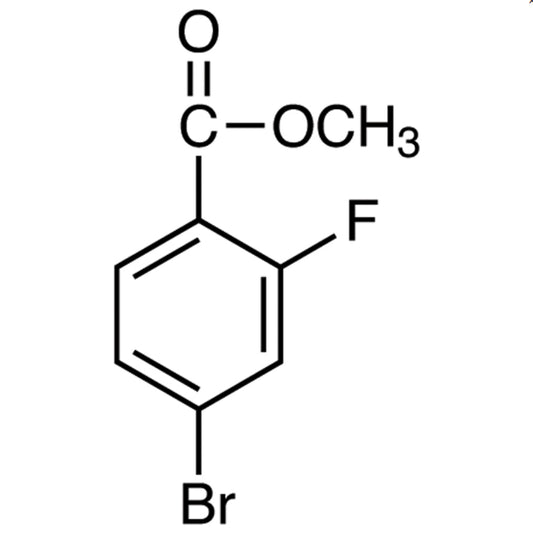
- TCI M3229 179232-29-2 Methyl 4-Bromo-2-fluorobenzoate
- TCI M3102 85953-29-3 Methyl 2-Chloro-4-fluorobenzoate
- Organic synthesis applications benefit from its reactivity and structural versatility, allowing for the creation of complex molecules with specific functional groups.
- Pharmaceutical research utilizes this compound as an intermediate in the development of new drug compounds due to its chemical stability and reactivity.
- Analytical chemistry laboratories use it as a reagent for the synthesis of compounds with precise molecular structures and functional groups.
- Industrial chemical production incorporates it in the synthesis of specialty chemicals and intermediates for various manufacturing processes.
- Educational institutions employ it in teaching and research to demonstrate chemical synthesis techniques and functional group reactivity.
| Brand | TCI |
|---|---|
| CAS number | 329-59-9 |
| Molecular formula | — |
| Purity | — |
| Category | Chemistry > Building Blocks > Fluorinated Building Blocks |
| Pack sizes | Available in various quantities as per supplier specifications |
| Physical form | Solid or liquid, depending on the specific product formulation |
| Storage | Store in a cool, dry place away from direct sunlight and incompatible materials |
This compound should be stored in a cool, dry environment, away from direct sunlight and sources of heat. It is recommended to use airtight containers to prevent moisture absorption and contamination. Due to its chemical reactivity, it should be kept away from incompatible substances such as strong acids or bases. Proper labeling of storage containers is essential for safety and identification. In laboratory settings, personal protective equipment such as gloves and safety goggles should be worn when handling the compound to ensure safe usage and minimize exposure risks. Regular monitoring of storage conditions is advised to maintain the compound's integrity and effectiveness for research purposes.
—
Produk Terkait
-
Methyl2-Fluoro-5-nitrobenzoate TCI M3115
Regular price Rp 1.803.900,00Regular price -
Ethyl2,3,4,5-Tetrafluorobenzoate TCI T2094
Regular price From Rp 903.000,00Regular price -
EthylPentafluorobenzoate TCI P1419
Regular price From Rp 1.035.300,00Regular price -
MethylPentafluorobenzoate TCI P1418
Regular price From Rp 928.200,00Regular price -
Methyl4-Bromo-2-fluorobenzoate TCI M3229
Regular price From Rp 1.510.950,00Regular price -
Methyl2-Chloro-4-fluorobenzoate TCI M3102
Regular price From Rp 955.500,00Regular price -
Methyl2-Bromo-5-fluorobenzoate TCI M3101
Regular price From Rp 2.411.850,00Regular price -
Methyl4-Bromo-3-fluorobenzoate TCI M3083
Regular price From Rp 2.411.850,00Regular price