Methyl 2,3-Dibromopropionate, identified by CAS number 1729-67-5, is a non-heterocyclic building block supplied by TCI that carries two bromine atoms along a propionate chain together with a methyl ester group. This combination makes it a versatile reagent in organic synthesis: both bromine atoms act as leaving groups ready to be displaced by a wide range of nucleophiles, while the ester group can be hydrolysed, reduced, or converted into an amide at a later stage of a synthetic sequence. In practical terms, the molecule delivers three carbons and two reactive handles in a single, easily dispensed reagent.
The property that makes this compound particularly attractive is the presence of two electrophilic centres whose reactivities are not exactly the same. Because the two positions can be differentiated, researchers are able to design stepwise substitution reactions or controlled cyclisations rather than relying on indiscriminate double displacement. The compound can also undergo elimination to yield substituted acrylate derivatives, a route long exploited in classical organic synthesis. As a liquid organobromine compound, the material is straightforward to transfer by syringe and to measure volumetrically, which suits small-scale exploratory chemistry as well as more established procedures.
In Indonesian laboratories, this reagent is typically used as a three-carbon building unit for assembling side chains, forming rings, or introducing two functional groups in a single operation. University research groups, synthetic chemistry laboratories, and R&D units working on intermediate preparation are the usual settings. The availability of 5 g and 25 g pack sizes provides flexibility, allowing a group to start with trial-scale experiments before committing to the larger pack for repeated or scaled-up work.
- Nucleophilic substitution chemistry: the two bromine atoms serve as leaving groups that can be displaced by a wide range of nucleophiles, allowing new carbon–heteroatom bonds to be formed under standard conditions.
- Stepwise functionalisation: because the two electrophilic centres differ in reactivity, chemists can target one position first and the second later, building asymmetrically substituted products in a controlled sequence.
- Ring formation and cyclisation: the dibrominated three-carbon chain reacts with bifunctional nucleophiles to close rings, making the reagent useful whenever a compact cyclic framework must be constructed.
- Preparation of substituted acrylate derivatives: elimination of hydrogen bromide converts the compound into substituted acrylates, a classical synthetic route that gives access to activated alkene intermediates.
- Ester group transformations: the methyl ester provides a further point of elaboration, since it can be hydrolysed, reduced, or converted into an amide once the halide chemistry has been completed.
| Brand | TCI |
|---|---|
| CAS number | 1729-67-5 |
| Molecular formula | — |
| Purity | — |
| Category | Chemistry > Building Blocks > Non-Heterocyclic Building Blocks |
| Pack sizes | 5 g and 25 g |
| Physical form | liquid organobromine compound, suitable for syringe transfer and volumetric measurement |
| Storage | keep in a tightly closed original container in a cool, dark, well-ventilated chemical store |
Store the container tightly closed in a cool, dark, and well-ventilated area set aside for organic reagents, away from heat sources, direct sunlight, and incompatible materials such as strong bases and strong oxidising agents. Keep the compound in its original supplier container wherever possible; if transfer is required, use glassware or containers compatible with organobromine liquids and close them securely. Handle inside a fume hood, wear safety glasses, gloves, and a laboratory coat, and avoid contact with skin, eyes, and inhalation of vapour. Because the material is a liquid, withdraw portions by syringe to limit exposure, keep the workspace free of ignition sources, and collect halogenated waste separately according to laboratory procedure.
—
Produk Terkait
-
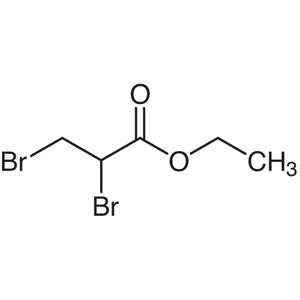
Ethyl2,3-Dibromopropionate TCI D1992
Regular price From Rp 717.150,00Regular price -
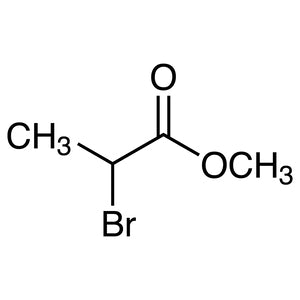
Methyl2-Bromopropionate TCI B1460
Regular price From Rp 769.650,00Regular price -
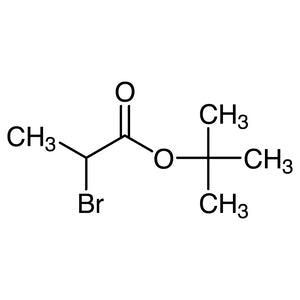
tert-Butyl2-Bromopropionate TCI B1277
Regular price From Rp 3.312.750,00Regular price -
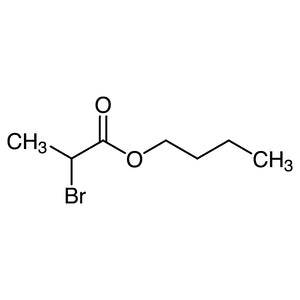
Butyl2-Bromopropionate TCI B1031
Regular price Rp 743.400,00Regular price -
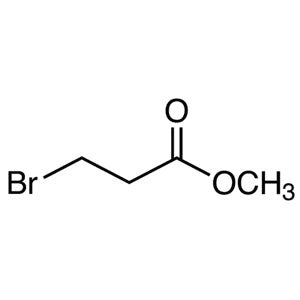
Methyl3-Bromopropionate TCI B0648
Regular price From Rp 1.485.750,00Regular price -
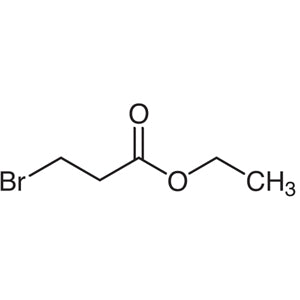
Ethyl3-Bromopropionate TCI B0647
Regular price From Rp 1.510.950,00Regular price -
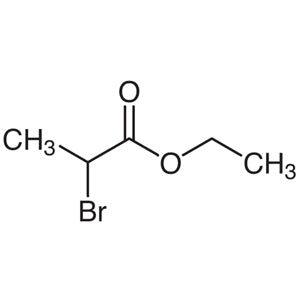
Ethyl2-Bromopropionate TCI B0646
Regular price From Rp 557.550,00Regular price -
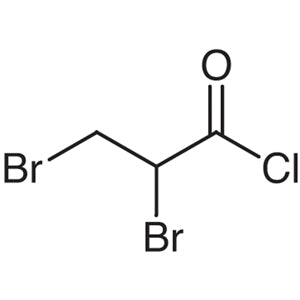
2,3-DibromopropionylChloride TCI D3288
Regular price From Rp 1.298.850,00Regular price