

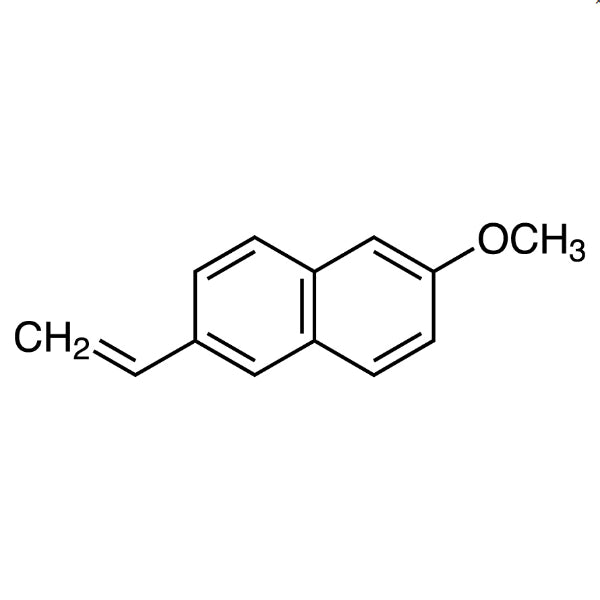
2-Methoxy-6-vinylnaphthalene is an organic compound widely used in scientific research, particularly in the field of semiconductor materials. This compound plays a crucial role in laboratories where the development of advanced electronic materials is a priority. Its unique molecular structure makes it a valuable building block for creating materials with tailored electronic properties. Due to its chemical versatility, it is frequently used in the synthesis of complex compounds and in the exploration of new material properties.
The compound's high reactivity and structural complexity make it a preferred choice for researchers aiming to modify molecular structures or develop materials with specific electronic characteristics. Its molecular framework, consisting of a naphthalene ring substituted with vinylo and methoxy groups, contributes to its functional versatility. This allows for a wide range of chemical reactions and applications, making it an essential tool in material science research.
In Indonesian laboratories, 2-Methoxy-6-vinylnaphthalene is commonly used in semiconductor material research, especially in the development of optoelectronic and electro-optic devices. It is also frequently found in organic chemistry studies and compound synthesis projects, where its reactivity and structural adaptability are highly valued. Its application in these contexts highlights its importance in advancing material science and electronic technology.
TCI brochures (PDF)
- Building Blocks for Organic Semiconductor 2026-03-24 · p. 8
Related TCI products
- TCI V0040 826-74-4 1-Vinylnaphthalene (stabilized with TBC)
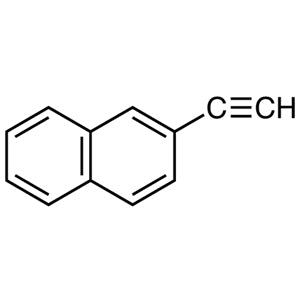
- TCI E0933 2949-26-0 2-Ethynylnaphthalene
- TCI M3600 7786-61-0 2-Methoxy-4-vinylphenol (stabilized with TBC)
- TCI E1556 612-15-7 1-Methoxy-2-vinylbenzene (stabilized with HQ)
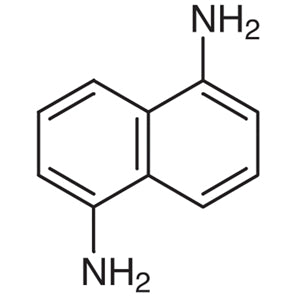
- TCI D5689 2243-62-1 1,5-Diaminonaphthalene (purified by sublimation)
- TCI D4339 83204-68-6 2,6-Dibromonaphthalene-1,4,5,8-tetracarboxylic Dianhydride
- Semiconductor material development due to its ability to form electronic structures with tailored properties.
- Organic chemistry research for synthesizing complex compounds with specific functional groups.
- Optoelectronic device fabrication because of its optical and electronic response characteristics.
- Electro-optic material exploration due to its molecular reactivity and structural adaptability.
- Advanced material synthesis for creating new compounds with enhanced conductivity and stability.
| Brand | TCI |
|---|---|
| CAS number | 63444-51-9 |
| Molecular formula | — |
| Purity | — |
| Category | Materials Science > Material Building Blocks > Small Molecule Semiconductor Building Blocks |
| Pack sizes | As available from supplier |
| Physical form | Liquid |
| Storage | Store in a cool, dark place away from moisture and direct sunlight. |
This compound should be stored in a cool, dark environment to prevent degradation. It is recommended to use airtight containers made of glass or high-density polyethylene to maintain its stability. Due to its reactivity, it should be handled in a well-ventilated area, preferably under a fume hood, to minimize exposure. Avoid contact with moisture and strong oxidizing agents to ensure safety. Always wear appropriate personal protective equipment, including gloves and safety goggles, when handling this material. Proper storage and handling are essential to maintain its chemical integrity and ensure safe laboratory practices.
—
Produk Terkait
-
1-Vinylnaphthalene(stabilizedwithTBC) TCI V0040
Regular price Rp 4.743.900,00Regular price -
2-Ethynylnaphthalene TCI E0933
Regular price Rp 2.359.350,00Regular price -
2-Methoxy-4-vinylphenol(stabilizedwithTBC) TCI M3600
Regular price From Rp 2.862.300,00Regular price -
1-Methoxy-2-vinylbenzene(stabilizedwithHQ) TCI E1556
Regular price From Rp 3.817.800,00Regular price -
1,5-Diaminonaphthalene(purifiedbysublimation) TCI D5689
Regular price From Rp 1.829.100,00Regular price -
2,6-Dibromonaphthalene-1,4,5,8-tetracarboxylicDianhydride TCI D4339
Regular price From Rp 6.042.750,00Regular price -
1,5-Diaminonaphthalene TCI D0101
Regular price From Rp 1.298.850,00Regular price -
1,4-Bis[[(3-ethyloxetan-3-yl)methoxy]methyl]benzene TCI X0084
Regular price From Rp 1.298.850,00Regular price



![142627-97-2 1,4-Bis[[(3-ethyloxetan-3-yl)methoxy]methyl]benzene - AMI Scientific](http://amiscientific.com/cdn/shop/files/TCI2510X0084.jpg?v=1768819865&width=533)