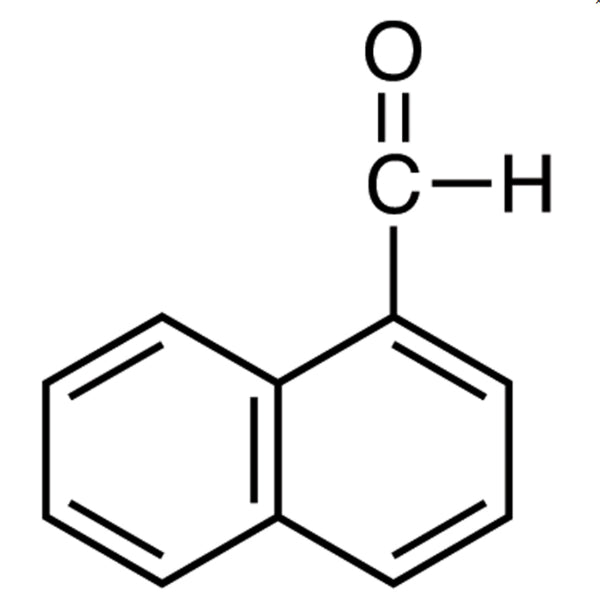
1-Naphthaldehyde with CAS number 66-77-3 is an aromatic aldehyde built from a naphthalene core carrying a formyl group at the alpha position, also described as position one. In organic synthesis laboratories, this compound ranks among the most frequently used aromatic building blocks because the aldehyde group is electrophilic and reacts readily with a wide range of nucleophiles. Starting from this single material, chemists can construct imines, secondary alcohols, carboxylic acids, alkenes, and a variety of heterocyclic rings simply by selecting the appropriate reaction partner.
The property that makes this reagent a preferred choice is the combination of predictable aldehyde reactivity with a naphthalene framework that is large, rigid, and lipophilic. The two-ring aromatic system contributes attractive optical behaviour together with the ability to interact through pi stacking, which is why its derivatives are widely used as fluorescent chemosensors, ligands, and dyes. Substitution at carbon one introduces the peri steric hindrance characteristic of naphthalene, a factor often exploited to direct the stereochemistry and conformation of the resulting products.
Because the material is a liquid at room temperature, volume measurement and transfer by pipette are straightforward, which suits the working style of Indonesian laboratories where reagents are commonly dispensed in small portions across several reactions. It is typically found in university and institutional organic synthesis groups, in research units preparing fluorescent probes and ligand systems, and in laboratories developing dye intermediates, where a reliable aromatic aldehyde is needed as a starting point for further derivatisation.
- Imine and Schiff base preparation: the electrophilic formyl group condenses cleanly with primary amines, giving the naphthalene-bearing imines used as ligand precursors in coordination chemistry work.
- Fluorescent chemosensor synthesis: the two-ring aromatic system supplies the optical behaviour required, so derivatives built from this aldehyde serve directly as sensing molecules in probe development.
- Secondary alcohol synthesis: the aldehyde reacts with carbon nucleophiles in a predictable manner, letting chemists install a naphthalene unit while generating a new carbinol centre.
- Heterocyclic ring construction: as a non-heterocyclic building block, it condenses with suitable partners to form heterocyclic rings, extending molecular complexity from a single inexpensive starting point.
- Stereochemical and conformational studies: the peri steric hindrance created by substitution at carbon one is deliberately used to direct product stereochemistry and control conformation in target molecules.
| Brand | TCI |
|---|---|
| CAS number | 66-77-3 |
| Molecular formula | — |
| Purity | — |
| Category | Chemistry > Building Blocks > Non-Heterocyclic Building Blocks |
| Pack sizes | available in the standard TCI catalogue pack sizes for this item |
| Physical form | liquid at room temperature |
| Storage | keep in a tightly closed container, protected from air and light |
Store the container tightly closed in a cool, dry, well ventilated area away from direct sunlight and from sources of ignition or heat. Aromatic aldehydes are susceptible to slow oxidation on exposure to air, so the bottle should be resealed promptly after each withdrawal and, where practical, kept under an inert atmosphere. Use the original supplier bottle or a compatible amber glass container for any aliquot. All transfers should be carried out in a fume hood, with nitrile gloves, safety goggles, and a laboratory coat worn throughout. Since the material is a liquid, dispense by pipette or syringe rather than pouring, and keep absorbent material available for spill containment. Consult the manufacturer safety data sheet before first use.
—
Produk Terkait
-
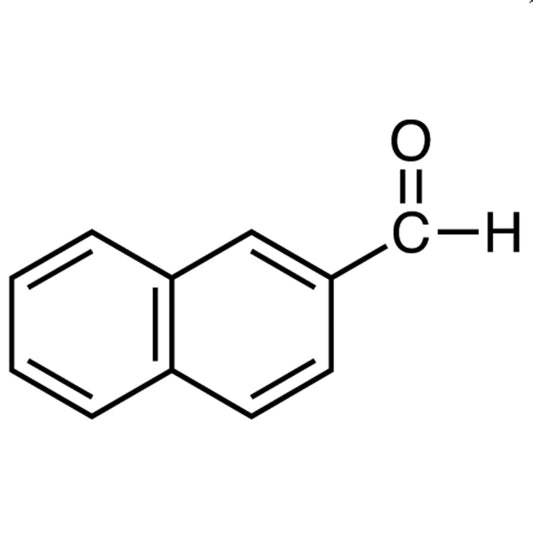
2-Naphthaldehyde TCI N0003
Regular price From Rp 1.008.000,00Regular price -
1-Bromo-2-naphthaldehyde TCI B1647
Regular price From Rp 1.696.800,00Regular price -
6-Methoxy-2-naphthaldehyde TCI M1090
Regular price From Rp 980.700,00Regular price -
4-Methoxy-1-naphthaldehyde TCI M1049
Regular price Rp 3.367.350,00Regular price -
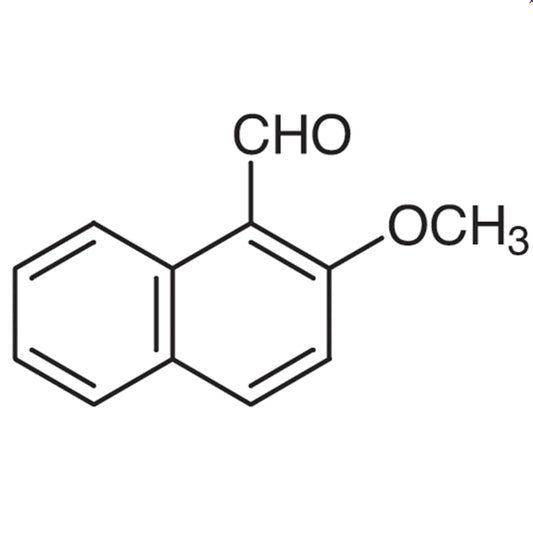
2-Methoxy-1-naphthaldehyde TCI M1040
Regular price From Rp 769.650,00Regular price -
1-Hydroxy-2-naphthaldehyde TCI H0839
Regular price From Rp 5.009.550,00Regular price -
2-Hydroxy-1-naphthaldehyde TCI H0275
Regular price From Rp 1.829.100,00Regular price -
2-Ethoxy-1-naphthaldehyde TCI E0794
Regular price Rp 5.512.500,00Regular price