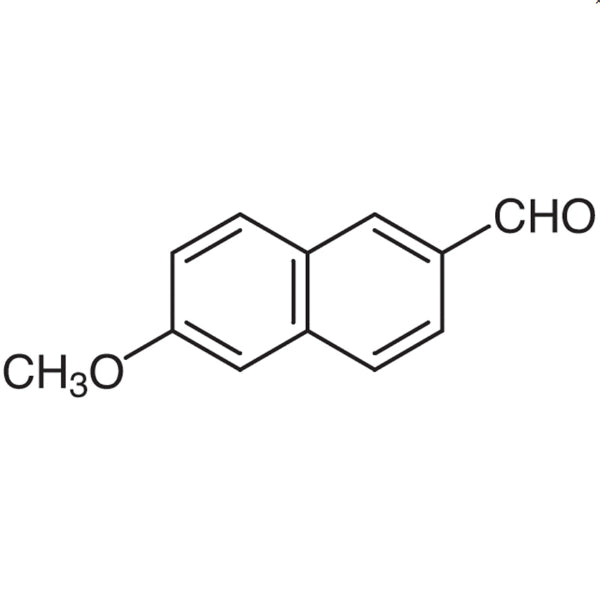
TCI M1090 6-Methoxy-2-naphthaldehyde is a non-heterocyclic building block built on a naphthalene framework carrying an aldehyde group at the two position and a methoxy group at the six position. This pseudo-para arrangement across the two fused rings produces a long conjugated system with one electron-donating terminus and one electron-withdrawing terminus. In the laboratory the compound serves as a versatile starting material that supplies a ready-to-react aromatic carbonyl group together with an extended aromatic skeleton, forming the basis for the preparation of dyes, optical probes, and a wide range of organic synthesis targets.
The defining characteristic of this material is the reactivity typical of an aromatic aldehyde combined with the optical behaviour of a methoxy-substituted naphthalene core. The aldehyde group readily undergoes condensation with primary amines to form Schiff bases, Wittig and Horner-Wadsworth-Emmons reactions to construct alkenes, Knoevenagel condensations, reduction to the corresponding alcohol, and oxidation to the carboxylic acid. The methoxy group meanwhile pushes electron density into the conjugated system, so derivatives prepared from it frequently display absorption and emission at attractive wavelength regions. This combination makes it a valuable material wherever both defined reactivity and useful photophysical character are required in a single scaffold.
In Indonesian laboratories this building block is typically found in organic synthesis and materials chemistry groups at universities and research institutes, where it supports method development, derivative libraries, and the preparation of fluorescent compounds. It is also used in analytical and industrial research settings that need a reliable naphthalene-based carbonyl intermediate. Because it is supplied by TCI, it fits routine research workflows in which consistent, well-documented reagents are required for reproducible multi-step synthesis.
- Schiff base synthesis: the aromatic aldehyde condenses cleanly with primary amines, giving imine ligands and conjugated products that are widely used in coordination and materials chemistry studies.
- Wittig and Horner-Wadsworth-Emmons olefination: the reactive carbonyl group allows controlled construction of carbon-carbon double bonds that extend conjugation across the methoxy-substituted naphthalene framework.
- Knoevenagel condensation: reaction with active methylene compounds produces strongly conjugated push-pull systems, a common route towards organic dyes and optically responsive molecules.
- Fluorescent probe and dye development: the electron-donating methoxy group combined with the extended naphthalene core yields derivatives with absorption and emission in useful wavelength regions.
- General intermediate preparation: straightforward reduction to the corresponding alcohol or oxidation to the carboxylic acid makes it a convenient entry point for multi-step organic synthesis routes.
| Brand | TCI |
|---|---|
| CAS number | 3453-33-6 |
| Molecular formula | — |
| Purity | — |
| Category | Chemistry > Building Blocks > Non-Heterocyclic Building Blocks |
| Pack sizes | available in standard TCI research pack sizes; please confirm the currently listed packaging option when ordering. |
| Physical form | — |
| Storage | store in a tightly closed container in a cool, dry, well-ventilated place away from light. |
- Product Code: M1090
Store this product in its original tightly closed container in a cool, dry, well-ventilated area, protected from direct sunlight and away from strong oxidising agents, acids, and sources of ignition. Amber glass or other light-protecting containers are appropriate for an aromatic aldehyde of this type, since prolonged exposure to air and light can promote gradual degradation. Handle the material inside a fume hood using safety glasses, chemical-resistant gloves, and a laboratory coat, and avoid generating or inhaling dust. Keep containers closed when not in use, weigh and transfer using clean dry tools to prevent moisture pickup, and always consult the manufacturer's safety data sheet before use and before any disposal of residues or contaminated materials.
—
Produk Terkait
-
4-Methoxy-1-naphthaldehyde TCI M1049
Regular price Rp 3.367.350,00Regular price -
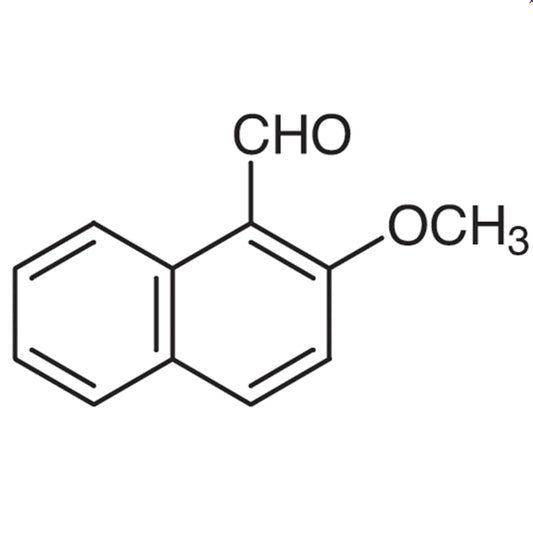
2-Methoxy-1-naphthaldehyde TCI M1040
Regular price From Rp 769.650,00Regular price -
1-Bromo-2-naphthaldehyde TCI B1647
Regular price From Rp 1.696.800,00Regular price -
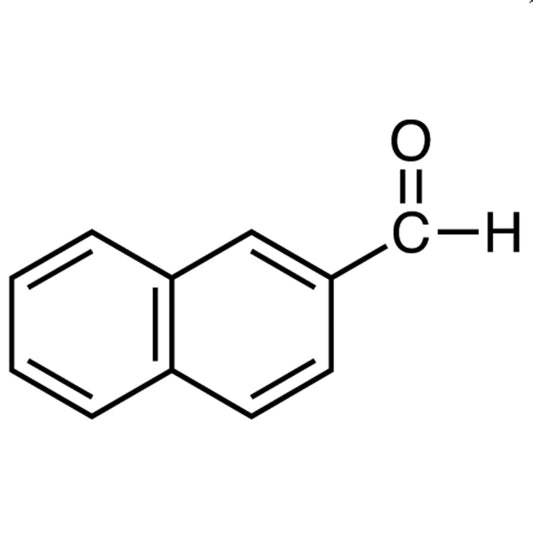
2-Naphthaldehyde TCI N0003
Regular price From Rp 1.008.000,00Regular price -
1-Naphthaldehyde TCI N0002
Regular price From Rp 769.650,00Regular price -
1-Hydroxy-2-naphthaldehyde TCI H0839
Regular price From Rp 5.009.550,00Regular price -
2-Hydroxy-1-naphthaldehyde TCI H0275
Regular price From Rp 1.829.100,00Regular price -
2-Ethoxy-1-naphthaldehyde TCI E0794
Regular price Rp 5.512.500,00Regular price