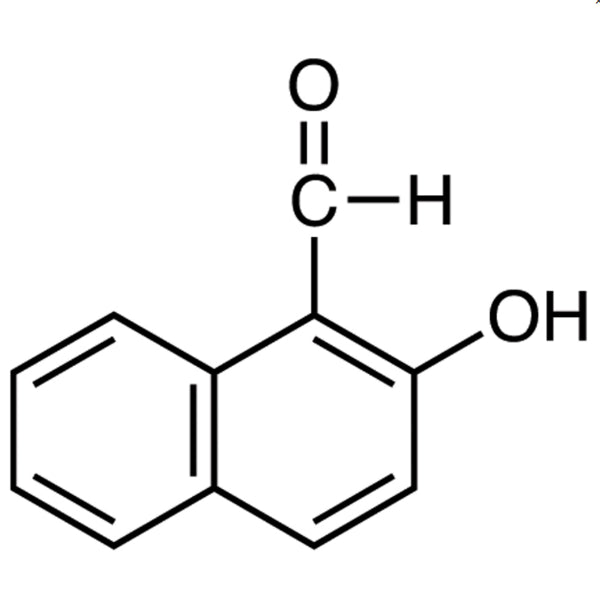
2-Hydroxy-1-naphthaldehyde is a chemical compound widely used in laboratory settings for the synthesis of complex molecules. As a building block in organic chemistry, it plays a crucial role in the development of compounds with specific structural requirements. Its presence in the synthesis of aromatic and heterocyclic compounds makes it a valuable resource for researchers aiming to create new materials or pharmaceuticals. This compound is particularly useful due to its ability to participate in various chemical reactions, making it a versatile reagent in synthetic pathways.
The compound’s structure, featuring an aromatic naphthalene ring with both an aldehyde and hydroxyl group, contributes to its reactivity and stability. These functional groups enable it to engage in nucleophilic reactions, condensation processes, and substitution reactions. Its chemical stability combined with reactivity makes it an ideal choice for applications requiring high reactivity and functional group compatibility. The compound’s molecular design allows it to serve as a key intermediate in the development of compounds with tailored properties.
In Indonesian laboratories, 2-Hydroxy-1-naphthaldehyde is commonly used in organic chemistry research, especially in the development of pharmaceutical compounds and advanced materials. It is frequently employed in academic and industrial research settings where the synthesis of complex molecules is required. Its availability and chemical versatility make it a preferred reagent for researchers working on drug discovery and material science projects.
- Organic synthesis of pharmaceutical compounds due to its reactivity and functional group compatibility.
- Development of new materials through its ability to participate in condensation and substitution reactions.
- Research in heterocyclic chemistry as it is a key building block for aromatic and heterocyclic structures.
- Drug discovery projects where the synthesis of complex molecules with specific structural features is required.
- Academic research in chemistry laboratories focusing on synthetic pathways and molecular design.
| Brand | TCI |
|---|---|
| CAS number | 708-06-5 |
| Molecular formula | — |
| Purity | — |
| Category | Chemistry > Building Blocks > Non-Heterocyclic Building Blocks |
| Pack sizes | Available in various quantities as per supplier specifications |
| Physical form | Solid or liquid, depending on the specific product variant |
| Storage | Store in a cool, dry place away from light and incompatible substances |
2-Hydroxy-1-naphthaldehyde should be stored in a cool, dry environment to maintain its chemical stability. It is recommended to keep it in a sealed container to prevent exposure to moisture and air. Storage away from incompatible substances such as strong oxidizers is essential to avoid potential chemical reactions. The compound should be kept in a well-ventilated area to ensure safe handling. Proper personal protective equipment, including gloves and safety goggles, should be worn when handling this material. Regular monitoring of storage conditions is advised to ensure the compound remains in optimal condition for laboratory use.
—
Produk Terkait
-
1-Hydroxy-2-naphthaldehyde TCI H0839
Regular price From Rp 5.009.550,00Regular price -
1-Bromo-2-naphthaldehyde TCI B1647
Regular price From Rp 1.696.800,00Regular price -
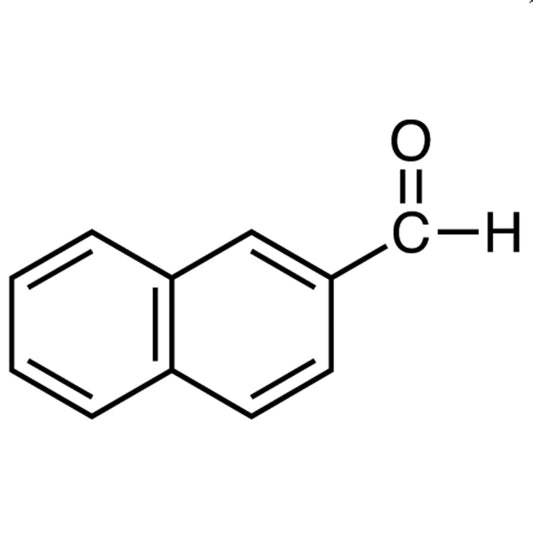
2-Naphthaldehyde TCI N0003
Regular price From Rp 1.008.000,00Regular price -
1-Naphthaldehyde TCI N0002
Regular price From Rp 769.650,00Regular price -
6-Methoxy-2-naphthaldehyde TCI M1090
Regular price From Rp 980.700,00Regular price -
4-Methoxy-1-naphthaldehyde TCI M1049
Regular price Rp 3.367.350,00Regular price -
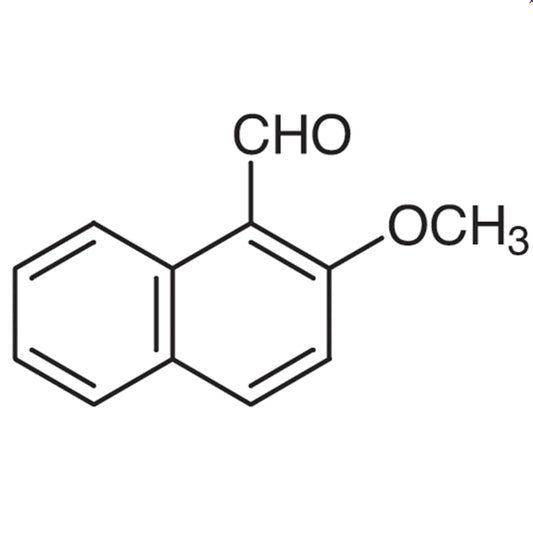
2-Methoxy-1-naphthaldehyde TCI M1040
Regular price From Rp 769.650,00Regular price -
2-Ethoxy-1-naphthaldehyde TCI E0794
Regular price Rp 5.512.500,00Regular price