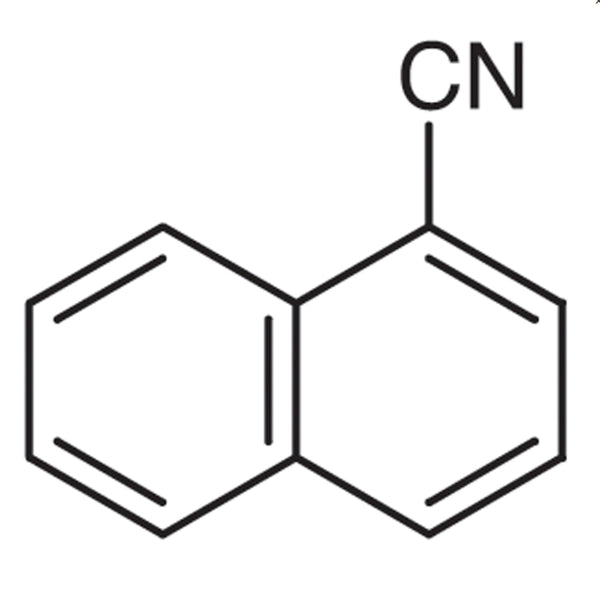
TCI N0038 1-Naphthonitrile, with CAS number 86-53-3, is an aromatic compound carrying a nitrile group at the alpha position of the naphthalene ring, also known as 1-cyanonaphthalene. In the organic synthesis laboratory, this compound serves as a versatile building block because the nitrile group can be converted into a wide range of other functional groups, from carboxylic acids, amides, aldehydes, and primary amines through to heterocyclic rings such as tetrazoles. Its availability allows researchers to construct substituted naphthalene frameworks without having to go through complicated cyanation routes that require hazardous reagents.
The characteristics that make this compound a preferred choice are the high yet controllable reactivity of the nitrile group, the stability of the naphthalene framework under many reaction conditions, and good solubility in common organic solvents such as dichloromethane, toluene, and tetrahydrofuran. The alpha position gives a steric environment different from that of the beta isomer, so both its hydrolysis and reduction products display distinctive downstream reactivity patterns. Consistent purity matters in this work, because residual aromatic impurities are often difficult to separate from the final product and can interfere with the interpretation of analytical data.
In Indonesian laboratories, this material is typically used in university and institutional organic synthesis groups, in medicinal chemistry work that builds naphthalene-based scaffolds, and in research units developing fine chemicals and functional materials. It is also called upon in methodology studies, where a well-defined aromatic nitrile is needed as a model substrate for testing new transformations before those conditions are applied to more valuable or harder-to-obtain intermediates.
- Nitrile hydrolysis to 1-naphthoic acid, where the stable naphthalene framework tolerates the acidic or basic conditions needed to reach the carboxylic acid cleanly.
- Reduction to 1-naphthylmethylamine, since the nitrile group responds predictably to hydride and catalytic reduction, giving a direct route to the primary amine building block.
- Tetrazole formation for medicinal chemistry scaffolds, because the aromatic nitrile readily undergoes cycloaddition to give a bioisosteric ring attached at the alpha position.
- Preparation of substituted naphthalene intermediates, letting researchers install the cyano group without performing difficult cyanation steps that call for hazardous reagents in house.
- Model substrate work in methodology studies, where a well-characterised aromatic nitrile of consistent purity allows new reaction conditions to be assessed reliably.
| Brand | TCI |
|---|---|
| CAS number | 86-53-3 |
| Molecular formula | — |
| Purity | — |
| Category | Chemistry > Building Blocks > Non-Heterocyclic Building Blocks |
| Pack sizes | available in the standard TCI catalogue pack sizes; please confirm the option you require when ordering |
| Physical form | — |
| Storage | keep in a tightly closed original container, protected from light and moisture |
- Chemical name: 1-Naphthonitrile (1-cyanonaphthalene)
Store this compound in its tightly closed original container in a cool, dry place away from direct sunlight, heat sources, and moisture, and keep it separated from strong oxidising agents, strong acids, and strong bases. Amber glass or the supplier's original packaging is suitable, and containers should be resealed promptly after each use to limit exposure to air and humidity. Handle all weighing and transfer operations in a functioning fume hood while wearing safety goggles, a laboratory coat, and chemically resistant gloves. Avoid inhalation of dust or vapour and any contact with skin and eyes. Consult the manufacturer's safety data sheet before use, and dispose of residues and contaminated materials through the laboratory's designated chemical waste stream.
—
Produk Terkait
-
2-Naphthonitrile TCI N0039
Regular price From Rp 1.220.100,00Regular price -
6-Hydroxy-2-naphthonitrile TCI H0995
Regular price Rp 2.466.450,00Regular price