

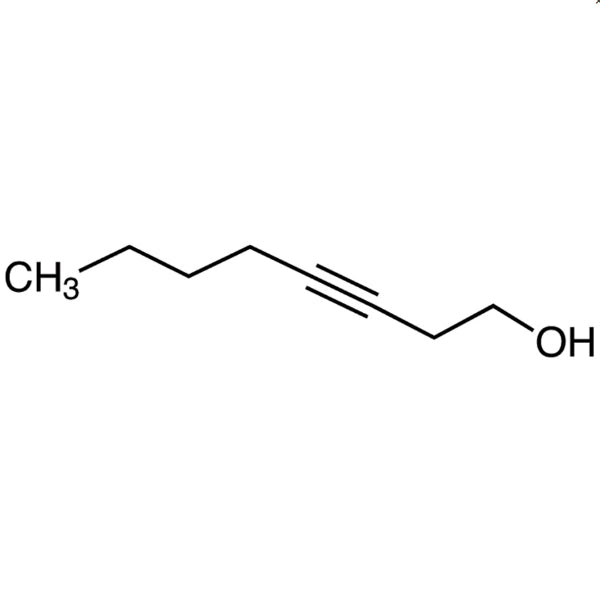
3-Octyn-1-ol from TCI, product code O0141, is an eight-carbon alkynyl alcohol. It has a primary hydroxyl group at one end of the chain and an internal carbon-carbon triple bond between the third and fourth carbons. Because one molecule carries two different functional groups, it is a useful non-heterocyclic building block in organic synthesis. The alcohol and the alkyne can be modified separately or one after the other. This lets researchers build more complex molecular frameworks in a planned way while keeping the number of synthetic steps low.
A main reason chemists choose this compound is that its internal alkyne can be reduced selectively. Reduction over a Lindlar catalyst gives the cis alkene, while dissolving-metal reduction gives the trans alkene. Either way, researchers get alkenyl alcohols with controlled double-bond geometry. This structural pattern is common in fragrance compounds, insect pheromones and natural products. The primary hydroxyl group is also easy to oxidize, esterify, protect or convert into a leaving group. That gives more flexibility when designing a synthetic route and makes the compound adaptable to many different target molecules.
For laboratories in Indonesia, 3-Octyn-1-ol is relevant to university organic chemistry research groups, natural product and pheromone studies, and teams working on flavor and fragrance chemistry. Research institutions studying agricultural pest control through pheromone-based methods can use it as a starting material for stereodefined alkenols. Graduate students and synthetic chemists will also find it a practical model substrate for teaching and exploring selective alkyne reduction and functional group transformations in a controlled laboratory setting.
- Stereoselective alkene synthesis: the internal triple bond can be reduced to either the cis alkene with a Lindlar catalyst or the trans alkene by dissolving-metal reduction, giving controlled geometry.
- Pheromone and natural product research: the resulting alkenyl alcohols match structural patterns found in insect pheromones and natural products, so the compound is a sensible starting material for these targets.
- Fragrance and aroma compound development: controlled-geometry alkenols made from this building block reflect motifs often found in aroma compounds, which supports flavor and fragrance research.
- Multistep organic synthesis: the hydroxyl and alkyne groups can be modified separately or one after the other, letting chemists build complex frameworks in fewer, well-planned steps.
- Functional group transformation studies: the primary alcohol can be oxidized, esterified, protected or converted into a leaving group, which makes it a versatile substrate for method development and teaching.
| Brand | TCI (product code O0141) |
|---|---|
| CAS number | 14916-80-4 |
| Molecular formula | — |
| Purity | — |
| Category | Chemistry > Building Blocks > Non-Heterocyclic Building Blocks |
| Pack sizes | as listed on the product page |
| Physical form | see the TCI product documentation and Certificate of Analysis |
| Storage | follow the conditions stated on the label and in the Safety Data Sheet (SDS) |
Store 3-Octyn-1-ol in its original, tightly closed container in a cool, dry, well-ventilated area, away from heat, open flames and strong oxidizing agents. Follow the storage conditions on the TCI label and in the Safety Data Sheet. Handle the material in a fume hood and wear suitable personal protective equipment, including chemical-resistant gloves, safety glasses and a lab coat. Avoid breathing vapors and avoid contact with skin and eyes. Reseal the container promptly after use to limit exposure to air and moisture. Dispose of waste according to local regulations and your institution's chemical safety procedures.
—
Produk Terkait
-
2-Octyn-1-ol TCI O0493
Regular price From Rp 1.458.450,00Regular price -
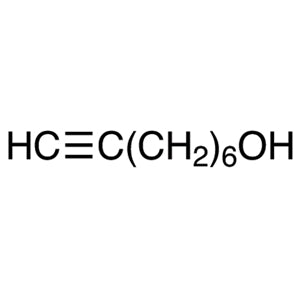
7-Octyn-1-ol TCI O0445
Regular price From Rp 1.431.150,00Regular price -
1-Octyn-3-ol TCI O0196
Regular price From Rp 1.696.800,00Regular price -
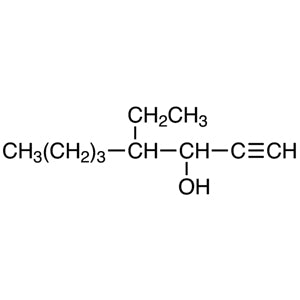
4-Ethyl-1-octyn-3-ol TCI E0270
Regular price From Rp 1.035.300,00Regular price -
(S)-1-Octyn-3-ol[omegaSide-ChainUnitforPGSynthesis] TCI O0235
Regular price From Rp 2.916.900,00Regular price


![32556-71-1 (S)-1-Octyn-3-ol [omega Side-Chain Unit for PG Synthesis] - AMI Scientific](http://amiscientific.com/cdn/shop/files/TCI2510O0235.jpg?v=1767131630&width=533)