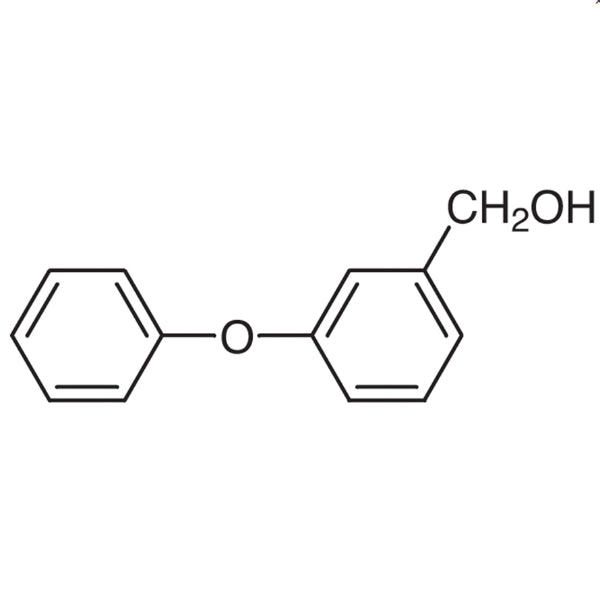
3-Phenoxybenzyl Alcohol from TCI is a benzylic alcohol with a phenoxy group at the meta position of the benzene ring. It is widely known as an important intermediate in the chemistry of synthetic pyrethroid insecticides, because the 3-phenoxybenzyl group forms the alcohol part of several pyrethroid esters. As a non-heterocyclic building block, it is used in laboratories for organic synthesis, agrochemical research, and the analysis of pesticide residues and their degradation products. It connects synthetic, analytical, and environmental chemistry.
Chemists choose this compound mainly because its benzylic hydroxyl group is easy to modify. The hydroxyl group can be esterified with carboxylic acids, oxidized to the corresponding aldehyde or carboxylic acid, or converted into a benzylic halide for substitution reactions. The diphenyl ether linkage is stable and gives the molecule a distinctive lipophilic framework. The compound is also closely linked to the metabolic and environmental degradation pathways of pyrethroids. This makes it useful as an analytical reference for researchers who study how these insecticides break down.
Pyrethroid insecticides are used very widely in Indonesia, both in agriculture and in controlling the mosquitoes that spread dengue fever. Residue testing laboratories, agricultural universities, and environmental research institutions can use this compound as a starting material for synthesizing pyrethroid-related structures, or as a comparison standard when studying pyrethroid degradation. Academic organic chemistry groups can also use it to teach and investigate esterification, oxidation, and substitution reactions on a well-defined aromatic scaffold.
Related TCI products
- Synthesis of pyrethroid esters: the 3-phenoxybenzyl group forms the alcohol part of several pyrethroid esters, so this compound is a direct starting material for building them.
- Pesticide residue analysis: because it is closely linked to pyrethroid metabolism and degradation, it can serve as an analytical reference when identifying breakdown products in samples.
- Environmental fate studies: research institutions studying how pyrethroids degrade in soil, water, and other matrices can use it as a comparison compound for degradation pathways.
- Functional group transformation research: its benzylic hydroxyl group can be esterified, oxidized to an aldehyde or carboxylic acid, or converted into a benzylic halide for further reactions.
- Agrochemical research and teaching: as a non-heterocyclic building block with a stable diphenyl ether framework, it suits university laboratories that explore structure and reactivity in insecticide chemistry.
| Brand | TCI (product code P0979) |
|---|---|
| CAS number | 13826-35-2 |
| Molecular formula | — |
| Purity | — |
| Category | Chemistry > Building Blocks > Non-Heterocyclic Building Blocks |
| Pack sizes | available in the pack sizes offered by TCI for this product code |
| Physical form | — |
| Storage | store according to the manufacturer's label and Safety Data Sheet |
- Structure: benzylic alcohol with a phenoxy group at the meta position of the benzene ring
Keep 3-Phenoxybenzyl Alcohol in its original, tightly closed manufacturer's container, in a cool, dry, well-ventilated area away from direct sunlight, heat sources, and strong oxidizing agents. Follow the storage conditions printed on the TCI label and in the Safety Data Sheet. Handle the compound in a fume hood or a well-ventilated workspace, and wear chemical-resistant gloves, safety glasses, and a lab coat. Avoid contact with skin and eyes and avoid breathing vapors. Label all working solutions clearly, and dispose of waste according to institutional and local chemical waste regulations.
—
Produk Terkait
-
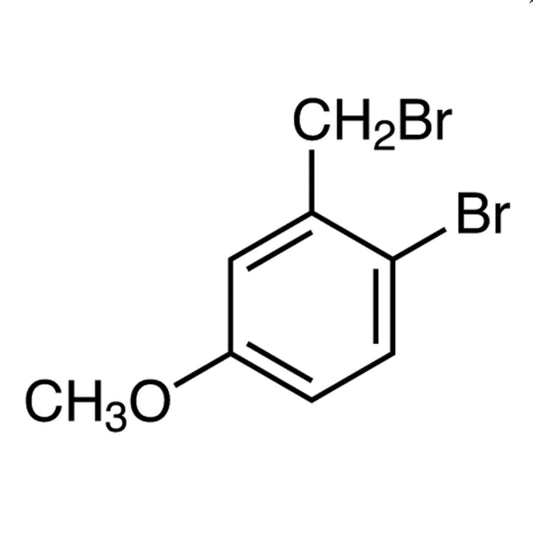
2-Bromo-5-methoxybenzylBromide TCI B4423
Regular price From Rp 1.298.850,00Regular price -
5-Bromo-2-methoxybenzylAlcohol TCI B3369
Regular price From Rp 1.035.300,00Regular price -
5-Bromo-2-hydroxybenzylAlcohol TCI B2164
Regular price From Rp 557.550,00Regular price -
3-Bromo-4-methoxybenzylCyanide TCI B1455
Regular price From Rp 1.246.350,00Regular price -
1-Methyl-4-phenoxybenzene TCI M3776
Regular price From Rp 980.700,00Regular price -
1-Methoxy-4-phenoxybenzene TCI M3535
Regular price From Rp 2.279.550,00Regular price -
(4-Methoxybenzyl)MethylEther TCI M2305
Regular price Rp 3.551.100,00Regular price -
3-MethoxybenzylAlcohol TCI M1101
Regular price Rp 1.273.650,00Regular price