


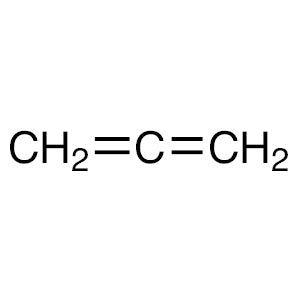
Allene, also known as 1,2-propadiene, is an organic compound with a unique molecular structure featuring two adjacent double bonds. This distinctive structure makes it a valuable reagent in synthetic chemistry, particularly in the creation of complex organic molecules. It is widely used in the synthesis of aromatic and heterocyclic compounds, where its reactivity plays a crucial role. Allene's ability to participate in various chemical reactions, such as isomerization and addition, makes it a versatile tool in organic research. Its presence in laboratory settings is essential for the development of new chemical compounds and advanced materials.
Allene is known for its high reactivity and unique chemical properties, which make it a preferred choice for specialized applications. It has a low boiling point and is highly volatile, which requires careful handling. Its reactivity allows it to undergo rapid and specific chemical transformations under controlled conditions. These characteristics make it suitable for use in reactions that require precise control over temperature and catalysts. The compound's ability to form stable intermediates in synthetic pathways further enhances its utility in chemical synthesis.
In Indonesian laboratories, Allene is commonly used in organic chemistry research, including the development of pharmaceutical compounds, industrial chemicals, and new synthetic materials. Its role in the synthesis of complex molecules and its reactivity under specific conditions make it an important reagent for researchers. The compound is often used in academic and industrial settings where advanced chemical synthesis is required. Its unique properties continue to drive innovation in chemical research across various fields.
- Organic Synthesis: Allene is widely used in the synthesis of aromatic and heterocyclic compounds due to its unique reactivity and ability to form complex molecular structures.
- Isomerization Reactions: Its ability to participate in isomerization reactions makes it valuable for creating different molecular configurations under controlled conditions.
- Addition Reactions: Allene's reactivity allows it to be a key component in addition reactions, enabling the formation of new chemical bonds in synthetic pathways.
- Pharmaceutical Development: It is used in the development of new pharmaceutical compounds, where its unique structure helps in the creation of complex drug molecules.
- Industrial Chemical Production: Allene is utilized in the production of various industrial chemicals, contributing to the development of advanced materials and specialty compounds.
| Brand | TCI |
|---|---|
| CAS number | 463-49-0 |
| Molecular formula | — |
| Purity | — |
| Category | Chemistry > Synthetic Reagents > Specialty Gases [Synthetic Reagents] |
| Pack sizes | — |
| Physical form | Liquid (in N,N-Dimethylformamide solution) |
| Storage | Store in a cool, dark place away from heat and direct sunlight |
Allene should be stored in a cool, dark place away from heat and direct sunlight to maintain its stability. It is recommended to use suitable containers that are resistant to chemical reactions, such as glass or high-quality plastic vessels. Due to its high reactivity and volatility, it is important to handle Allene with care, using appropriate personal protective equipment. The compound should be kept in a well-ventilated area to prevent the accumulation of vapors. Regular monitoring of storage conditions is essential to ensure the safety and integrity of the material. Proper labeling and secure storage are also necessary to prevent accidental exposure and ensure safe laboratory practices.
—
Produk Terkait
-
Allene(ca.2%inTetrahydrofuran,ca.0.4mol/L) TCI P2847
Regular price From Rp 1.298.850,00Regular price -
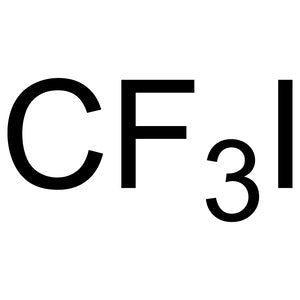
Trifluoroiodomethane(ca.10%inN,N-Dimethylformamide,ca.0.5mol/L) TCI T4423
Regular price From Rp 1.776.600,00Regular price -
Acetaldehyde(ca.2%inN,N-Dimethylformamide)[forDetectionofPrimaryandSecondaryAmines] TCI A1640
Regular price Rp 1.696.800,00Regular price -
Propyne(ca4%inN,N-Dimethylformamide,ca10mol/L) TCI P2152
Regular price From Rp 1.087.800,00Regular price -
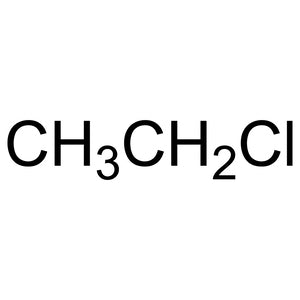
Chloroethane(ca.15%inN,N-Dimethylformamide,ca.2mol/L) TCI C4176
Regular price Rp 1.803.900,00Regular price -
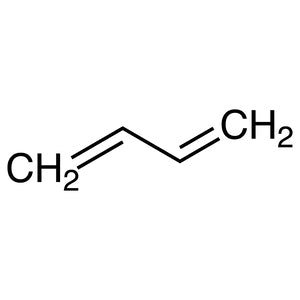
1,3-Butadiene(ca.5%inN,N-Dimethylformamide,ca.0.9mol/L) TCI B6533
Regular price From Rp 1.405.950,00Regular price -
PicrylsulfonicAcid(ca.1%inN,N-Dimethylformamide)[forDetectionofPrimaryAmines] TCI P1447
Regular price From Rp 1.670.550,00Regular price -
4-(4-Morpholinyl)benzoicAcid(contains05%N,N-Dimethylformamideatmaximum) TCI M3100
Regular price From Rp 848.400,00Regular price

![75-07-0 Acetaldehyde (ca. 2% in N,N-Dimethylformamide) [for Detection of Primary and Secondary Amines] - AMI Scientific](http://amiscientific.com/cdn/shop/files/TCI2510A1640.jpg?v=1768203865&width=533)

![2508-19-2 Picrylsulfonic Acid (ca. 1% in N,N-Dimethylformamide) [for Detection of Primary Amines] - AMI Scientific](http://amiscientific.com/cdn/shop/files/TCI2510P1447.jpg?v=1769057414&width=533)
