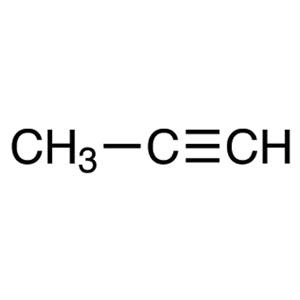
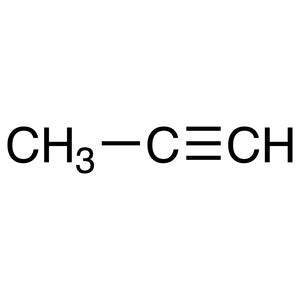
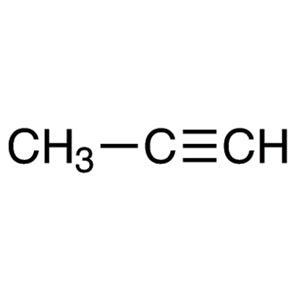
Propyne (C₃H₄), with CAS number 74-99-7, is an organic compound with an aliphatic structure widely used in various chemical reactions, particularly in conjugation chemistry and click chemistry. This product is a liquid solution containing approximately 4% propyne dissolved in N,N-Dimethylformamide (DMF) at a concentration of about 10 mol/L. It serves as a versatile reagent in laboratory settings, enabling the synthesis of complex organic compounds. Its role is critical in research areas such as biochemistry and pharmacology, where precise chemical reactions are essential.
Propyne’s chemical properties make it a preferred choice for researchers due to its reactivity in specific environments. It is particularly effective in click chemistry reactions, allowing for the formation of stable chemical bonds with high specificity and efficiency. The use of DMF as a solvent simplifies its application in organic synthesis, as it provides a ready-to-use solution that reduces preparation time. The high concentration of propyne in DMF ensures consistent performance and reliability in experimental procedures.
In Indonesian laboratories, propyne is commonly used in research focused on organic synthesis and molecular conjugation. Its availability in a ready-to-use form makes it ideal for academic and industrial research. Due to its reactivity, it is often employed in controlled environments where precise chemical reactions are required. Its application is especially relevant in biochemistry and pharmaceutical research, where its properties support the development of new compounds and therapeutic agents.
- Conjugation Chemistry: Propyne is ideal for conjugation reactions due to its reactivity and ability to form stable bonds under controlled conditions.
- Click Chemistry Reactions: Its participation in click chemistry allows for efficient and specific bond formation, making it essential in synthetic chemistry.
- Organic Synthesis: The ready-to-use form of propyne simplifies the synthesis of complex organic compounds in research settings.
- Biochemical Research: Its application in biochemistry supports the development of new compounds and molecular interactions.
- Pharmaceutical Development: Propyne is used in the synthesis of pharmaceutical compounds, aiding in drug discovery and development.
| Brand | TCI |
|---|---|
| CAS number | 74-99-7 |
| Molecular formula | — |
| Purity | — |
| Category | Chemistry > Chemical Biology > Conjugation Chemistry/Click Chemistry |
| Pack sizes | — |
| Physical form | Liquid solution in N,N-Dimethylformamide |
| Storage | Store in a cool, dark place away from heat and oxygen exposure. |
Propyne should be stored in a cool, dark place, away from heat and direct sunlight to maintain its chemical stability. It is recommended to use airtight containers to prevent exposure to oxygen, which can increase its reactivity. Due to its flammable nature, it should be kept in a well-ventilated area and away from any potential ignition sources. In laboratory settings, it is important to handle propyne with care, using appropriate personal protective equipment such as gloves and safety goggles. The solution should only be used in controlled environments to ensure safety and optimal performance in chemical reactions.
—
Produk Terkait
-
Propyne(ca2%inHexane,ca03mol/L) TCI P3067
Regular price From Rp 1.087.800,00Regular price -
Propyne(ca2%inToluene,ca04mol/L) TCI P3066
Regular price From Rp 1.087.800,00Regular price -
Propyne(ca2%inDichloromethane,ca07mol/L) TCI P3065
Regular price From Rp 1.087.800,00Regular price -
Propyne(ca5%inTetrahydrofuran,ca1mol/L) TCI P2295
Regular price From Rp 1.220.100,00Regular price -
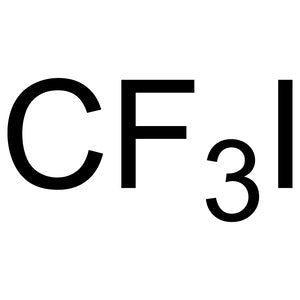
Trifluoroiodomethane(ca.10%inN,N-Dimethylformamide,ca.0.5mol/L) TCI T4423
Regular price From Rp 1.776.600,00Regular price -
Acetaldehyde(ca.2%inN,N-Dimethylformamide)[forDetectionofPrimaryandSecondaryAmines] TCI A1640
Regular price Rp 1.696.800,00Regular price -
Allene(ca.2%inN,N-Dimethylformamide,ca.0.4mol/L) TCI P2846
Regular price From Rp 1.353.450,00Regular price -
Chloroethane(ca.15%inN,N-Dimethylformamide,ca.2mol/L) TCI C4176
Regular price Rp 1.803.900,00Regular price

![75-07-0 Acetaldehyde (ca. 2% in N,N-Dimethylformamide) [for Detection of Primary and Secondary Amines] - AMI Scientific](http://amiscientific.com/cdn/shop/files/TCI2510A1640.jpg?v=1768203865&width=533)