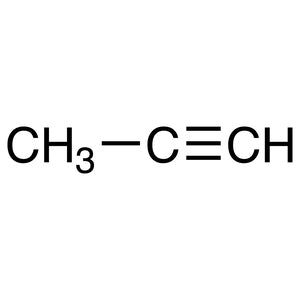
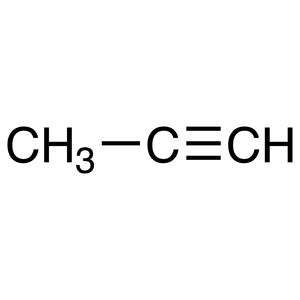
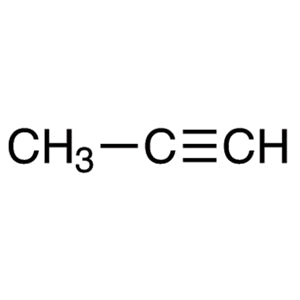
Propyne, with CAS number 74-99-7, is a highly reactive chemical compound widely used in laboratory settings for various chemical reactions. It is a colorless gas that can be dissolved in organic solvents such as hexane. In the laboratory, propyne serves as a versatile building block for the synthesis of complex organic compounds. Its reactivity makes it an essential tool for chemists working on reactions that require high reactivity and precise control over carbon-carbon bond formation.
Propyne is known for its strong chemical reactivity, especially under conditions such as the presence of alkali metals or high temperatures. This reactivity makes it ideal for substitution and addition reactions, where it can act as both a reagent and a source of carbon atoms. Its solubility in hexane simplifies handling and usage, as it does not require special storage conditions. This makes it a practical and efficient choice for laboratory applications.
In Indonesian laboratories, propyne is commonly used in organic chemistry research, particularly in academic institutions and research centers. It is an essential part of the basic chemical inventory required for experiments involving carbon-based compounds. Its availability and reactivity make it a preferred choice for researchers and students alike in the field of organic synthesis.
TCI brochures (PDF)
- Safely Handleable Volatile Solutions 2024-05-02 · p. 2
- Click Chemistry 2026-09-08 · p. 10
Related TCI products
- TCI P3065 74-99-7 Propyne (ca 2% in Dichloromethane, ca 07 mol/L)
- TCI P3066 74-99-7 Propyne (ca 2% in Toluene, ca 04 mol/L)
- TCI P2295 74-99-7 Propyne (ca 5% in Tetrahydrofuran, ca 1mol/L)
- TCI P2152 74-99-7 Propyne (ca 4% in N,N-Dimethylformamide, ca 10mol/L)
- TCI P1956 10147-11-2 3-Phenyl-1-propyne (stabilized with BHT)
- TCI P0219 673-32-5 1-Phenyl-1-propyne
- Organic Synthesis: Propyne is used in the synthesis of complex organic molecules due to its reactivity and ability to form carbon-carbon bonds.
- Substitution Reactions: Its high reactivity makes it suitable for substitution reactions where a specific carbon atom needs to be replaced.
- Addition Reactions: Propyne is ideal for addition reactions, especially in the presence of catalysts or under controlled temperature conditions.
- Research and Development: It is commonly used in R&D settings to test new chemical processes and reaction mechanisms.
- Educational Purposes: It is a valuable teaching tool in chemistry laboratories for demonstrating reactivity and synthetic pathways.
| Brand | TCI |
|---|---|
| CAS number | 74-99-7 |
| Molecular formula | — |
| Purity | — |
| Category | Chemistry > Building Blocks > Non-Heterocyclic Building Blocks |
| Pack sizes | — |
| Physical form | Gas dissolved in hexane |
| Storage | — |
Propyne should be stored in a cool, dry, and well-ventilated area away from sources of ignition. It is recommended to use containers made of stainless steel or other non-reactive materials to prevent any chemical interactions. Due to its flammable nature, it should be kept in a sealed container and stored in a designated chemical storage cabinet. Regular inspection of the container and storage area is essential to ensure safety. In laboratory settings, proper personal protective equipment such as gloves and safety goggles should always be worn when handling propyne. Additionally, it is important to follow all local safety regulations and guidelines for the storage and use of flammable substances.
—
Product Categories
Produk Terkait
-
Propyne(ca2%inDichloromethane,ca07mol/L) TCI P3065
Regular price From Rp 1.087.800,00Regular priceRp 760.200,00Sale price From Rp 1.087.800,00 -
Propyne(ca2%inToluene,ca04mol/L) TCI P3066
Regular price From Rp 1.087.800,00Regular priceRp 760.200,00Sale price From Rp 1.087.800,00 -
Propyne(ca5%inTetrahydrofuran,ca1mol/L) TCI P2295
Regular price From Rp 1.220.100,00Regular priceRp 852.600,00Sale price From Rp 1.220.100,00 -
Propyne(ca4%inN,N-Dimethylformamide,ca10mol/L) TCI P2152
Regular price From Rp 1.087.800,00Regular priceRp 760.200,00Sale price From Rp 1.087.800,00 -
3-Phenyl-1-propyne(stabilizedwithBHT) TCI P1956
Regular price From Rp 1.273.650,00Regular priceRp 890.400,00Sale price From Rp 1.273.650,00 -
1-Phenyl-1-propyne TCI P0219
Regular price From Rp 1.696.800,00Regular priceRp 1.186.500,00Sale price From Rp 1.696.800,00 -
1-Butene(ca.10%inHexane) TCI B4410
Regular price From Rp 955.500,00Regular priceRp 667.800,00Sale price From Rp 955.500,00 -
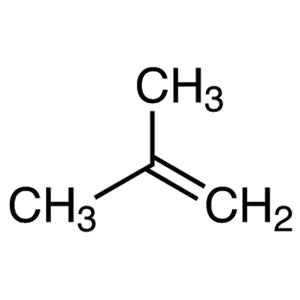
Isobutene(ca.9%inHexane) TCI I1083
Regular price From Rp 769.650,00Regular priceRp 537.600,00Sale price From Rp 769.650,00