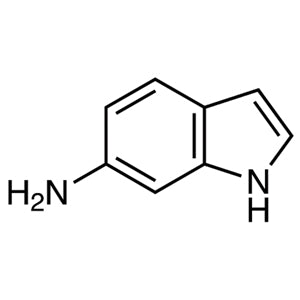
5-Cyanoindole is a heterocyclic compound derived from indole, carrying a nitrile group at the 5-position of the benzene ring. In the laboratory it serves as an important building block in organic synthesis because it combines two features at once: the indole framework that forms the core of many bioactive compounds, and the nitrile group that ranks among the most versatile functional groups in organic chemistry. This combination makes 5-Cyanoindole a frequent starting point for synthetic routes leading toward drug candidates, dyes, and fluorescent probe compounds.
The property that makes it a preferred choice lies in the flexibility of the nitrile group as a centre of transformation. The nitrile can be hydrolysed to a carboxylic acid or an amide, reduced to a primary amine, reacted with organometallic reagents to give ketones, or converted into a tetrazole ring that is often used as a bioisosteric replacement for the carboxylic acid group in drug design. In addition, the nitrile group is electron-withdrawing, so it lowers the electron density of the ring and influences the selectivity of subsequent substitution reactions. The group also shows a sharp and characteristic infrared absorption, so the progress of a reaction is easy to monitor.
In Indonesian laboratories, this material is typically used in university and institutional research groups working on organic synthesis, medicinal chemistry, and materials chemistry, as well as in the development units of pharmaceutical and fine chemical producers. It is generally handled at bench scale for route exploration and intermediate preparation, where a well-defined heterocyclic building block shortens the path to a target molecule and keeps the synthesis reproducible from one batch of work to the next.
- Medicinal chemistry intermediate synthesis: the indole core appears in many bioactive compounds, so this building block gives researchers a ready-made scaffold for elaborating drug candidate structures.
- Tetrazole bioisostere preparation: the nitrile group converts into a tetrazole ring, a widely used replacement for carboxylic acid functionality when tuning the properties of a drug design.
- Primary amine route development: reduction of the nitrile delivers an aminomethyl handle on the indole ring, opening access to amide couplings and further nitrogen-based chemistry.
- Carboxylic acid and amide synthesis: hydrolysis of the nitrile gives either the acid or the amide, letting one starting material serve two different downstream targets.
- Fluorescent probe and dye research: the indole framework combined with an electron-withdrawing nitrile supports work on probe compounds and colourant systems that depend on electronic character.
| Brand | TCI |
|---|---|
| CAS number | 15861-24-2 |
| Molecular formula | — |
| Purity | — |
| Category | Chemistry > Building Blocks > Heterocyclic Building Blocks |
| Pack sizes | available in standard TCI research-scale packaging; please confirm the size options when ordering |
| Physical form | — |
| Storage | keep in a cool, dry place in the tightly closed original container |
- Product code: C1491
Store 5-Cyanoindole in its tightly closed original container in a cool, dry, well-ventilated area, away from direct sunlight, heat sources, moisture, and strong oxidising agents. Amber glass or the supplier's original packaging is suitable, and containers should be resealed promptly after each use to limit exposure to air and humidity. Handle the material in a fume hood using standard personal protective equipment: safety goggles, chemical-resistant gloves, and a laboratory coat. Avoid inhalation of dust and direct skin or eye contact. Weigh and transfer with clean, dry equipment to prevent cross-contamination, label all secondary containers clearly, and consult the manufacturer's safety data sheet before first use and for disposal of residues.
—
Produk Terkait
-
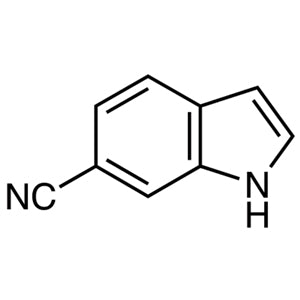
6-Cyanoindole TCI C2084
Regular price Rp 4.743.900,00Regular price -
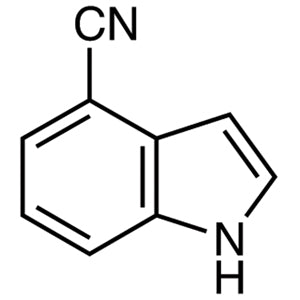
4-Cyanoindole TCI C2083
Regular price From Rp 955.500,00Regular price -
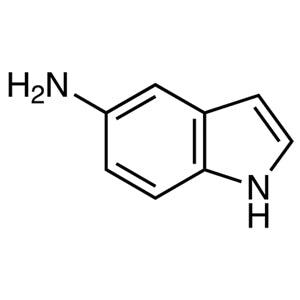
5-Aminoindole TCI A2071
Regular price From Rp 1.035.300,00Regular price -
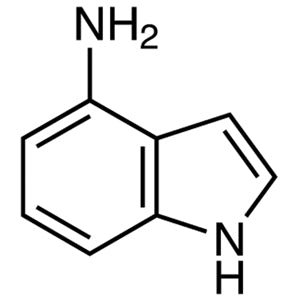
4-Aminoindole TCI A2070
Regular price From Rp 1.298.850,00Regular price -
6-Aminoindole TCI A2067
Regular price Rp 1.856.400,00Regular price