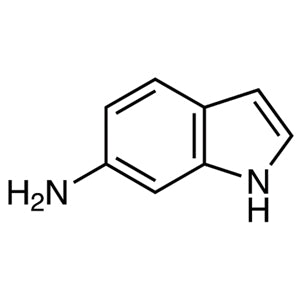
6-Aminoindole is a chemical compound classified under the heterocyclic category, featuring a basic indole structure with an amino group substituted at the 6th position. This compound plays a crucial role in laboratory settings as a building block for the synthesis of complex molecules, particularly in organic and pharmaceutical research. Its unique chemical structure allows it to serve as a versatile starting material for various chemical transformations, enabling researchers to design and develop compounds with specific biological activities. Due to its structural flexibility, 6-Aminoindole is widely used in the creation of heterocyclic compounds, which are essential in drug development and chemical innovation.
The chemical properties of 6-Aminoindole make it a preferred choice for laboratory applications. It exhibits stability under certain conditions but remains highly reactive in the presence of elevated temperatures, catalysts, or specific solvents. This reactivity allows it to participate effectively in substitution, reduction, and oxidation reactions. Additionally, its good solubility in organic solvents simplifies handling and processing in experimental procedures. These characteristics make it a reliable and efficient reagent for a wide range of chemical syntheses.
In Indonesian laboratories, 6-Aminoindole is commonly utilized by researchers in organic chemistry, pharmacology, and biochemistry. Its role in synthesizing bioactive compounds and heterocyclic structures makes it a valuable resource for academic and industrial research. The compound is frequently employed in studies aimed at developing new drugs and understanding molecular interactions. Its availability and chemical versatility contribute to its widespread use in both academic and applied research settings.
- Organic synthesis applications benefit from 6-Aminoindole due to its structural versatility and reactivity in forming complex heterocyclic compounds.
- Pharmaceutical research utilizes this compound as a key building block for the development of bioactive molecules with therapeutic potential.
- Biochemical studies often incorporate 6-Aminoindole to investigate molecular interactions and biological activity in drug discovery processes.
- Heterocyclic compound synthesis relies on 6-Aminoindole as a foundational reagent for creating diverse chemical structures with unique properties.
- Chemical reaction testing frequently employs 6-Aminoindole to evaluate reaction mechanisms and optimize synthetic pathways in laboratory settings.
| Brand | TCI |
|---|---|
| CAS number | 5318-27-4 |
| Molecular formula | — |
| Purity | — |
| Category | Chemistry > Building Blocks > Heterocyclic Building Blocks |
| Pack sizes | Available in various quantities as per standard laboratory supply |
| Physical form | Solid powder |
| Storage | Store in a cool, dry place away from direct sunlight and moisture |
6-Aminoindole should be stored in a cool, dry environment to maintain its chemical stability and prevent degradation. It is recommended to keep the compound in a sealed container to avoid exposure to moisture and air, which can affect its reactivity. Suitable storage containers include glass or high-density polyethylene vessels that are resistant to chemical interactions. In laboratory settings, it is essential to handle the compound with appropriate personal protective equipment, such as gloves and safety goggles, to ensure safe handling. Proper labeling of storage containers is also important for identification and safety. Regular monitoring of storage conditions ensures the compound remains suitable for use in chemical syntheses and research applications.
—
Produk Terkait
-
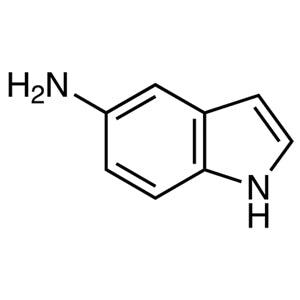
5-Aminoindole TCI A2071
Regular price From Rp 1.035.300,00Regular price -
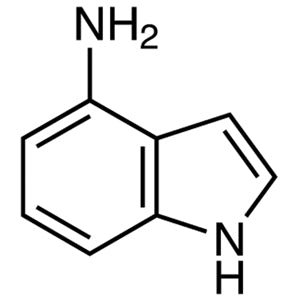
4-Aminoindole TCI A2070
Regular price From Rp 1.298.850,00Regular price -
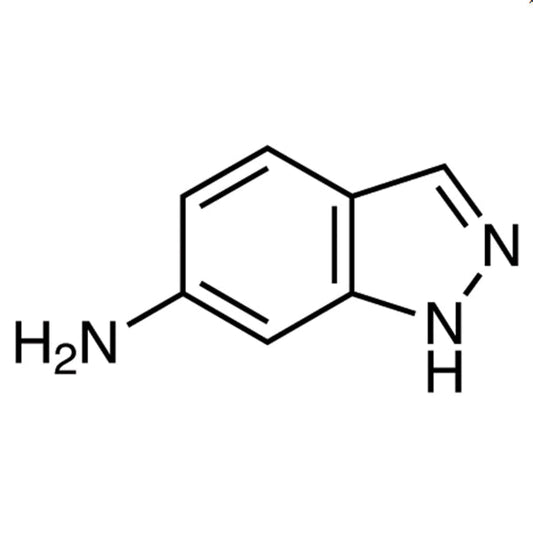
6-Aminoindazole TCI A0798
Regular price Rp 2.199.750,00Regular price -
5-Aminoindazole TCI A0797
Regular price From Rp 1.378.650,00Regular price -
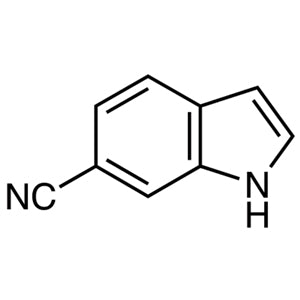
6-Cyanoindole TCI C2084
Regular price Rp 4.743.900,00Regular price -
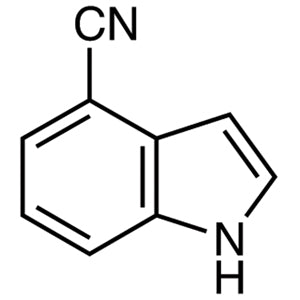
4-Cyanoindole TCI C2083
Regular price From Rp 955.500,00Regular price -
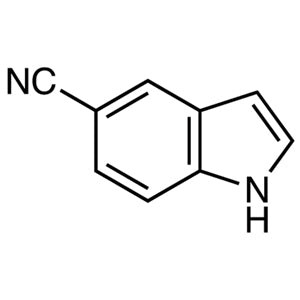
5-Cyanoindole TCI C1491
Regular price From Rp 1.087.800,00Regular price