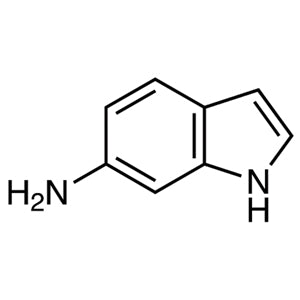
6-Cyanoindole from TCI, supplied under catalogue code C2084, is an indole derivative carrying a cyano group at the sixth position of the bicyclic indole framework. The compound belongs to the family of heterocyclic building blocks — high-value starting materials that synthetic chemists use to assemble larger and more elaborate molecules. Within a working laboratory it functions as a defined intermediate rather than a finished reagent, giving researchers a reliable entry point into indole chemistry without the need to construct the heterocyclic core themselves from simpler precursors.
The indole nucleus is itself one of the most important scaffolds in medicinal chemistry, appearing in a great many bioactive compounds of both natural and synthetic origin, which is why functionalised derivatives of it are so sought after in drug discovery programmes and in organic materials development. The principal attraction of this particular compound lies in the chemical versatility of the cyano group. A nitrile can be hydrolysed to a carboxylic acid or an amide, reduced to a primary amine, or converted into a tetrazole ring, so that a single starting material opens several onward synthetic routes. In addition, the electron-withdrawing character of the cyano group alters the electron density distribution across the indole ring and influences the selectivity of subsequent substitution reactions. This combination of a clearly defined substituent position and directable reactivity is what leads chemists to select it.
In Indonesian laboratories, 6-Cyanoindole is typically encountered in university research groups, pharmaceutical research units, and contract synthesis facilities engaged in heterocyclic chemistry. It is used at research and development scale rather than in bulk production, generally weighed out in small quantities for exploratory reactions, route scouting, and the preparation of compound libraries. Institutions working on medicinal chemistry projects or on organic functional materials are the usual purchasers, ordering it alongside other catalogue building blocks for multi-step synthetic campaigns.
- Medicinal chemistry scaffold synthesis: the indole core is present in numerous bioactive natural and synthetic compounds, making this functionalised derivative a direct entry point into drug discovery series.
- Nitrile-to-carboxylic acid or amide conversion: the cyano group can be hydrolysed under standard conditions, allowing chemists to install acid or amide handles at a defined ring position.
- Primary amine preparation: reduction of the nitrile function yields an aminomethyl substituent on the indole ring, providing a basic nitrogen centre for further derivatisation or salt formation.
- Tetrazole ring construction: the cyano group can be converted into a tetrazole, a transformation widely valued because tetrazoles serve as recognised carboxylic acid bioisosteres in medicinal chemistry.
- Directed substitution studies: the electron-withdrawing cyano group modifies electron density across the indole ring, giving chemists a means of influencing the selectivity of subsequent substitution reactions.
| Brand | TCI (Tokyo Chemical Industry), catalogue code C2084 |
|---|---|
| CAS number | 15861-36-6 |
| Molecular formula | — |
| Purity | — |
| Category | Chemistry > Building Blocks > Heterocyclic Building Blocks |
| Pack sizes | available in standard TCI research-scale catalogue pack sizes; please confirm the packing option required when ordering |
| Physical form | — |
| Storage | store under the conditions stated on the manufacturer's label and safety data sheet |
- Chemical name: 6-Cyanoindole
Keep 6-Cyanoindole in its original tightly closed container, stored in a cool, dry, well-ventilated area away from direct sunlight, heat sources, moisture, and incompatible materials such as strong oxidising agents. Amber glass or the supplier's original packaging is suitable for keeping the material protected from light and atmospheric humidity. Handle the compound in a fume hood using safety goggles, chemical-resistant gloves, and a laboratory coat, and avoid generating or inhaling dust during weighing and transfer. Always consult the manufacturer's safety data sheet before use, label all prepared solutions clearly, and dispose of residues and contaminated materials in accordance with applicable chemical waste regulations.
—
Produk Terkait
-
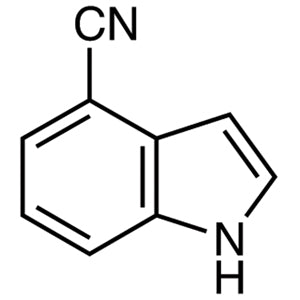
4-Cyanoindole TCI C2083
Regular price From Rp 955.500,00Regular price -
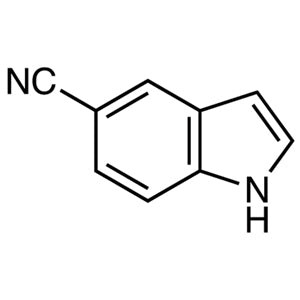
5-Cyanoindole TCI C1491
Regular price From Rp 1.087.800,00Regular price -
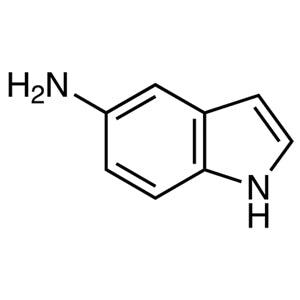
5-Aminoindole TCI A2071
Regular price From Rp 1.035.300,00Regular price -
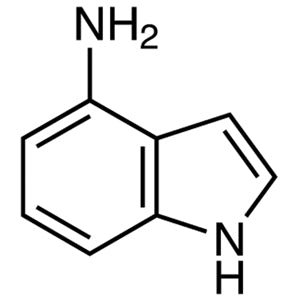
4-Aminoindole TCI A2070
Regular price From Rp 1.298.850,00Regular price -
6-Aminoindole TCI A2067
Regular price Rp 1.856.400,00Regular price