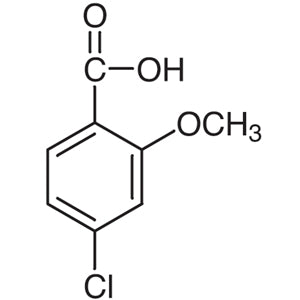
4-Chloro-2-methoxybenzoic acid is an organic compound belonging to the benzoic acid family, bearing two substituents on its aromatic ring: a chlorine atom at position 4 and a methoxy group at position 2. As part of the non-heterocyclic building block group, this compound counts among the most frequently sought starting materials in organic synthesis because it provides a pre-modified aromatic framework, allowing researchers to avoid building the basic structure from scratch. In the laboratory, the material serves both as an intermediate and as a starting material in a broad range of reactions, including esterification, amidation, coupling reactions, and the preparation of other, more valuable carboxylic acid derivatives.
The combination of chlorine and methoxy substituents gives this compound an attractive electronic profile: the methoxy group acts as an electron donor, while the chlorine atom acts as an electron-withdrawing group. This balanced electronic character influences the reactivity of the carboxyl moiety and the molecule as a whole, making the compound a versatile handle for designing more complex target molecules. The reactive carboxylic acid group provides a strategic point of attack for forming new bonds, which is why chemists frequently select this building block when planning multi-step syntheses, whether for academic research or for the development of industrially relevant compounds. Its well-defined structure and consistent behavior make it a dependable and reproducible choice for routine work.
In Indonesian laboratories, this compound is typically applied in organic chemistry research and teaching settings, where it supports undergraduate and postgraduate synthesis projects, method development, and the preparation of novel derivatives. Researchers commonly employ it when constructing libraries of substituted benzoic acid analogues, studying structure–activity relationships, or developing intermediates for pharmaceutical and agrochemical candidates. Because it is a commercially available, ready-to-use building block, it helps local research groups shorten their synthetic routes and accelerate experimental progress, making it a practical addition to the shelves of university, institute, and industry laboratories across the country.
Related TCI products
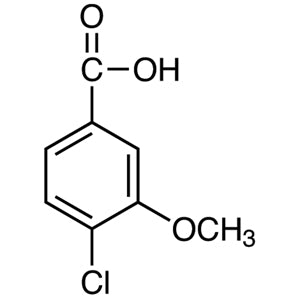
- TCI C3304 85740-98-3 4-Chloro-3-methoxybenzoic Acid
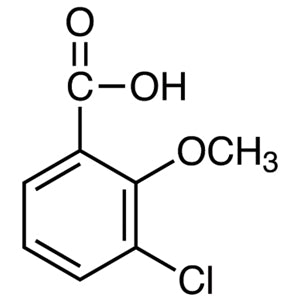
- TCI C3261 3260-93-3 3-Chloro-2-methoxybenzoic Acid
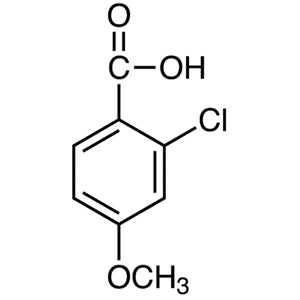
- TCI C3077 21971-21-1 2-Chloro-4-methoxybenzoic Acid
- TCI C2755 6280-89-3 2-Chloro-5-methoxybenzoic Acid
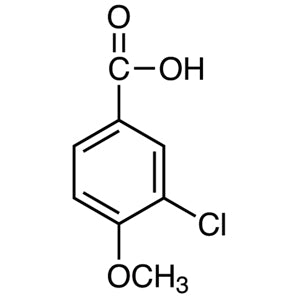
- TCI C2550 37908-96-6 3-Chloro-4-methoxybenzoic Acid
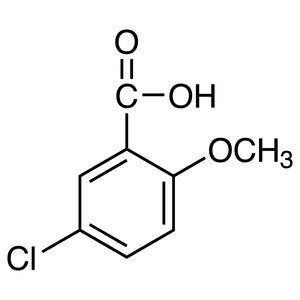
- TCI C1539 3438-16-2 5-Chloro-2-methoxybenzoic Acid
- Esterification: The reactive carboxylic acid group readily forms esters with alcohols, making this compound a convenient substrate for preparing substituted benzoate esters that serve as useful synthetic intermediates.
- Amidation: The carboxyl group can be converted into amides under standard coupling conditions, enabling the construction of amide-linked products that are common in pharmaceutical lead discovery.
- Cross-coupling reactions: The aromatic ring carrying a halogen and an electron-donating group offers a suitable platform for transition-metal-catalyzed coupling, allowing attachment of diverse functional fragments.
- Building complex molecular scaffolds: As a pre-functionalized aromatic building block, it lets researchers introduce a substituted benzene core into larger structures without lengthy multi-step construction.
- Derivatization for analytical standards: The compound can serve as a starting point for preparing carboxylic acid derivatives used as analytical standards or reference materials in method validation.
| Brand | TCI |
|---|---|
| CAS number | 57479-70-6 |
| Molecular formula | — |
| Purity | — |
| Category | Chemistry > Building Blocks > Non-Heterocyclic Building Blocks |
| Pack sizes | standard research pack sizes; please confirm current availability with the supplier |
| Physical form | — |
| Storage | keep in a cool, dry place, protected from direct sunlight and moisture |
- Product: TCI C2076 — 4-Chloro-2-methoxybenzoic Acid
Store the product in a cool, dry, and well-ventilated area, protected from direct sunlight and excessive moisture. Keep the container tightly closed when not in use to preserve the integrity of the compound. Use suitable laboratory containers, such as the original bottle or an equivalent chemically resistant vessel, and avoid transferring the material into food or beverage containers. Wear appropriate personal protective equipment, including gloves and safety goggles, and handle the substance in a fume hood or well-ventilated workspace. Avoid inhalation of dust and contact with skin and eyes, and always follow standard laboratory hygiene practices.
—
Produk Terkait
-
4-Chloro-3-methoxybenzoicAcid TCI C3304
Regular price From Rp 1.246.350,00Regular price -
3-Chloro-2-methoxybenzoicAcid TCI C3261
Regular price From Rp 769.650,00Regular price -
2-Chloro-4-methoxybenzoicAcid TCI C3077
Regular price From Rp 1.298.850,00Regular price -
2-Chloro-5-methoxybenzoicAcid TCI C2755
Regular price Rp 505.050,00Regular price -
3-Chloro-4-methoxybenzoicAcid TCI C2550
Regular price Rp 2.411.850,00Regular price -
5-Chloro-2-methoxybenzoicAcid TCI C1539
Regular price Rp 1.008.000,00Regular price -
3-Bromo-2-methoxybenzoicAcid TCI B5262
Regular price From Rp 928.200,00Regular price -
5-Bromo-2-methoxybenzoicAcid TCI B4741
Regular price From Rp 584.850,00Regular price