3-Bromo-2-methoxybenzoic Acid is a versatile organic compound widely used in laboratory settings for its reactivity and structural versatility. As a building block in organic synthesis, it serves as a key intermediate in the development of complex molecules. Its aromatic structure, combined with bromo and methoxy substituents, makes it a valuable tool for chemists seeking to modify molecular frameworks. This compound is commonly found in research laboratories, where it supports the synthesis of pharmaceuticals, agrochemicals, and industrial chemicals. Its role in facilitating chemical transformations underscores its importance in both academic and industrial research.
The chemical properties of 3-Bromo-2-methoxybenzoic Acid make it a preferred choice for synthetic chemists. The presence of bromo and methoxy groups enhances its reactivity and polarity, enabling it to participate in various reaction mechanisms such as nucleophilic substitution and electrophilic aromatic substitution. The bromo group contributes to the molecule’s electrophilicity, while the methoxy group increases its polarity, making it suitable for a wide range of synthetic pathways. These characteristics allow it to be used in esterification, coupling reactions, and other functional group transformations, making it a reliable reagent in organic chemistry.
In Indonesian laboratories, 3-Bromo-2-methoxybenzoic Acid is frequently used in scientific research and educational settings. It is a staple in academic institutions and research centers, supporting the development of new compounds and the teaching of organic chemistry principles. Its stability and ease of modification make it an essential component in both basic and advanced chemical studies. As a result, it plays a crucial role in advancing scientific knowledge and innovation in the region.
Related TCI products
- TCI B4741 2476-35-9 5-Bromo-2-methoxybenzoic Acid
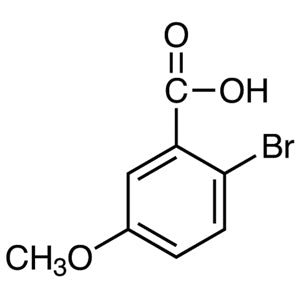
- TCI B3846 22921-68-2 2-Bromo-5-methoxybenzoic Acid
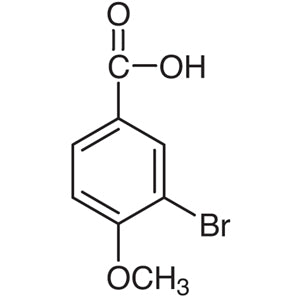
- TCI B3336 99-58-1 3-Bromo-4-methoxybenzoic Acid
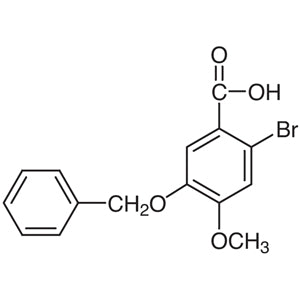
- TCI B3332 24958-42-7 5-Benzyloxy-2-bromo-4-methoxybenzoic Acid
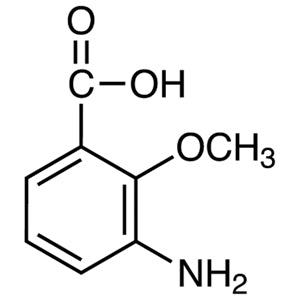
- TCI A2938 861306-04-9 3-Amino-2-methoxybenzoic Acid
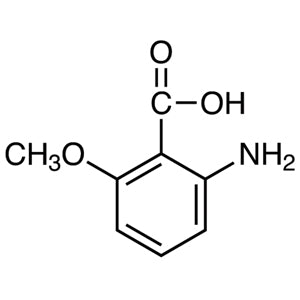
- TCI A2847 53600-33-2 2-Amino-6-methoxybenzoic Acid
- Organic synthesis for the preparation of pharmaceuticals and agrochemicals due to its reactivity and structural versatility.
- Development of complex molecules through nucleophilic substitution and electrophilic aromatic substitution reactions.
- Esterification processes where the methoxy group enhances reactivity and polarity for efficient chemical transformations.
- Coupling reactions in the synthesis of diverse organic compounds, leveraging its functional group compatibility.
- Educational use in teaching organic chemistry principles, demonstrating key synthetic strategies and molecular modifications.
| Brand | TCI |
|---|---|
| CAS number | 101084-39-3 |
| Molecular formula | — |
| Purity | — |
| Category | Chemistry > Building Blocks > Non-Heterocyclic Building Blocks |
| Pack sizes | Available in various quantities as per standard laboratory supply |
| Physical form | Solid, crystalline appearance |
| Storage | Store in a cool, dry place away from direct sunlight and moisture |
3-Bromo-2-methoxybenzoic Acid should be stored in a cool, dry environment to maintain its chemical integrity. It is recommended to keep it in a sealed container to prevent exposure to moisture and air. Due to its reactivity, it should be handled in a well-ventilated area, and appropriate personal protective equipment should be worn. Avoid contact with incompatible substances such as strong bases or oxidizing agents. The compound is stable under normal storage conditions but should be protected from light and heat to ensure long-term usability. Proper storage ensures the compound remains effective for its intended applications in laboratory research.
—
Produk Terkait
-
5-Bromo-2-methoxybenzoicAcid TCI B4741
Regular price From Rp 637.350,00Regular priceRp 460.950,00Sale price From Rp 637.350,00 -
2-Bromo-5-methoxybenzoicAcid TCI B3846
Regular price From Rp 662.550,00Regular priceRp 478.800,00Sale price From Rp 662.550,00 -
3-Bromo-4-methoxybenzoicAcid TCI B3336
Regular price From Rp 822.150,00Regular priceRp 590.100,00Sale price From Rp 822.150,00 -
5-Benzyloxy-2-bromo-4-methoxybenzoicAcid TCI B3332
Regular price From Rp 2.439.150,00Regular priceRp 1.720.950,00Sale price From Rp 2.439.150,00 -
3-Amino-2-methoxybenzoicAcid TCI A2938
Regular price From Rp 1.618.050,00Regular priceRp 1.146.600,00Sale price From Rp 1.618.050,00 -
2-Amino-6-methoxybenzoicAcid TCI A2847
Regular price From Rp 2.994.600,00Regular priceRp 2.109.450,00Sale price From Rp 2.994.600,00 -
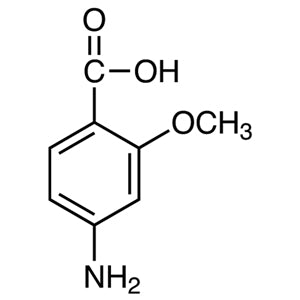
4-Amino-2-methoxybenzoicAcid TCI A2840
Regular price From Rp 557.550,00Regular priceRp 405.300,00Sale price From Rp 557.550,00 -
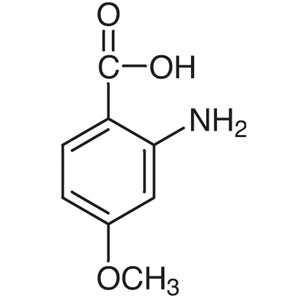
2-Amino-4-methoxybenzoicAcid TCI A2319
Regular price From Rp 1.670.550,00Regular priceRp 1.183.350,00Sale price From Rp 1.670.550,00