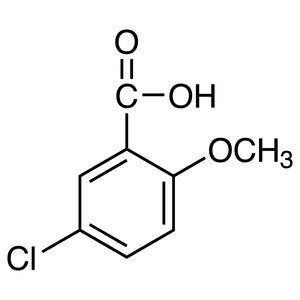
4-Chloro-3-methoxybenzoic Acid is a versatile organic compound widely used in laboratory settings for its role in synthetic chemistry. As a building block, it serves as a foundational material for the creation of more complex organic molecules. This compound is commonly utilized in research environments to facilitate chemical reactions that lead to the development of pharmaceuticals, industrial chemicals, and other specialized compounds. Its presence in the chemical supply chain makes it an essential component for chemists working on a variety of projects.
The compound's unique molecular structure, featuring both a chlorine and a methoxy group, contributes to its reactivity and functional versatility. These substituents enhance its ability to participate in various chemical transformations, such as esterification, substitution, and coupling reactions. Its stability under controlled conditions and compatibility with a wide range of reagents make it a preferred choice for researchers. The presence of these functional groups also allows for the synthesis of derivatives with tailored properties, expanding its applicability in different chemical processes.
In Indonesian laboratories, 4-Chloro-3-methoxybenzoic Acid is frequently used in chemical research, particularly in the field of organic synthesis. Its availability in solid form and ease of handling make it a practical choice for both academic and industrial research. The compound is often employed in the development of new compounds with specific chemical properties, supporting innovation in pharmaceutical and chemical industries. Its role in creating complex molecules makes it an indispensable tool in modern chemical laboratories.
Related TCI products
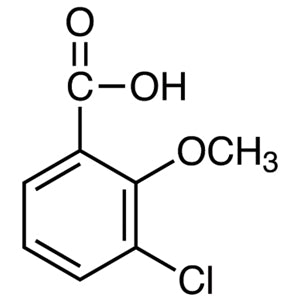
- TCI C3261 3260-93-3 3-Chloro-2-methoxybenzoic Acid
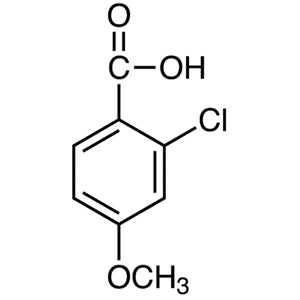
- TCI C3077 21971-21-1 2-Chloro-4-methoxybenzoic Acid
- TCI C2755 6280-89-3 2-Chloro-5-methoxybenzoic Acid
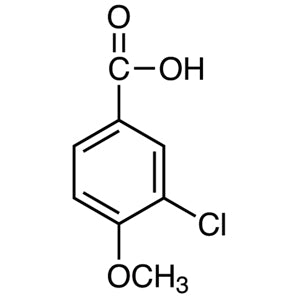
- TCI C2550 37908-96-6 3-Chloro-4-methoxybenzoic Acid
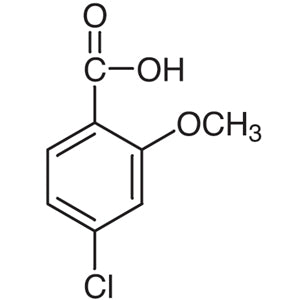
- TCI C2076 57479-70-6 4-Chloro-2-methoxybenzoic Acid
- TCI C1539 3438-16-2 5-Chloro-2-methoxybenzoic Acid
- Organic synthesis is a primary application where this compound serves as a key building block for creating complex molecules with specific functional groups.
- Pharmaceutical research benefits from its reactivity, allowing the development of drug candidates with tailored chemical properties.
- Industrial chemical production utilizes this compound for the synthesis of various derivatives used in manufacturing processes.
- Analytical chemistry laboratories employ it as a standard reference material for calibration and quality control purposes.
- Environmental studies use it to investigate the behavior of chlorinated and methoxy-substituted compounds in chemical systems.
| Brand | TCI |
|---|---|
| CAS number | 85740-98-3 |
| Molecular formula | — |
| Purity | — |
| Category | Chemistry > Building Blocks > Non-Heterocyclic Building Blocks |
| Pack sizes | Available in various quantities as per standard laboratory supply |
| Physical form | Solid |
| Storage | Store in a cool, dry place away from moisture and direct sunlight |
This compound should be stored in a cool, dry environment to maintain its stability and prevent degradation. It is recommended to use airtight containers to protect it from moisture and air exposure. Due to its chemical nature, it should be handled with care, using appropriate personal protective equipment such as gloves and safety goggles. It is important to ensure that storage areas are well-ventilated to minimize the risk of inhalation of any vapors. Avoid storing it near incompatible materials to prevent any potential chemical reactions. Proper labeling of containers is essential for safe handling and to prevent accidental misuse in the laboratory.
—
Produk Terkait
-
3-Chloro-2-methoxybenzoicAcid TCI C3261
Regular price From Rp 769.650,00Regular price -
2-Chloro-4-methoxybenzoicAcid TCI C3077
Regular price From Rp 1.298.850,00Regular price -
2-Chloro-5-methoxybenzoicAcid TCI C2755
Regular price Rp 505.050,00Regular price -
3-Chloro-4-methoxybenzoicAcid TCI C2550
Regular price Rp 2.411.850,00Regular price -
4-Chloro-2-methoxybenzoicAcid TCI C2076
Regular price From Rp 1.035.300,00Regular price -
5-Chloro-2-methoxybenzoicAcid TCI C1539
Regular price Rp 1.008.000,00Regular price -
3-Bromo-2-methoxybenzoicAcid TCI B5262
Regular price From Rp 928.200,00Regular price -
5-Bromo-2-methoxybenzoicAcid TCI B4741
Regular price From Rp 584.850,00Regular price