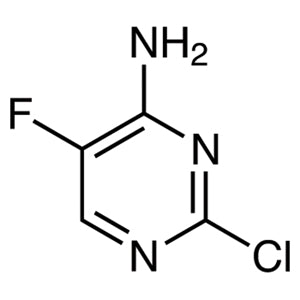
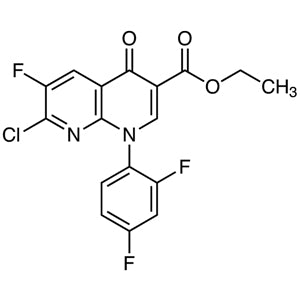
6-Chloro-2-fluoropurine from TCI, catalogue code C2221, is a purine derivative carrying two different halogen atoms: chlorine at position six and fluorine at position two. The compound belongs to the family of fluorinated building blocks, a class of starting materials in high demand in modern medicinal chemistry. The purine scaffold itself is the structural core of the nucleobases adenine and guanine, which makes halogenated purine derivatives a principal entry point for constructing nucleoside analogues, kinase inhibitors, and a wide range of compounds directed at nucleotide-binding proteins inside the cell.
Its synthetic value rests on the difference in reactivity between the two halogens. The chlorine atom at position six is displaced by nucleophiles such as amines, alkoxides, or thiolates far more readily than the fluorine atom at position two. This graded difference in reactivity allows chemists to carry out sequential functionalisation under control: the first substituent is installed at position six under mild conditions, and position two is then addressed under more forcing conditions. Fluorine is also frequently retained in the final product, since it can improve metabolic stability and alter the acidity of its surrounding environment.
In Indonesian laboratories, this building block is used in university and institutional research groups working on medicinal chemistry and heterocyclic synthesis, as well as in method development for nucleoside analogue routes. It is typically ordered in small research quantities for exploratory and multi-step synthesis rather than bulk production, and is handled alongside other catalogue reagents in organic synthesis laboratories where controlled, stepwise substitution chemistry is routine.
TCI brochures (PDF)
- Nucleosides, Nucleotides, Nucleic Acids and Related Reagents 2026-03-23 · p. 10
- Fluorination Reagents, Fluorinated Building Blocks 2026-03-18 · p. 49
- Nucleoside analogue synthesis: the purine core mirrors adenine and guanine, so the halogenated positions give direct access to modified nucleoside frameworks used in research.
- Kinase inhibitor development: purine derivatives target nucleotide-binding pockets, and the two displaceable halogens let researchers build diverse substitution patterns around that scaffold.
- Sequential nucleophilic substitution studies: the reactivity gap between C6 chlorine and C2 fluorine supports controlled two-step functionalisation, first under mild then under more forcing conditions.
- Fluorinated compound design: fluorine retained at position two can improve metabolic stability and modulate the acidity of neighbouring groups in candidate molecules.
- Heterocyclic building block chemistry: as a fluorinated building block, it serves as a versatile starting material for assembling more elaborate purine-based target structures.
| Brand | TCI |
|---|---|
| CAS number | 1651-29-2 |
| Molecular formula | — |
| Purity | — |
| Category | Chemistry > Building Blocks > Fluorinated Building Blocks |
| Pack sizes | available in standard TCI research pack sizes; please confirm the currently listed options when ordering. |
| Physical form | — |
| Storage | keep in the original tightly closed container in a cool, dry, well-ventilated place away from light and moisture. |
- Catalogue code: C2221
Store the material in its original tightly closed container in a cool, dry and well-ventilated area, protected from moisture, direct sunlight and sources of ignition. Keep the container sealed when not in use to limit exposure to atmospheric humidity, and return it promptly to designated chemical storage after weighing. Handle in a fume hood using appropriate personal protective equipment, including safety glasses, chemical-resistant gloves and a laboratory coat. Avoid inhaling dust and avoid contact with skin and eyes. Keep it separate from strong oxidising agents and strong bases, label all secondary containers clearly, and follow the manufacturer safety data sheet together with your institutional chemical waste procedures for disposal.
—
Produk Terkait
-
5-(Trifluoromethyl)uracil TCI T1622
Regular price Rp 1.060.500,00Regular priceRp 757.050,00Sale price Rp 1.060.500,00 -
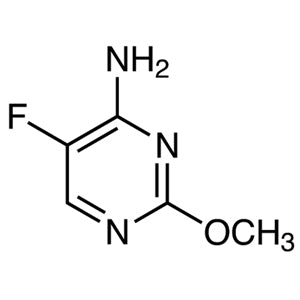
4-Amino-5-fluoro-2-methoxypyrimidine TCI A2125
Regular price Rp 2.544.150,00Regular priceRp 1.794.450,00Sale price Rp 2.544.150,00 -
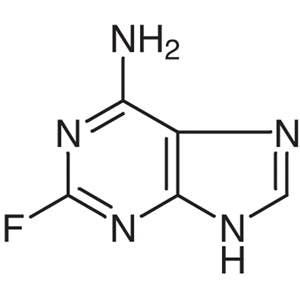
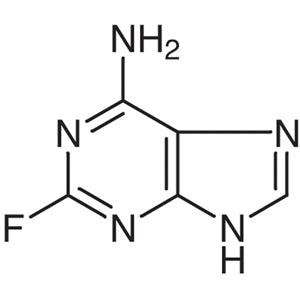
2-Fluoroadenine TCI F0647
Regular price Rp 1.033.200,00Regular priceRp 738.150,00Sale price Rp 1.033.200,00 -
5-FluorooroticAcidMonohydrate TCI F0382
Regular price Rp 795.900,00Regular priceRp 572.250,00Sale price Rp 795.900,00 -
5-Fluorocytosine TCI F0321
Regular price Rp 530.250,00Regular priceRp 386.400,00Sale price Rp 530.250,00 -
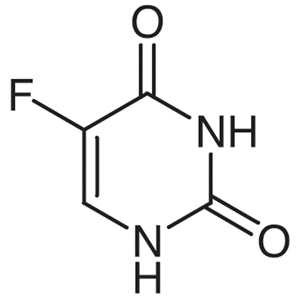
5-Fluorouracil TCI F0151
Regular price Rp 955.500,00Regular priceRp 683.550,00Sale price Rp 955.500,00 -
4-Amino-2-chloro-5-fluoropyrimidine TCI A2809
Regular price Rp 1.801.800,00Regular priceRp 1.275.750,00Sale price Rp 1.801.800,00 -
Ethyl7-Chloro-1-(2,4-difluorophenyl)-6-fluoro-4-oxo-1,4-dihydro-1,8-naphthyridine-3-carboxylate TCI E1180
Regular price Rp 928.200,00Regular priceRp 664.650,00Sale price Rp 928.200,00