5-Fluorouracil (5-FU) is a chemical compound widely used in organic chemistry and pharmaceutical research. As a building block, it plays a crucial role in the synthesis of complex molecules, especially those containing fluorine atoms. Its versatility makes it a valuable tool in laboratories where the development of new compounds and drug formulations is essential. 5-FU is commonly used as a starting material for the production of pharmaceuticals, diagnostic reagents, and other bioactive chemicals. Its stability and controlled reactivity make it a reliable choice for various chemical experiments.
The compound's molecular structure consists of a carbon chain with fluorine atoms, giving it unique chemical properties. It is typically colorless and solid, with a high melting point, which facilitates storage and handling. Its high purity and consistent chemical properties make it ideal for scientific research requiring precision and accuracy. In Indonesian laboratories, 5-FU is a key component in studies related to pharmacology, organic chemistry, and biochemical research. It is frequently found in chemical, pharmaceutical, and public health research settings.
In the context of Indonesian laboratories, 5-FU is used in a variety of research applications. Its role in drug development and diagnostic reagents is particularly significant. Researchers rely on its predictable behavior and chemical stability to conduct experiments that require precise control over reaction conditions. Its presence in both academic and industrial research environments underscores its importance in advancing scientific knowledge and practical applications.
TCI brochures (PDF)
- Pharmacologically Active Metabolites 2025-07-22 · p. 1
- Quorum Sensing Research Reagents 2024-10-17 · p. 1
- Biofilm Research Reagents 2024-06-21 · p. 1
- Reagents for Preparing Animal Disease Models 2024-09-13 · p. 1
- Cancer Research Reagents 2025-04-01 · p. 2
- Immunology Research Reagents 2026-06-03 · p. 10
- Pharmaceutical research utilizes 5-FU as a foundational compound in the development of anti-cancer and anti-inflammatory drugs due to its reactivity and structural versatility.
- Organic synthesis applications benefit from 5-FU’s ability to participate in various chemical reactions, enabling the creation of complex fluorinated compounds.
- Diagnostic reagent preparation leverages 5-FU’s stability and controlled reactivity for the production of bioactive compounds used in medical testing.
- Biochemical studies use 5-FU to investigate its interactions with biological systems, aiding in the understanding of cellular processes and drug mechanisms.
- Public health research incorporates 5-FU in the development of therapeutic agents, contributing to advancements in disease treatment and prevention.
From the TCI brochure
- An Antitumor Antimetabolite
| Brand | TCI |
|---|---|
| CAS number | 51-21-8 |
| Molecular formula | — |
| Purity | — |
| Category | Chemistry > Building Blocks > Fluorinated Building Blocks |
| Pack sizes | Available in standard laboratory quantities |
| Physical form | Solid |
| Storage | Store in a cool, dry place away from direct light |
5-Fluorouracil should be stored in a cool, dry environment to maintain its chemical stability. It is recommended to keep the compound in a sealed container to prevent moisture absorption and contamination. Due to its solid form, it is best stored in airtight glass or plastic containers that are resistant to chemical reactions. Laboratory personnel should handle the compound with care, using appropriate personal protective equipment such as gloves and safety goggles. It is important to ensure that the storage area is well-ventilated and free from incompatible substances. Proper labeling and storage conditions help maintain the integrity of the compound and ensure safe handling in laboratory settings.
—
Product Categories
- Biochemicals and ReagentsAnimal Disease Models PreparationReagents for Central Nervous System Disease Models
- Biochemicals and ReagentsAnimal Disease Models PreparationReagents for Inflammation and Immunity Disorder Models
- Biochemicals and ReagentsNucleosides, Nucleotides, OligonucleotidesNucleobases and their Analogs
- Biochemicals and ReagentsPharmaceutical Research Reagents (for Experimental Use)Antitumor Research Reagents (for Experimental Use)
- Biochemicals and ReagentsBioactive CompoundsPharmacologically Active Metabolites
- Cell BiologyCancer ResearchAntitumor Agents for Research
- MicrobiologyBiofilm ResearchBiofilm Inhibitors and Suppressors, etc.
- MicrobiologyQuorum Sensing ResearchQuorum Sensing Inhibitors and Antagonists, etc.
- Pharmaceutical Development and Drug Discovery ResearchPharmaceutical Research Reagents (for Experimental Use)Antitumor Research Reagents (for Experimental Use)
Produk Terkait
-
cis-Diammineplatinum(II)Dichloride TCI D3371
Regular price From Rp 1.538.250,00Regular priceRp 1.090.950,00Sale price From Rp 1.538.250,00 -
BleomycinSulfate(mixture) TCI B3972
Regular price From Rp 4.345.950,00Regular priceRp 3.054.450,00Sale price From Rp 4.345.950,00 -
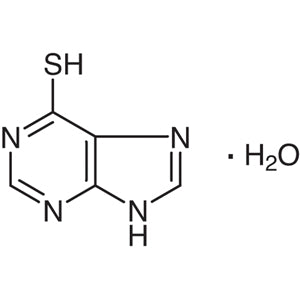
6-MercaptopurineMonohydrate TCI M0063
Regular price From Rp 530.250,00Regular priceRp 386.400,00Sale price From Rp 530.250,00 -
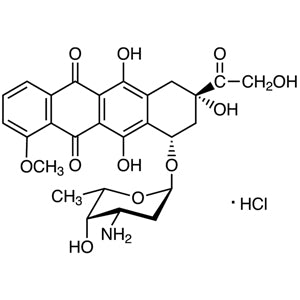
DoxorubicinHydrochloride TCI D4193
Regular price From Rp 6.095.250,00Regular priceRp 4.277.700,00Sale price From Rp 6.095.250,00 -
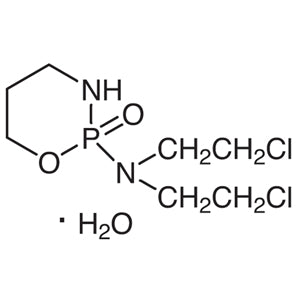
CyclophosphamideMonohydrate TCI C2236
Regular price From Rp 1.246.350,00Regular priceRp 2.628.150,00Sale price From Rp 1.246.350,00Sale -
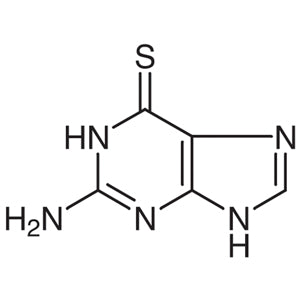
6-Thioguanine TCI T0212
Regular price From Rp 2.782.500,00Regular priceRp 1.961.400,00Sale price From Rp 2.782.500,00 -
7-Ethyl-10-hydroxycamptothecin TCI E0748
Regular price From Rp 3.763.200,00Regular priceRp 2.647.050,00Sale price From Rp 3.763.200,00 -
MetforminHydrochloride TCI M2009
Regular price From Rp 1.988.700,00Regular priceRp 1.405.950,00Sale price From Rp 1.988.700,00