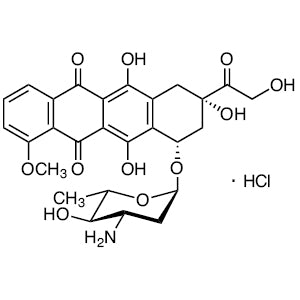
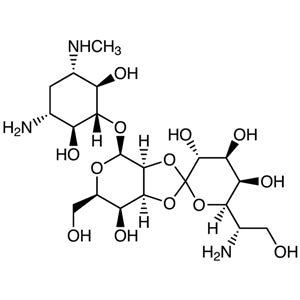
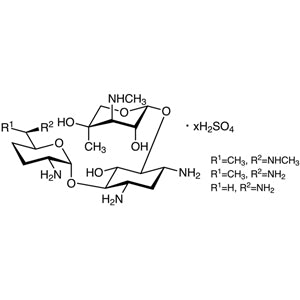
TCI D4193 Doxorubicin Hydrochloride, bearing CAS number 25316-40-9, is an anthracycline compound supplied in its hydrochloride salt form and classified within chemical biology, specifically the field of glycoscience, because its structure contains an amino sugar moiety attached to a polyketide aglycone core. It is one of the most widely recognised reagents in cell biology research and experimental oncology, employed as a comparative treatment in cell viability assays, DNA damage studies, and drug resistance research. Its established role as a reference compound makes it an important part of the modern biomedical research laboratory toolkit.
The characteristics that make doxorubicin such a frequently chosen compound include its ability to intercalate between DNA base pairs and its influence on the activity of the topoisomerase II enzyme, two properties that together produce clear and readily observable cellular responses. The molecule is also intrinsically fluorescent, so its uptake into cells can be monitored directly by fluorescence microscopy or flow cytometry without the need for any additional labelling step. The daunosamine sugar portion improves solubility in water, and the hydrochloride salt form makes the preparation of aqueous stock solutions straightforward and practical for routine bench work.
In Indonesian laboratories, this reagent is typically found in university research groups, biomedical and pharmaceutical research institutes, and cell culture facilities working on oncology-related questions. It commonly serves as the positive control or benchmark treatment in cytotoxicity screening panels, where new candidate compounds are compared against a well-characterised standard. Because its behaviour in cell-based systems is thoroughly documented, it also supports method development, assay validation, and the training of researchers and postgraduate students in cell biology techniques.
TCI brochures (PDF)
- Drug delivery system (DDS) products from TCI / Functional sugar chains of TCI 2024-12-20 · p. 1
- Reagents for Preparing Animal Disease Models 2024-09-13 · p. 1
- Cancer Research Reagents 2025-04-01 · p. 11
- Antimicrobials and Antitumor Agents for Research and Experimental Use 2025-04-24 · p. 5
- Reagents for Glyco Chemistry & Biology 5th Edition · p. 122
- Pharmaceutical Ingredients for Research and Experimental Use 2026-03-09 · p. 5
- Cell viability and cytotoxicity assays, where it functions as a reliable comparative treatment against which the activity of newly synthesised or extracted candidate compounds can be measured.
- DNA damage studies, since its intercalation between DNA base pairs and its effect on topoisomerase II activity generate clear, reproducible cellular responses suitable for mechanistic investigation.
- Drug resistance research, in which it is used as a reference anthracycline to characterise resistant cell populations and to examine how treatment responses shift across experimental conditions.
- Cellular uptake and localisation experiments, taking advantage of its intrinsic fluorescence so that entry into cells can be tracked by fluorescence microscopy without adding any external label.
- Flow cytometry workflows in experimental oncology, where the compound's own fluorescent signal allows quantitative assessment of accumulation across cell populations without an additional staining procedure.
| Brand | TCI |
|---|---|
| CAS number | 25316-40-9 |
| Molecular formula | — |
| Purity | — |
| Category | Chemistry > Chemical Biology > Glycoscience |
| Pack sizes | available in the pack sizes listed on the product page; please confirm the option required when ordering |
| Physical form | — |
| Storage | store according to the conditions stated on the manufacturer's label and product documentation |
- Chemical class: anthracycline compound supplied as the hydrochloride salt
- Solubility note: the daunosamine sugar moiety supports water solubility, and the hydrochloride salt form facilitates preparation of aqueous stock solutions
Data from the TCI brochure
| Purity | >95.0%(HPLC) |
|---|
Source: TCI brochure reagent_for_glyco_chemistry_&_biology_5th_ed ()
Store this product under the conditions specified on the manufacturer's label and accompanying documentation, keeping the container tightly closed and protected from light, moisture, and elevated temperature. Use clean, chemically compatible containers for aqueous stock solutions, label them clearly with concentration and preparation date, and aliquot where repeated freeze-thaw cycles would otherwise be required. Handle the material only in a designated laboratory area using appropriate personal protective equipment, including gloves, a laboratory coat, and eye protection, and carry out weighing and solution preparation with suitable engineering controls in place. Avoid the generation of dust or aerosols, keep the compound away from incompatible materials, and dispose of residues and contaminated consumables through the established chemical waste procedures of your institution. Always consult the Safety Data Sheet before first use.
—
Product Categories
- Chemical BiologyGlycoscienceApplications Using Glyco-materials
- Chemical BiologyGlycoscienceSugars (Other) [Glycoscience]
- Pharmaceutical Development and Drug Discovery Research ReagentsAntibody-Drug Conjugates (ADC) Preparation Research ReagentsPayload (Drug) Candidates [ADC Preparation Research Reagents]
- GlycoscienceApplications Using Glyco-materialsGlyco-engeneering [Applications Using Glyco-materials]
- GlycoscienceApplications Using Glyco-materialsGlyco-utilization [Applications Using Glyco-materials]
- GlycoscienceSugars (Other) [Glycoscience]
- Biochemicals and ReagentsAnimal Disease Models PreparationReagents for Central Nervous System Disease Models
- Biochemicals and ReagentsAnimal Disease Models PreparationReagents for Life-style related Disease Models
- Biochemicals and ReagentsAnimal Disease Models PreparationReagents for Inflammation and Immunity Disorder Models
- Biochemicals and ReagentsAntibioticsAntibiotics (Chemical Structure Class)
- Biochemicals and ReagentsAntibody-Drug Conjugates (ADC) Preparation Research ReagentsPayload (Drug) Candidates [ADC Preparation Research Reagents]
- Biochemicals and ReagentsEnzymes, Enzyme Inhibitors, Enzyme SubstratesEnzyme Inhibitors [Biochemicals and Reagents]
- Biochemicals and ReagentsPharmaceutical Research Reagents (for Experimental Use)Antimicrobial Ingredients (for Research and Experimental Use)
- Biochemicals and ReagentsPharmaceutical Research Reagents (for Experimental Use)Antitumor Research Reagents (for Experimental Use)
- Cell BiologyCancer ResearchAntitumor Agents for Research
- Cell BiologyStem Cell BiologyRegenerative Medicine Research Reagents
- MicrobiologyAntibioticsAntibiotics (Chemical Structure Class)
- Molecular BiologyRegenerative Medicine Research Reagents
- Pharmaceutical Development and Drug Discovery ResearchAntibody-Drug Conjugates (ADC) Preparation Research ReagentsPayload (Drug) Candidates [ADC Preparation Research Reagents]
- Pharmaceutical Development and Drug Discovery ResearchPharmaceutical Research Reagents (for Experimental Use)Antimicrobial Ingredients (for Research and Experimental Use)
- Pharmaceutical Development and Drug Discovery ResearchPharmaceutical Research Reagents (for Experimental Use)Antitumor Research Reagents (for Experimental Use)
- Pharmaceutical Development and Drug Discovery ResearchAntibioticsAntibiotics (Chemical Structure Class)
Produk Terkait
-
EpirubicinHydrochloride TCI E0840
Regular price From Rp 3.815.700,00Regular priceRp 2.683.800,00Sale price From Rp 3.815.700,00 -
BleomycinSulfate(mixture) TCI B3972
Regular price From Rp 4.345.950,00Regular priceRp 3.054.450,00Sale price From Rp 4.345.950,00 -
Geldanamycin TCI G0334
Regular price Rp 7.737.450,00Regular priceRp 5.426.400,00Sale price Rp 7.737.450,00 -
KanamycinMonosulfate TCI K0047
Regular price Rp 1.272.600,00Regular priceRp 905.100,00Sale price Rp 1.272.600,00 -
Paclitaxel TCI P1632
Regular price Rp 10.281.600,00Regular priceRp 7.205.100,00Sale price Rp 10.281.600,00 -
5-Azacytidine TCI A2033
Regular price From Rp 1.167.600,00Regular priceRp 831.600,00Sale price From Rp 1.167.600,00 -
HygromycinB TCI H1509
Regular price From Rp 1.008.000,00Regular priceRp 720.300,00Sale price From Rp 1.008.000,00 -
GentamicinSulfate TCI G0383
Regular price From Rp 1.988.700,00Regular priceRp 1.405.950,00Sale price From Rp 1.988.700,00