2,4-Dichlorobenzophenone is a chemical compound widely used in organic laboratory reactions. As a building block in chemical synthesis, it plays a crucial role in the development of complex molecules. This aromatic compound features two chlorine atoms attached to the benzophenone ring, contributing to its structural stability and reactivity. Its versatility makes it an essential reagent in various synthetic pathways, supporting both academic and industrial research. The compound's controlled reactivity allows chemists to manipulate reaction conditions with precision, ensuring consistent results in experimental processes.
The properties of 2,4-Dichlorobenzophenone make it a preferred choice for laboratory use. Its high melting point ensures stability under normal laboratory conditions, while its ability to participate in multiple reaction types enhances its utility. The molecule's aromatic nature and substituent groups provide a balanced reactivity profile, making it suitable for substitution, catalytic, and photoreaction processes. These characteristics enable researchers to achieve reliable outcomes in a variety of chemical transformations, making it a valuable tool in synthetic chemistry.
In Indonesian laboratories, 2,4-Dichlorobenzophenone is commonly used in organic chemistry research. It is frequently found in academic institutions and research centers, where it supports the synthesis of new compounds, drug development, and studies on chemical reactivity. Its consistent chemical properties and broad applicability make it a go-to material for researchers seeking precision and reliability in their experiments.
Related TCI products
- Organic synthesis projects benefit from 2,4-Dichlorobenzophenone due to its ability to participate in substitution reactions, enabling the creation of complex molecular structures with controlled reactivity.
- Photoreaction experiments utilize this compound because of its stability under certain conditions and its capacity to undergo light-induced chemical changes.
- Catalytic reactions often employ 2,4-Dichlorobenzophenone as a versatile building block that can interact with various catalysts to enhance reaction efficiency.
- Drug development research incorporates this compound as a key reagent in the synthesis of pharmaceutical compounds, supporting the creation of new therapeutic agents.
- Research on chemical reactivity uses 2,4-Dichlorobenzophone to study how substituent groups affect molecular behavior and reaction pathways.
| Brand | TCI |
|---|---|
| CAS number | 19811-05-3 |
| Molecular formula | — |
| Purity | — |
| Category | Chemistry > Building Blocks > Non-Heterocyclic Building Blocks |
| Pack sizes | — |
| Physical form | — |
| Storage | Store in a cool, dry place away from light |
2,4-Dichlorobenzophenone should be stored in a cool, dry environment to maintain its chemical stability. It is recommended to keep the compound in a tightly sealed container to prevent exposure to moisture and air. Due to its aromatic nature, it should be stored away from direct sunlight and sources of heat. In laboratory settings, it is important to handle the compound with appropriate personal protective equipment, such as gloves and safety goggles, to ensure safe handling. Proper ventilation should be maintained when working with this material to minimize inhalation risks. Its inert nature under normal conditions makes it relatively safe to handle, but standard laboratory safety protocols should always be followed.
—
Produk Terkait
-
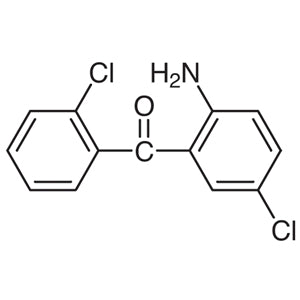
2-Amino-2',5-dichlorobenzophenone TCI A1128
Regular price Rp 1.035.300,00Regular price -
3,4-Dichlorobenzophenone TCI D3574
Regular price Rp 2.094.750,00Regular price -
4,4'-Dichlorobenzophenone TCI D1621
Regular price From Rp 903.000,00Regular price -
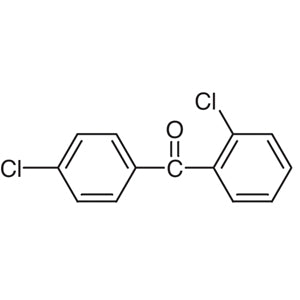
2,4'-Dichlorobenzophenone TCI D0230
Regular price Rp 477.750,00Regular price -
2-Amino-5-chlorobenzophenone TCI A0079
Regular price From Rp 848.400,00Regular price -
4-Bromo-4'-chlorobenzophenone TCI B4224
Regular price From Rp 3.340.050,00Regular price -
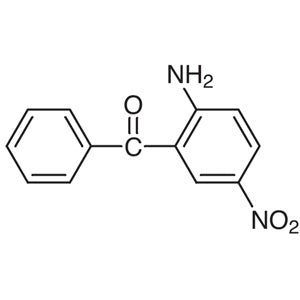
2-Amino-5-nitrobenzophenone TCI A1134
Regular price Rp 1.326.150,00Regular price -
4-Nitrobenzophenone TCI N0365
Regular price From Rp 1.008.000,00Regular price