TCI D3574 3,4-Dichlorobenzophenone is a non-heterocyclic building block from TCI that belongs to the class of aromatic ketones. Its structure consists of two benzene rings joined by a carbonyl group, with one of the rings bearing two chlorine atoms at the 3 and 4 positions. In the laboratory, this compound serves as a synthetic scaffold — a starting point for constructing more elaborate molecules either through transformations of the carbonyl group or through reactions at the two chlorine atoms. It also functions as a model compound in photochemical studies, since the benzophenone framework is well known as a classical photoinitiator and photosensitizer.
The properties that make this material a preferred choice begin with the carbonyl group, which is readily converted into a wide range of other functional groups: reduction affords the corresponding benzhydryl alcohol, reaction with organometallic reagents gives tertiary alcohols, and condensation reactions yield imine and hydrazone derivatives. The two chlorine atoms on the ring are electron-withdrawing, which increases the electrophilicity of the carbonyl group while at the same time providing handles for palladium-catalysed cross-coupling reactions. The benzophenone framework additionally possesses a relatively long-lived triplet excited state, which is the basis of its use in hydrogen abstraction reactions.
In Indonesian laboratories, a building block of this kind is typically handled in university and institutional research settings where organic synthesis and photochemistry work is carried out. It is used at bench scale for exploratory route development, for preparing derivatives from a defined aromatic ketone core, and for teaching and method-development work that requires a well-characterised, commercially available starting material rather than one prepared in-house.
Related TCI products
- Organic synthesis scaffold — the carbonyl group and the two ring chlorine atoms provide multiple independent reaction sites for building more complex target molecules step by step.
- Carbonyl transformation chemistry — reduction to the benzhydryl alcohol, addition of organometallic reagents to give tertiary alcohols, and condensation to imines or hydrazones all proceed from this single substrate.
- Palladium-catalysed cross-coupling — the chlorine substituents at the 3 and 4 positions act as coupling handles, allowing new carbon–carbon or carbon–heteroatom bonds to be installed on the aromatic ring.
- Photochemical model studies — the benzophenone framework is a classical photoinitiator and photosensitizer, making this compound a suitable reference substrate for investigating light-driven reaction behaviour.
- Hydrogen abstraction studies — the relatively long-lived triplet excited state of the benzophenone core underpins its use in experiments where excited-state hydrogen abstraction is the reaction of interest.
| Brand | TCI |
|---|---|
| CAS number | 6284-79-3 |
| Molecular formula | — |
| Purity | — |
| Category | Chemistry > Building Blocks > Non-Heterocyclic Building Blocks |
| Pack sizes | available in standard laboratory research pack sizes; please confirm the currently offered options when ordering |
| Physical form | — |
| Storage | keep in the tightly closed original container in a cool, dry, well-ventilated place |
- Chemical name: 3,4-Dichlorobenzophenone
- Catalogue code: D3574
Store the material in its original tightly closed container in a cool, dry and well-ventilated area, away from heat, ignition sources and incompatible chemicals such as strong oxidising agents. Because the benzophenone framework is photochemically active, protection from direct light is advisable. Amber glass or the supplied original packaging is suitable for storage; avoid transferring to containers of unknown compatibility. Handle in a fume hood using safety glasses, gloves and a laboratory coat, avoid inhalation of dust and contact with skin and eyes, and keep the container closed when not in active use. Consult the manufacturer's safety data sheet before use and dispose of residues and contaminated materials through the laboratory's chemical waste stream.
—
Produk Terkait
-
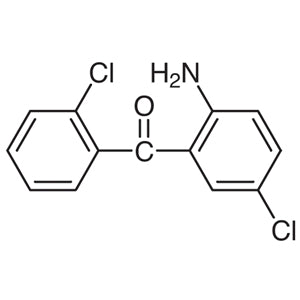
2-Amino-2',5-dichlorobenzophenone TCI A1128
Regular price Rp 1.035.300,00Regular price -
4,4'-Dichlorobenzophenone TCI D1621
Regular price From Rp 903.000,00Regular price -
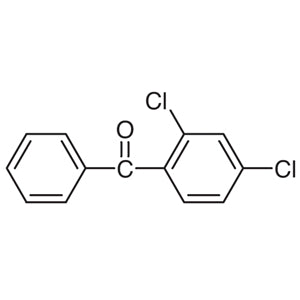
2,4-Dichlorobenzophenone TCI D0342
Regular price From Rp 2.254.350,00Regular price -
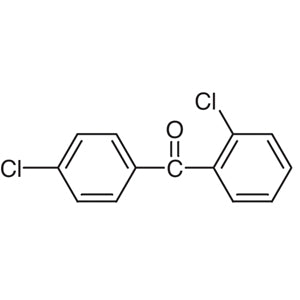
2,4'-Dichlorobenzophenone TCI D0230
Regular price Rp 477.750,00Regular price -
2-Amino-5-chlorobenzophenone TCI A0079
Regular price From Rp 848.400,00Regular price -
4-Bromo-4'-chlorobenzophenone TCI B4224
Regular price From Rp 3.340.050,00Regular price -
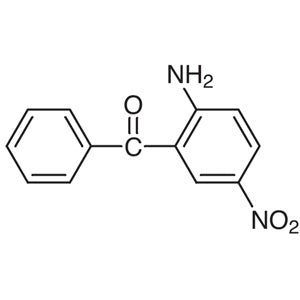
2-Amino-5-nitrobenzophenone TCI A1134
Regular price Rp 1.326.150,00Regular price -
4-Nitrobenzophenone TCI N0365
Regular price From Rp 1.008.000,00Regular price