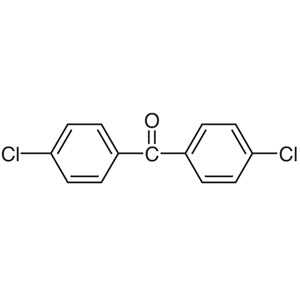
4,4'-Dichlorobenzophenone is a chemical compound widely used in organic reactions for the synthesis of complex molecules. As a building block in chemistry, it serves as a fundamental component in various laboratory applications due to its aromatic structure and carbonyl group. This compound is commonly found in chemical laboratories as a versatile reagent that enables the formation of both heterocyclic and non-heterocyclic structures. Its stable chemical properties and controlled reactivity make it a reliable choice for a wide range of experimental procedures. The molecule consists of two chlorine atoms attached to a benzene ring and a carbonyl group connected to a carbon atom. These structural features allow it to participate in reactions such as electrophilic substitution or condensation under specific conditions.
The compound's chemical consistency and physical stability make it suitable for use in experiments of varying scales. Its predictable behavior and compatibility with a range of reaction conditions contribute to its popularity among chemists. The presence of the carbonyl group enhances its reactivity, allowing it to act as a key intermediate in the synthesis of more complex organic compounds. These characteristics ensure that it remains a valuable resource in both academic and industrial research settings.
In Indonesian laboratories, 4,4'-Dichlorobenzophenone is extensively used in organic chemistry research, particularly in higher education institutions and research organizations. Its role in teaching and experimental development is significant, as it helps students and researchers understand the principles of organic synthesis and functional group reactivity. Its availability and reliability make it an essential part of the chemical toolkit in Indonesian laboratories.
TCI brochures (PDF)
- Biomaterials Research Reagents 2025-02-19 · p. 24
- Organic synthesis reactions benefit from 4,4'-Dichlorobenzophenone due to its aromatic structure and carbonyl group, enabling the formation of complex molecules through electrophilic substitution.
- It is ideal for condensation reactions because of its carbonyl functionality, which allows for the creation of new carbon-carbon bonds in synthetic pathways.
- In heterocyclic compound synthesis, the compound serves as a precursor, providing a stable platform for the introduction of functional groups in ring formation processes.
- Its controlled reactivity makes it suitable for use in controlled reaction environments, ensuring predictable outcomes in laboratory experiments.
- It is commonly used in teaching laboratories to demonstrate the principles of organic chemistry, including functional group reactivity and reaction mechanisms.
| Brand | TCI |
|---|---|
| CAS number | 90-98-2 |
| Molecular formula | — |
| Purity | — |
| Category | Chemistry > Building Blocks > Non-Heterocyclic Building Blocks |
| Pack sizes | Available in various quantities as per standard chemical supply practices |
| Physical form | Solid, typically in crystalline or powder form |
| Storage | Store in a cool, dry place away from direct sunlight and moisture |
4,4'-Dichlorobenzophenone should be stored in a cool, dry environment to maintain its chemical stability. It is recommended to keep the compound in airtight containers to prevent exposure to moisture and air, which could affect its reactivity. The material is generally non-hazardous under normal conditions but should be handled with care to avoid direct contact with skin or inhalation of vapors. In laboratory settings, it is advisable to use appropriate personal protective equipment such as gloves and safety goggles when handling the compound. Proper labeling of containers is essential to ensure safe storage and handling. The compound should not be stored near incompatible materials, such as strong acids or bases, to prevent any potential chemical interactions.
—
Product Categories
Produk Terkait
-
3'-Hydroxyacetophenone TCI A0104
Regular price From Rp 1.060.500,00Regular price -
Anthraquinone TCI A0502
Regular price From Rp 477.750,00Regular price -
Methyl2-Benzoylbenzoate TCI B1231
Regular price From Rp 903.000,00Regular price -
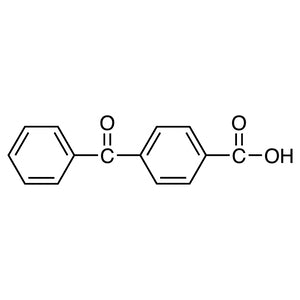
4-BenzoylbenzoicAcid TCI B1164
Regular price From Rp 1.988.700,00Regular price -
MethylBenzoylformate TCI B1033
Regular price From Rp 1.167.600,00Regular price -
BenzoinIsopropylEther TCI B0942
Regular price From Rp 505.050,00Regular price -
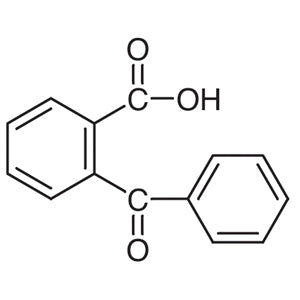
2-BenzoylbenzoicAcid TCI B0103
Regular price Rp 530.250,00Regular price -
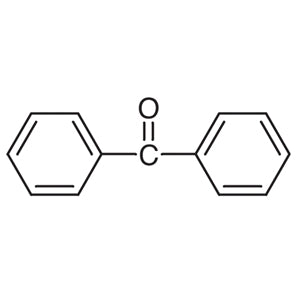
Benzophenone TCI B0083
Regular price From Rp 477.750,00Regular price