Benzophenone is an organic compound with an aromatic structure, widely used in various chemical applications within laboratory settings. As a key building block in chemical synthesis, it serves as a versatile reagent or auxiliary in reactions such as photoreactions, cross-coupling reactions, and substitution reactions. Its role in laboratory research is essential for the development of new compounds and materials. Due to its stability and predictable chemical behavior, Benzophenone is a reliable choice for researchers working in diverse experimental conditions.
One of the main reasons Benzophenone is preferred is its high photoreactivity, making it ideal for reactions requiring ultraviolet (UV) light. This property allows it to act as a photosensitizer in various synthetic processes. Additionally, its molecular structure is stable under normal conditions, which enhances its usability and safety in laboratory environments. Benzophenone is also chemically inert in most cases, reducing the risk of unwanted side reactions and simplifying its handling and storage.
In Indonesian laboratories, Benzophenone is commonly used in organic chemistry research, particularly in the synthesis of new compounds and the development of chemical materials. It is a preferred choice for laboratories that prioritize safety, sustainability, and efficiency in their experimental processes. Its non-toxic nature under normal conditions makes it suitable for use in laboratories that follow strict safety and environmental guidelines.
TCI brochures (PDF)
- Organic Photoreaction Reagents 2025-02-13 · p. 7
- Polymerization Initiators 2025-09-17 · p. 3
- Biomaterials Research Reagents 2025-02-19 · p. 24
- Organic synthesis reactions where photoreactivity is required, as Benzophenone acts as a photosensitizer in UV-induced processes.
- Cross-coupling reactions due to its stability and ability to participate in various chemical transformations without degrading.
- Substitution reactions where a stable and predictable reagent is needed, ensuring consistent results in synthetic pathways.
- Photopolymerization processes, as Benzophenone is commonly used in light-sensitive materials and resins.
- Research in photochemistry, where its high photoreactivity makes it a key component in studying light-induced chemical changes.
| Brand | TCI |
|---|---|
| CAS number | 119-61-9 |
| Molecular formula | — |
| Purity | — |
| Category | Chemistry > Building Blocks > Non-Heterocyclic Building Blocks |
| Pack sizes | Available in various sizes as per supplier specifications |
| Physical form | Solid |
| Storage | Store in a cool, dry place away from direct sunlight |
Benzophenone should be stored in a cool, dry place away from direct sunlight to maintain its stability and prevent degradation. It is recommended to use airtight containers to minimize exposure to moisture and air, which could potentially affect its chemical integrity. Due to its inert nature under normal conditions, Benzophenone is generally safe to handle, but standard laboratory precautions should still be observed, such as wearing appropriate personal protective equipment. It is important to ensure that the storage area is well-ventilated and free from incompatible substances to maintain a safe working environment. Proper labeling of containers is also essential for safe handling and identification.
—
Product Categories
Produk Terkait
-
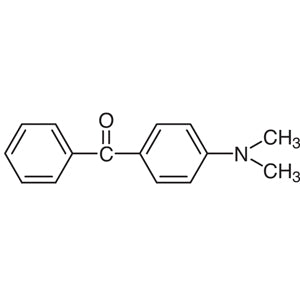
4-(Dimethylamino)benzophenone TCI D2561
Regular price From Rp 1.033.200,00Regular priceRp 738.150,00Sale price From Rp 1.033.200,00 -
4,4'-Bis(dimethylamino)benzophenone TCI B0481
Regular price From Rp 928.200,00Regular priceRp 664.650,00Sale price From Rp 928.200,00 -
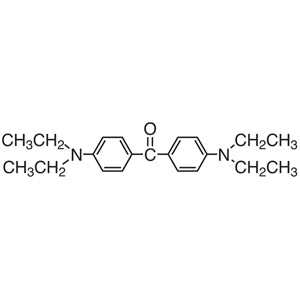
4,4'-Bis(diethylamino)benzophenone TCI B0139
Regular price From Rp 689.850,00Regular priceRp 497.700,00Sale price From Rp 689.850,00 -
3'-Hydroxyacetophenone TCI A0104
Regular price From Rp 1.113.000,00Regular priceRp 793.800,00Sale price From Rp 1.113.000,00 -
Anthraquinone TCI A0502
Regular price From Rp 477.750,00Regular priceRp 333.900,00Sale price From Rp 477.750,00 -
Methyl2-Benzoylbenzoate TCI B1231
Regular price From Rp 955.500,00Regular priceRp 683.550,00Sale price From Rp 955.500,00 -
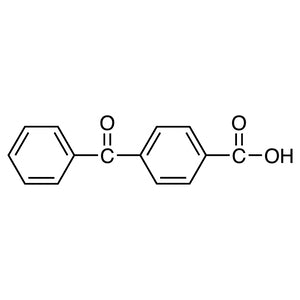
4-BenzoylbenzoicAcid TCI B1164
Regular price From Rp 2.041.200,00Regular priceRp 1.442.700,00Sale price From Rp 2.041.200,00 -
MethylBenzoylformate TCI B1033
Regular price From Rp 1.220.100,00Regular priceRp 868.350,00Sale price From Rp 1.220.100,00