4,4'-Bis(diethylamino)benzophenone is a chemical compound widely used in laboratory applications, particularly in the fields of materials science and organic chemistry. This compound serves as a photoinitiator in photopolymerization reactions, enabling the formation of polymers through ultraviolet (UV) light. Its role is critical in initiating chemical reactions that lead to the creation of stable polymer structures with favorable mechanical properties. As a key reagent in UV curing processes, it is essential for various industrial and scientific applications.
The compound is known for its chemical stability and high reactivity towards UV light, making it a preferred choice in photopolymerization reactions. Its molecular structure allows it to efficiently absorb UV radiation, triggering the polymerization process without compromising the integrity of the base material. This property ensures that the resulting polymers maintain their desired characteristics. The compound’s ability to accelerate polymerization while preserving the original properties of the material makes it highly versatile in laboratory settings.
In Indonesian laboratories, 4,4'-Bis(diethylamino)benzophenone is a valuable resource for researchers in materials, chemistry, and engineering. It is commonly used in the development of UV coatings, adhesives, and composites. Its application in academic and industrial research supports innovation in polymer science, contributing to advancements in various technological fields. The compound’s reliability and effectiveness make it a staple in laboratory workflows across Indonesia.
TCI brochures (PDF)
- Photo- and Thermal-Acid Generators with Organogallium Anion 2025-08-27 · p. 2
- Polymerization Initiators 2025-09-17 · p. 3
- Biomaterials Research Reagents 2025-02-19 · p. 24
- Photopolymerization Reactions: This compound is ideal for initiating UV-curable polymer systems, enabling rapid and efficient crosslinking of monomers and oligomers.
- UV Coating Formulation: It is widely used in the development of UV-curable coatings, providing durable and high-performance surface finishes for various substrates.
- Adhesive Development: Its ability to trigger polymerization under UV light makes it suitable for creating strong, fast-curing adhesives used in industrial and medical applications.
- Composite Material Synthesis: It supports the creation of composite materials with enhanced mechanical properties by facilitating controlled polymerization processes.
- Research and Development in Polymer Science: It is a key reagent in academic and industrial R&D for exploring new polymer structures and applications.
| Brand | TCI |
|---|---|
| CAS number | 90-93-7 |
| Molecular formula | — |
| Purity | — |
| Category | Materials Science > Polymer/Macromolecule Reagents > Polymerization Reagents |
| Pack sizes | Available in various quantities as per supplier specifications |
| Physical form | Solid (as per standard product description) |
| Storage | Store in a cool, dry place away from direct sunlight |
This compound should be stored in a cool, dry environment, away from direct sunlight and sources of heat. It is recommended to use airtight containers made of materials compatible with the chemical to prevent contamination and degradation. As a UV-sensitive compound, it should be protected from prolonged exposure to light. In laboratory settings, it should be handled with appropriate personal protective equipment, including gloves and safety goggles, to ensure safe handling. Proper labeling and storage conditions are essential to maintain its chemical integrity and ensure safe use in laboratory applications.
—
Product Categories
Produk Terkait
-
4,4'-Bis(dimethylamino)benzophenone TCI B0481
Regular price From Rp 928.200,00Regular priceRp 664.650,00Sale price From Rp 928.200,00 -
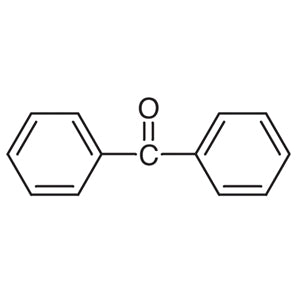
Benzophenone TCI B0083
Regular price From Rp 477.750,00Regular priceRp 333.900,00Sale price From Rp 477.750,00 -
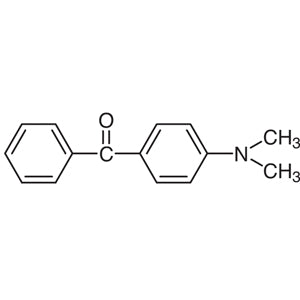
4-(Dimethylamino)benzophenone TCI D2561
Regular price From Rp 1.033.200,00Regular priceRp 738.150,00Sale price From Rp 1.033.200,00 -
3'-Hydroxyacetophenone TCI A0104
Regular price From Rp 1.113.000,00Regular priceRp 793.800,00Sale price From Rp 1.113.000,00 -
Anthraquinone TCI A0502
Regular price From Rp 477.750,00Regular priceRp 333.900,00Sale price From Rp 477.750,00 -
SodiumAnthraquinone-2-sulfonateMonohydrate TCI A0508
Regular price From Rp 822.150,00Regular priceRp 590.100,00Sale price From Rp 822.150,00 -
Acetophenone TCI A0061
Regular price From Rp 769.650,00Regular priceRp 537.600,00Sale price From Rp 769.650,00 -
TriphenylsulfoniumBis(trifluoromethanesulfonyl)imide TCI T4393
Regular price From Rp 1.298.850,00Regular priceRp 924.000,00Sale price From Rp 1.298.850,00