4,4'-Bis(dimethylamino)benzophenone is a chemical compound widely used in the fields of materials science and chemistry. This compound plays a crucial role in laboratory settings, particularly in photopolymerization processes. Its unique molecular structure, featuring two dimethylamino groups attached to a benzophenone core, makes it highly effective as a photoinitiator. In the laboratory, it is essential for initiating chemical reactions when exposed to light, which accelerates the formation of polymers. This compound is a key component in various synthetic processes, contributing to the development of advanced materials and chemical products.
One of the main reasons this compound is preferred is its ability to absorb ultraviolet light efficiently and trigger chemical reactions with high performance. Its stability under certain conditions ensures consistent results in experimental applications. Additionally, its chemical properties allow for versatility in different experimental setups, making it a reliable choice for researchers. The compound’s effectiveness in initiating polymerization reactions under light exposure makes it an indispensable tool in modern laboratory research.
In Indonesian laboratories, 4,4'-Bis(dimethylamino)benzophenone is commonly used in material research and chemical development. It is particularly relevant for institutions focused on polymer science and composite materials. Many research centers and universities in Indonesia rely on this compound for developing new materials and improving existing ones. Its role in photopolymerization processes supports innovation in various scientific and industrial applications.
TCI brochures (PDF)
- Polymerization Initiators 2025-09-17 · p. 3
- Biomaterials Research Reagents 2025-02-19 · p. 24
Related TCI products
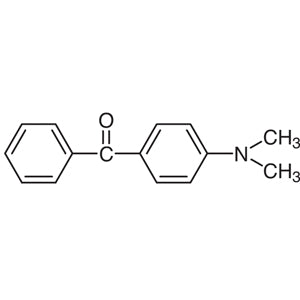
- TCI D2561 530-44-9 4-(Dimethylamino)benzophenone
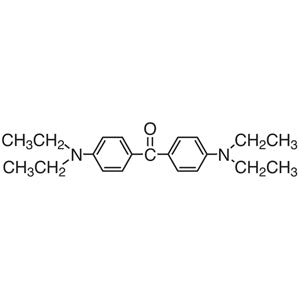
- TCI B0139 90-93-7 4,4'-Bis(diethylamino)benzophenone
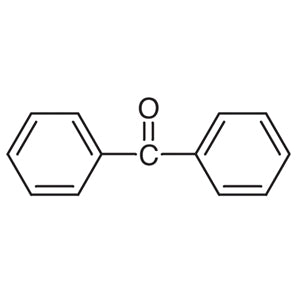
- TCI B0083 119-61-9 Benzophenone
- TCI B3914 119313-12-1 2-Benzyl-2-(dimethylamino)-4'-morpholinobutyrophenone
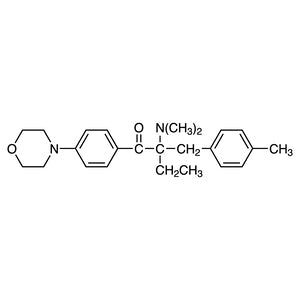
- TCI M3451 119344-86-4 2-(Dimethylamino)-2-(4-methylbenzyl)-1-(4-morpholinophenyl)butan-1-one
- TCI A0104 121-71-1 3'-Hydroxyacetophenone
- Photopolymerization of resins and coatings due to its efficient UV light absorption and initiation of polymer chain reactions.
- Development of composite materials where controlled cross-linking is required for enhanced mechanical properties.
- Fabrication of thin films and optical materials that benefit from light-induced curing processes.
- Synthesis of functional polymers for applications in electronics and biomedical devices.
- Research into photoresponsive materials that change properties upon exposure to light.
| Brand | TCI |
|---|---|
| CAS number | 90-94-8 |
| Molecular formula | — |
| Purity | — |
| Category | Materials Science > Polymer/Macromolecule Reagents > Polymerization Reagents |
| Pack sizes | Available in various quantities as per standard laboratory requirements |
| Physical form | Solid |
| Storage | Store in a cool, dry place away from direct light |
This compound should be stored in a cool, dry environment, away from direct sunlight and sources of heat. It is recommended to keep it in a sealed container to prevent moisture absorption and maintain its chemical integrity. Due to its photoactive nature, it should be protected from prolonged exposure to light. Proper ventilation is essential when handling the material to ensure safe laboratory practices. Always use appropriate personal protective equipment, such as gloves and safety goggles, to minimize exposure. The compound is non-hazardous under normal storage conditions but should be handled with care to avoid contamination or accidental exposure.
—
Product Categories
Produk Terkait
-
4-(Dimethylamino)benzophenone TCI D2561
Regular price From Rp 1.033.200,00Regular priceRp 738.150,00Sale price From Rp 1.033.200,00 -
4,4'-Bis(diethylamino)benzophenone TCI B0139
Regular price From Rp 689.850,00Regular priceRp 497.700,00Sale price From Rp 689.850,00 -
Benzophenone TCI B0083
Regular price From Rp 477.750,00Regular priceRp 333.900,00Sale price From Rp 477.750,00 -
2-Benzyl-2-(dimethylamino)-4'-morpholinobutyrophenone TCI B3914
Regular price From Rp 1.060.500,00Regular priceRp 757.050,00Sale price From Rp 1.060.500,00 -
2-(Dimethylamino)-2-(4-methylbenzyl)-1-(4-morpholinophenyl)butan-1-one TCI M3451
Regular price Rp 2.093.700,00Regular priceRp 1.479.450,00Sale price Rp 2.093.700,00 -
3'-Hydroxyacetophenone TCI A0104
Regular price From Rp 1.113.000,00Regular priceRp 793.800,00Sale price From Rp 1.113.000,00 -
Anthraquinone TCI A0502
Regular price From Rp 477.750,00Regular priceRp 333.900,00Sale price From Rp 477.750,00 -
SodiumAnthraquinone-2-sulfonateMonohydrate TCI A0508
Regular price From Rp 822.150,00Regular priceRp 590.100,00Sale price From Rp 822.150,00