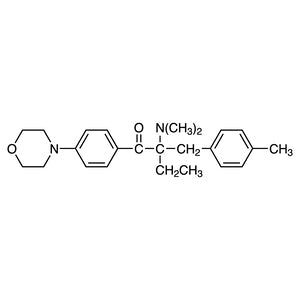
2-Benzyl-2-(dimethylamino)-4'-morpholinobutyrophenone is a chemical compound widely used in laboratory settings, particularly in materials science and organic chemistry. This compound serves as a photoinitiator in photochemical polymerization processes, enabling the initiation of polymer chain growth under ultraviolet (UV) light exposure. Its role is critical in the synthesis of polymers and complex organic molecules, making it a valuable tool for researchers working on advanced material development. Due to its photoactive nature, it is commonly used in applications requiring controlled and rapid polymerization reactions.
One of the key properties that make this compound a preferred choice is its ability to generate free radicals upon UV light exposure, which triggers the polymerization process efficiently. It also exhibits good chemical stability under specific conditions, minimizing degradation during storage and use. These characteristics ensure reliable performance in various experimental setups, making it a trusted reagent for precision-driven applications. Additionally, its compatibility with different polymer systems enhances its versatility in laboratory environments.
In Indonesian laboratories, this compound is frequently used in research and development projects focused on polymer technology and organic chemistry. It is a staple in academic and industrial settings where the synthesis of new materials and the modification of existing ones are required. Its application spans across multiple disciplines, supporting innovation in material science and chemical engineering. Researchers in Indonesia rely on this compound for its consistent performance and reliability in experimental processes.
TCI brochures (PDF)
- Polymerization Initiators 2025-09-17 · p. 4
- Biomaterials Research Reagents 2025-02-19 · p. 25
Related TCI products
- TCI B0481 90-94-8 4,4'-Bis(dimethylamino)benzophenone
- TCI M3451 119344-86-4 2-(Dimethylamino)-2-(4-methylbenzyl)-1-(4-morpholinophenyl)butan-1-one
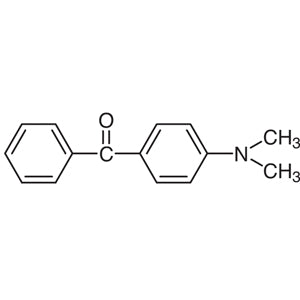
- TCI D2561 530-44-9 4-(Dimethylamino)benzophenone
- TCI A0104 121-71-1 3'-Hydroxyacetophenone
- TCI A0502 84-65-1 Anthraquinone
- TCI A0508 153277-35-1 Sodium Anthraquinone-2-sulfonate Monohydrate
- Polymer synthesis and modification in materials science research due to its role as a photoinitiator in UV-curable systems.
- Development of UV-sensitive polymers and coatings for applications in optoelectronics and biomedical engineering.
- Organic chemistry experiments requiring controlled radical formation and polymer chain initiation under UV light.
- Creation of composite materials and functional films where precise polymerization control is essential.
- Research into advanced polymerization techniques for industrial and academic applications in Indonesia.
| Brand | TCI |
|---|---|
| CAS number | 119313-12-1 |
| Molecular formula | — |
| Purity | — |
| Category | Materials Science > Polymer/Macromolecule Reagents > Polymerization Reagents |
| Pack sizes | Available in various quantities as per standard laboratory reagent packaging |
| Physical form | Solid or liquid, depending on formulation and supplier specifications |
| Storage | — |
This compound should be stored in a cool, dry, and dark place to maintain its chemical stability and photoinitiating properties. It is recommended to keep it in a sealed container to prevent exposure to moisture and air, which may affect its performance. Due to its photoactive nature, it should be protected from direct sunlight and UV light sources during storage. Proper labeling and safe handling procedures are essential to ensure laboratory safety. Always use appropriate personal protective equipment when handling this material to minimize exposure risks.
—
Product Categories
Produk Terkait
-
4,4'-Bis(dimethylamino)benzophenone TCI B0481
Regular price From Rp 928.200,00Regular priceRp 664.650,00Sale price From Rp 928.200,00 -
2-(Dimethylamino)-2-(4-methylbenzyl)-1-(4-morpholinophenyl)butan-1-one TCI M3451
Regular price Rp 2.093.700,00Regular priceRp 1.479.450,00Sale price Rp 2.093.700,00 -
4-(Dimethylamino)benzophenone TCI D2561
Regular price From Rp 1.033.200,00Regular priceRp 738.150,00Sale price From Rp 1.033.200,00 -
3'-Hydroxyacetophenone TCI A0104
Regular price From Rp 1.113.000,00Regular priceRp 793.800,00Sale price From Rp 1.113.000,00 -
Anthraquinone TCI A0502
Regular price From Rp 477.750,00Regular priceRp 333.900,00Sale price From Rp 477.750,00 -
SodiumAnthraquinone-2-sulfonateMonohydrate TCI A0508
Regular price From Rp 822.150,00Regular priceRp 590.100,00Sale price From Rp 822.150,00 -
Acetophenone TCI A0061
Regular price From Rp 769.650,00Regular priceRp 537.600,00Sale price From Rp 769.650,00 -
TriphenylsulfoniumBis(trifluoromethanesulfonyl)imide TCI T4393
Regular price From Rp 1.298.850,00Regular priceRp 924.000,00Sale price From Rp 1.298.850,00