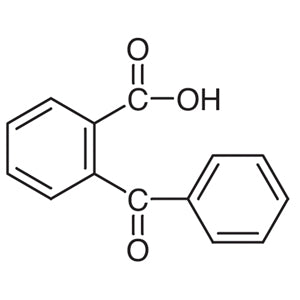
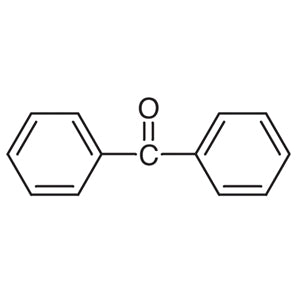
4-Benzoylbenzoic Acid is a versatile organic compound widely used in chemical laboratories for the synthesis of complex molecules. As a key building block in organic chemistry, it serves as a fundamental component in various synthetic pathways. This compound is commonly utilized in both academic and industrial research settings due to its reactivity and structural stability. Its presence in chemical reactions allows for the development of new compounds with tailored properties, making it an essential tool for chemists working on drug discovery and material science projects.
The compound’s aromatic structure and carboxylic acid functionality make it highly reactive and compatible with a wide range of reagents. Its ability to participate in substitution, esterification, and coupling reactions enhances its utility in synthetic chemistry. Additionally, its solubility in common organic solvents such as ethyl acetate and ethanol facilitates purification and isolation processes in the laboratory. These properties contribute to its popularity among researchers seeking reliable and effective chemical intermediates.
In Indonesian laboratories, 4-Benzoylbenzoic Acid is frequently used in chemical and pharmaceutical research. It plays a crucial role in the development of new compounds for both academic and industrial applications. Its availability in the local market ensures that researchers have access to this essential reagent for their experiments. Its adaptability and chemical versatility make it a preferred choice for a wide range of synthetic and analytical tasks.
Advantages (TCI brochure)
- Benzophenones excited by UV (near 360 nm) induce hydrogen abstraction from target molecules
- Reaction efficiency remains high due to reversibility of the excited state
- Photoexcited benzophenones are not water-reactive
TCI brochures (PDF)
- Photo-reactive Crosslinkers 2024-11-07 · p. 2
- Cross-linkers 2026-04-14 · p. 4
- Polymerization Initiators 2025-09-17 · p. 3
- Bioconjugation Reagents 2026-07-07 · p. 5
- Biomaterials Research Reagents 2025-02-19 · p. 24
- Organic synthesis applications benefit from 4-Benzoylbenzoic Acid due to its reactivity and structural versatility, enabling the creation of complex molecular frameworks.
- Pharmaceutical research utilizes this compound as a building block for the development of new drug molecules, leveraging its functional groups for further modification.
- Analytical chemistry experiments often incorporate this compound as a standard for calibration and identification in chromatographic and spectroscopic analyses.
- Materials science studies use 4-Benzoylbenzoic Acid to synthesize polymers and functional materials with specific chemical properties.
- Educational laboratories employ this compound to teach fundamental concepts in organic chemistry, including reaction mechanisms and synthetic strategies.
From the TCI brochure
- Photoaffinity labeling
- Photoaffinity microarray
| Brand | TCI |
|---|---|
| CAS number | 611-95-0 |
| Molecular formula | — |
| Purity | — |
| Category | Chemistry > Building Blocks > Non-Heterocyclic Building Blocks |
| Pack sizes | Available in various quantities as per standard laboratory supply |
| Physical form | Solid |
| Storage | Store in a cool, dry place away from light and moisture |
4-Benzoylbenzoic Acid should be stored in a cool, dry environment to maintain its chemical integrity. It is recommended to keep the compound in airtight containers to prevent exposure to moisture and air. Due to its solid form, it is best stored in glass or plastic containers that are resistant to chemical degradation. Laboratory personnel should handle the compound with appropriate personal protective equipment, such as gloves and safety goggles, to ensure safety during handling. It is important to avoid direct contact with skin and inhalation of dust, especially during grinding or weighing processes. Proper storage and handling practices help preserve the compound’s effectiveness and ensure safe laboratory operations.
References cited in the TCI brochure
- Günther F. Ross. Synthesis of Trifunctional PNA−Benzophenone Derivatives for Mitochondrial Targeting, Selective DNA Binding, and Photo-Cross-Linking Bioconjugate Chemistry, 2003. doi:10.1021/bc034050f
- Yongwon Jung. Photoactivable Antibody Binding Protein: Site-Selective and Covalent Coupling of Antibody Analytical Chemistry, 2009. doi:10.1021/ac8014565
- Alex J. Hughes. Microfluidic Western blotting Proceedings of the National Academy of Sciences, 2012. doi:10.1073/pnas.1207754110
Product Categories
Produk Terkait
-
2-BenzoylbenzoicAcid TCI B0103
Regular price Rp 582.750,00Regular priceRp 423.150,00Sale price Rp 582.750,00 -
Methyl2-Benzoylbenzoate TCI B1231
Regular price From Rp 955.500,00Regular priceRp 683.550,00Sale price From Rp 955.500,00 -
1,4-Dibenzoylbenzene TCI D4196
Regular price Rp 3.870.300,00Regular priceRp 2.705.850,00Sale price Rp 3.870.300,00 -
3'-Hydroxyacetophenone TCI A0104
Regular price From Rp 1.113.000,00Regular priceRp 793.800,00Sale price From Rp 1.113.000,00 -
Anthraquinone TCI A0502
Regular price From Rp 477.750,00Regular priceRp 333.900,00Sale price From Rp 477.750,00 -
MethylBenzoylformate TCI B1033
Regular price From Rp 1.220.100,00Regular priceRp 868.350,00Sale price From Rp 1.220.100,00 -
BenzoinIsopropylEther TCI B0942
Regular price From Rp 557.550,00Regular priceRp 405.300,00Sale price From Rp 557.550,00 -
Benzophenone TCI B0083
Regular price From Rp 477.750,00Regular priceRp 333.900,00Sale price From Rp 477.750,00