TCI D1383 2,3-Dibromopropionic Acid is a three-carbon carboxylic acid carrying two bromine atoms at the second and third positions of the chain. As a non-heterocyclic building block, this compound offers three reactive points at once within a single small molecule: the carboxylic acid group, one bromine on the alpha carbon, and one bromine on the beta carbon. That combination makes it a useful starting material for constructing functionalised aliphatic derivatives, whether through nucleophilic substitution or through elimination reactions that generate unsaturated systems.
The property that leads chemists to select this material is the reactivity of its bromine atoms, which act as good leaving groups and are therefore readily displaced by nucleophiles such as amines, thiols, or alkoxides. The difference in electronic environment between the alpha and beta positions creates an opportunity for selective reaction when conditions are controlled carefully. The carboxylic acid group itself can be converted into esters, amides, or salts as the synthetic route requires. In addition, treatment with base can trigger dehydrohalogenation to give unsaturated derivatives, opening a path toward more diverse molecular frameworks from one simple starting material.
In Indonesian laboratories, this reagent is typically used in synthetic organic chemistry work at university research groups, chemistry teaching laboratories, and industrial R&D units that prepare functionalised intermediates. It is normally handled on a small to moderate scale in fume-hood-based synthesis, where a versatile trifunctional building block allows a single reagent to serve several different reaction routes rather than requiring a separate starting material for each target structure.
- Nucleophilic substitution chemistry: the two bromine atoms serve as good leaving groups, allowing amines, thiols, or alkoxides to be introduced onto the propionic acid backbone in a controlled manner.
- Preparation of unsaturated derivatives: treatment with base induces dehydrohalogenation, converting this saturated dibrominated acid into unsaturated systems that serve as onward intermediates.
- Carboxylic acid derivatisation: the acid group can be transformed into esters, amides, or salts, letting one starting material feed several parallel synthetic routes.
- Functionalised aliphatic intermediate synthesis: three reactive handles in one small molecule allow multi-step assembly of aliphatic targets without introducing additional coupling partners early on.
- Selective reaction method development: the differing electronic environments at the alpha and beta positions let researchers explore position-selective transformations under carefully controlled reaction conditions.
| Brand | TCI |
|---|---|
| CAS number | 600-05-5 |
| Molecular formula | — |
| Purity | — |
| Category | Chemistry > Building Blocks > Non-Heterocyclic Building Blocks |
| Pack sizes | available in standard TCI research pack sizes; please confirm the sizes currently listed for this catalogue item |
| Physical form | — |
| Storage | keep the container tightly closed and store according to the conditions stated on the manufacturer's label and safety data sheet |
- Product code: D1383
- Chemical name: 2,3-Dibromopropionic Acid
Store this reagent in its original tightly closed container in a cool, dry, well-ventilated area away from direct sunlight, moisture, and incompatible materials, following the storage conditions given on the manufacturer's label and safety data sheet. Suitable containers are the supplier's own chemically resistant bottles with secure closures; transfer only into clean, dry, clearly labelled glassware. As a brominated carboxylic acid, this material should be handled in a fume hood with appropriate personal protective equipment, including safety goggles, chemical-resistant gloves, and a laboratory coat. Avoid contact with skin and eyes and avoid breathing dust or vapour. Consult the safety data sheet before use and dispose of residues and contaminated materials through the laboratory's designated chemical waste route.
—
Produk Terkait
-
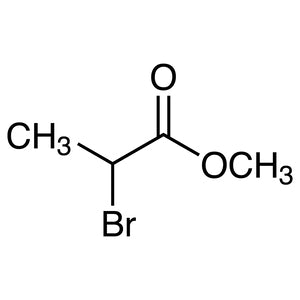
Methyl2-Bromopropionate TCI B1460
Regular price From Rp 769.650,00Regular price -
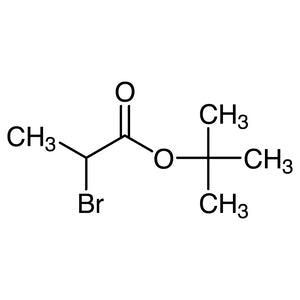
tert-Butyl2-Bromopropionate TCI B1277
Regular price From Rp 3.312.750,00Regular price -
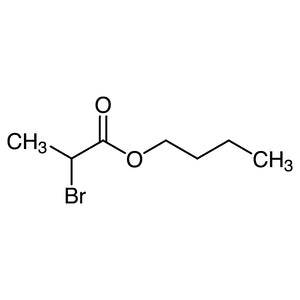
Butyl2-Bromopropionate TCI B1031
Regular price Rp 743.400,00Regular price -
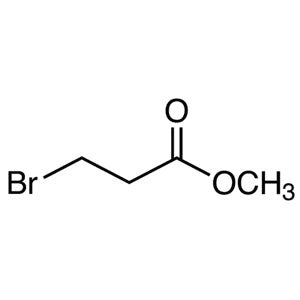
Methyl3-Bromopropionate TCI B0648
Regular price From Rp 1.485.750,00Regular price -
Ethyl3-Bromopropionate TCI B0647
Regular price From Rp 1.510.950,00Regular price -
Ethyl2-Bromopropionate TCI B0646
Regular price From Rp 557.550,00Regular price -
3-BromopropionicAcid TCI B0645
Regular price From Rp 717.150,00Regular price -
2-BromopropionicAcid TCI B0644
Regular price From Rp 610.050,00Regular price