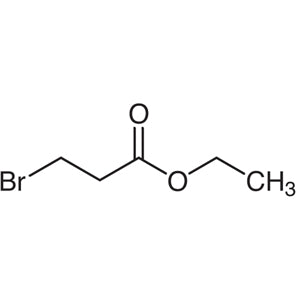
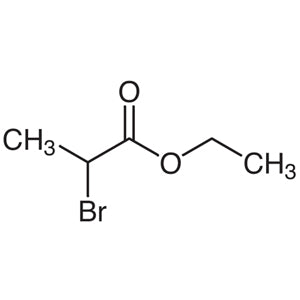
2-Bromopropionic Acid (TCI B0644) is a chemical compound widely used as a foundational building block in various chemical reactions. It plays a critical role in synthetic chemistry, particularly in reactions that require bromine substitution on carbon chains. This compound is commonly found in chemical laboratories and is categorized under non-heterocyclic building blocks, making it a versatile reagent for organic synthesis. Its simple yet essential chemical structure supports the creation of more complex organic molecules, making it a staple in both academic and industrial research settings.
The chemical properties of 2-Bromopropionic Acid make it a preferred choice for synthetic applications. It exhibits stability in chemical reactions and readily reacts with a variety of reagents, enabling efficient synthetic pathways. Its solubility in organic solvents such as ethyl acetate and ethanol facilitates easy handling and processing in laboratory settings. These characteristics allow for straightforward purification and reaction steps, enhancing its utility in both small-scale and large-scale chemical synthesis.
In Indonesian laboratories, 2-Bromopropionic Acid is frequently utilized in organic chemistry research, pharmaceutical development, and chemical testing. Its availability and reliability make it an essential component for researchers working on compound synthesis and modification. It is particularly valuable in projects involving brominated compounds and functional group transformations, supporting a wide range of scientific investigations and innovations.
- Organic synthesis projects benefit from 2-Bromopropionic Acid due to its reactivity and utility in bromine substitution reactions.
- Pharmaceutical research utilizes this compound for the development of new drug compounds through chemical modification.
- Chemical testing laboratories rely on it for the synthesis of brominated derivatives and functional group transformations.
- Academic research institutions use it as a key reagent in teaching and experimental chemistry courses.
- Industrial chemical processes incorporate it for the production of specialty chemicals and intermediates.
| Brand | TCI |
|---|---|
| CAS number | 598-72-1 |
| Molecular formula | — |
| Purity | — |
| Category | Chemistry > Building Blocks > Non-Heterocyclic Building Blocks |
| Pack sizes | Available in various quantities as per supplier specifications |
| Physical form | Solid or liquid, depending on the specific product variant |
| Storage | Store in a cool, dry place away from direct sunlight and moisture |
2-Bromopropionic Acid should be stored in a cool, dry environment, away from direct sunlight and moisture. It is recommended to use sealed containers to prevent exposure to air and humidity, which could affect its stability. The compound should be kept in a well-ventilated area to minimize inhalation risks. Laboratory personnel should wear appropriate personal protective equipment, including gloves and safety goggles, when handling this material. It is important to ensure that storage areas are free from incompatible substances to prevent any potential chemical reactions. Proper labeling and safe storage practices are essential to maintain the integrity and safety of the compound in a laboratory setting.
—
Produk Terkait
-
3-BromopropionicAcid TCI B0645
Regular price From Rp 769.650,00Regular priceRp 553.350,00Sale price From Rp 769.650,00 -
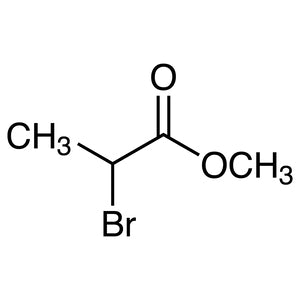
Methyl2-Bromopropionate TCI B1460
Regular price From Rp 822.150,00Regular priceRp 590.100,00Sale price From Rp 822.150,00 -
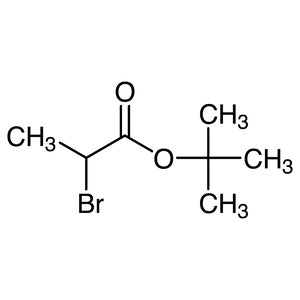
tert-Butyl2-Bromopropionate TCI B1277
Regular price From Rp 3.365.250,00Regular priceRp 2.368.800,00Sale price From Rp 3.365.250,00 -
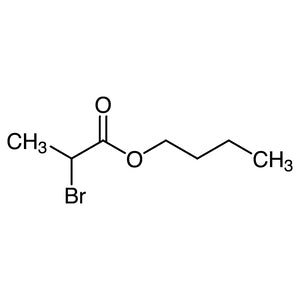
Butyl2-Bromopropionate TCI B1031
Regular price Rp 795.900,00Regular priceRp 572.250,00Sale price Rp 795.900,00 -
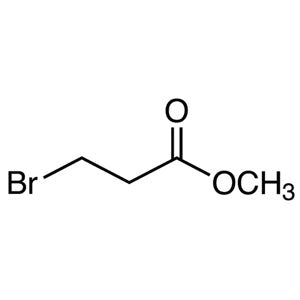
Methyl3-Bromopropionate TCI B0648
Regular price From Rp 1.538.250,00Regular priceRp 1.090.950,00Sale price From Rp 1.538.250,00 -
Ethyl3-Bromopropionate TCI B0647
Regular price From Rp 1.563.450,00Regular priceRp 1.108.800,00Sale price From Rp 1.563.450,00 -
Ethyl2-Bromopropionate TCI B0646
Regular price From Rp 610.050,00Regular priceRp 442.050,00Sale price From Rp 610.050,00 -
2,3-DibromopropionicAcid TCI D1383
Regular price From Rp 1.060.500,00Regular priceRp 757.050,00Sale price From Rp 1.060.500,00