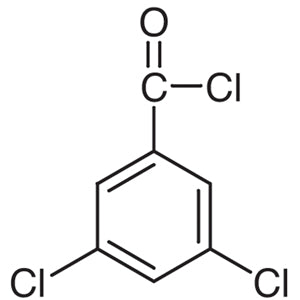
3,5-Dichlorobenzoyl Chloride, identified by CAS number 2905-62-6, is an aromatic acyl chloride carrying two chlorine atoms at the meta positions of the benzene ring together with a highly reactive acid chloride group. This combination makes it a high-powered acylating reagent widely used to install the 3,5-dichlorobenzoyl group onto target molecules. In organic synthesis laboratories, the compound serves as a building block for forming amides, esters, aromatic ketones, and a range of intermediates that form the backbone of research into pharmaceutical active ingredients and agrochemical compounds under development.
The property that leads chemists to select this reagent is the reactivity of the acid chloride group, which far exceeds that of the parent carboxylic acid. Reactions with amines or alcohols therefore proceed rapidly at low to moderate temperatures without requiring an additional coupling agent. The two chlorine substituents at the meta positions withdraw electron density from the ring, making the carbonyl carbon increasingly electrophilic and raising the reaction rate. Those same chlorine substituents simultaneously confer lipophilicity and metabolic stability on the final product, two factors frequently sought in molecular design.
In Indonesian laboratories, this reagent is typically used in university research groups, pharmaceutical development units, and agrochemical laboratories that build target molecules step by step. It is handled at the bench inside a fume hood under anhydrous conditions, usually as part of acylation sequences where a defined benzoyl fragment must be attached reliably. Supplied under the TCI brand as catalogue item D1404, it is stocked as a routine building block for synthesis programmes that require consistent, well-characterised starting material.
Related TCI products
- Amide bond formation: the acid chloride reacts directly with primary and secondary amines at low to moderate temperatures, giving 3,5-dichlorobenzamides quickly without any additional coupling reagent.
- Ester synthesis: alcohols and phenols are acylated efficiently because the electron-withdrawing meta chlorine substituents raise the electrophilicity of the carbonyl carbon and accelerate the reaction.
- Aromatic ketone preparation: the reagent serves as the acylating partner in Friedel–Crafts type transformations, delivering the 3,5-dichlorobenzoyl fragment onto suitable aromatic substrates.
- Pharmaceutical intermediate research: laboratories developing active pharmaceutical ingredients use it as a building block whose chlorine substituents add lipophilicity and metabolic stability to candidate molecules.
- Agrochemical compound development: research programmes on agrochemical actives employ it to introduce a defined dichlorinated benzoyl group into intermediates during stepwise molecular construction.
| Brand | TCI (catalogue number D1404) |
|---|---|
| CAS number | 2905-62-6 |
| Molecular formula | — |
| Purity | — |
| Category | Chemistry > Building Blocks > Non-Heterocyclic Building Blocks |
| Pack sizes | available in the standard research pack sizes offered by the manufacturer; please confirm the size required when ordering |
| Physical form | — |
| Storage | keep tightly closed in a cool, dry place, protected from moisture |
- Chemical name: 3,5-Dichlorobenzoyl Chloride
Store the container tightly closed in a cool, dry, well-ventilated area away from moisture, since acid chlorides react readily with water and atmospheric humidity. Keep the material in its original tightly sealed container or in another closure-tight glass container resistant to the reagent, and separate it from amines, alcohols, and other reactive substances. Handle only inside a working fume hood while wearing chemical-resistant gloves, safety goggles, and a laboratory coat, as the compound is corrosive and releases irritating vapours. Transfer under anhydrous conditions using dry glassware, close the container immediately after use, and consult the manufacturer's safety data sheet before handling and before disposal of residues.
—
Produk Terkait
-
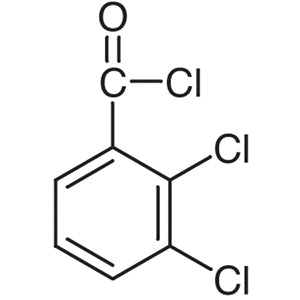
2,3-DichlorobenzoylChloride TCI D3206
Regular price Rp 1.246.350,00Regular price -
2,5-DichlorobenzoylChloride TCI D2953
Regular price From Rp 3.446.100,00Regular price -
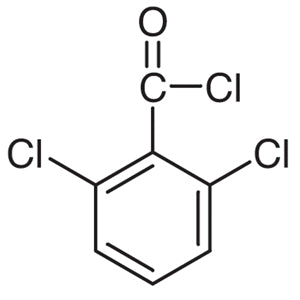
2,6-DichlorobenzoylChloride TCI D2064
Regular price From Rp 1.644.300,00Regular price -
3,4-DichlorobenzoylChloride TCI D0346
Regular price Rp 1.405.950,00Regular price -
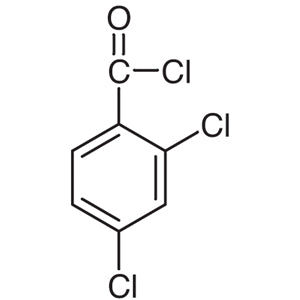
2,4-DichlorobenzoylChloride TCI D0345
Regular price From Rp 743.400,00Regular price -
2,3,4,5-TetrachlorobenzoylChloride TCI T2379
Regular price Rp 2.545.200,00Regular price -
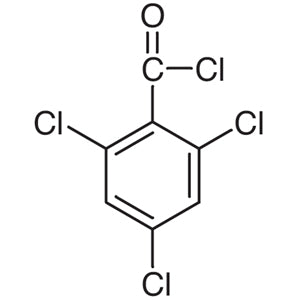
2,4,6-TrichlorobenzoylChloride TCI T1413
Regular price From Rp 2.466.450,00Regular price -
N-(4-Nitrobenzoyl)-beta-alanine TCI N0942
Regular price From Rp 664.650,00Regular price