TCI D2064 2,6-Dichlorobenzoyl Chloride is an aromatic acid chloride that carries two chlorine atoms at both ortho positions of the benzene ring, flanking its reactive carbonyl group directly. In the laboratory, this compound serves as an acylating reagent, that is, a material that transfers an acyl group to another molecule. Acid chlorides are among the most reactive carboxylic acid derivatives, so this material is routinely used to form amides, esters, anhydrides, and aromatic ketones rapidly, generally at low to moderate temperatures and with the assistance of a base that scavenges the hydrogen chloride released during the reaction.
The distinguishing property of this compound is its combination of high reactivity with a characteristic steric hindrance. The two chlorine atoms at the ortho positions leave the carbonyl group spatially shielded, so its selectivity toward bulky nucleophiles differs from that of ordinary benzoyl chloride, and this pattern is frequently exploited to control the course of a reaction. The chlorine atoms are also electron-withdrawing, which further activates the carbonyl center. As a consequence, the compound is highly sensitive to water: contact with atmospheric moisture hydrolyses it into the corresponding carboxylic acid while releasing corrosive hydrogen chloride gas.
In Indonesian laboratories, this building block is typically handled in synthetic organic chemistry work at universities, research institutes, and industrial R&D units, where acylation steps are part of routine preparative sequences. Because the local climate is consistently humid, careful attention to moisture exclusion matters more here than in drier regions. Work is generally carried out in a fume hood using dried glassware and anhydrous solvents, with the container resealed promptly after each withdrawal.
Related TCI products
- Amide bond formation — the highly reactive acid chloride couples rapidly with amines under mild conditions, while the ortho-chlorine substituents give selectivity behaviour that differs usefully from unsubstituted benzoyl chloride.
- Ester synthesis — alcohols and phenols are acylated quickly at low to moderate temperatures in the presence of an acid-scavenging base, making this reagent convenient for preparing sterically defined aromatic esters.
- Aromatic ketone preparation — the activated carbonyl centre, further electron-poor because of the two chlorine atoms, supports acylation routes toward aromatic ketone frameworks in preparative organic chemistry.
- Anhydride formation — reaction with carboxylic acids or their salts converts this acid chloride into mixed anhydrides, providing intermediates for further acyl transfer steps within a synthetic sequence.
- Non-heterocyclic building block work — as a catalogue building block, it introduces a 2,6-dichlorobenzoyl fragment with defined steric shielding into larger target molecules during multi-step research syntheses.
| Brand | TCI |
|---|---|
| CAS number | 4659-45-4 |
| Molecular formula | — |
| Purity | — |
| Category | Chemistry > Building Blocks > Non-Heterocyclic Building Blocks |
| Pack sizes | available in the standard research pack sizes offered by TCI for this catalogue item |
| Physical form | — |
| Storage | keep tightly closed in a cool, dry place, protected from moisture |
- Product code: D2064
- Chemical class: aromatic acid chloride (carboxylic acid derivative), moisture-sensitive
Store the material in a cool, dry, well-ventilated area, tightly closed in its original container and kept away from water, moist air, alcohols, amines, and strong bases. Because contact with moisture generates corrosive hydrogen chloride gas, containers should be resealed immediately after use and, where possible, handled under an inert atmosphere with dry glassware and anhydrous solvents. All transfers and reactions should be performed in a fume hood with appropriate chemical-resistant gloves, safety goggles, and a laboratory coat. Avoid inhaling vapours, keep the workspace free of open water sources, and consult the manufacturer's safety data sheet before use.
—
Produk Terkait
-
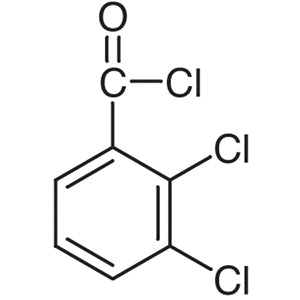
2,3-DichlorobenzoylChloride TCI D3206
Regular price Rp 1.246.350,00Regular price -
2,5-DichlorobenzoylChloride TCI D2953
Regular price From Rp 3.446.100,00Regular price -
3,5-DichlorobenzoylChloride TCI D1404
Regular price Rp 1.220.100,00Regular price -
3,4-DichlorobenzoylChloride TCI D0346
Regular price Rp 1.405.950,00Regular price -
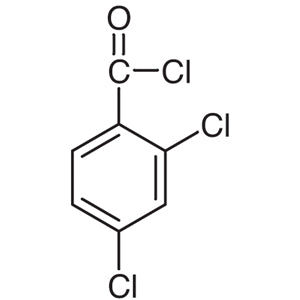
2,4-DichlorobenzoylChloride TCI D0345
Regular price From Rp 743.400,00Regular price -
2,3,4,5-TetrachlorobenzoylChloride TCI T2379
Regular price Rp 2.545.200,00Regular price -
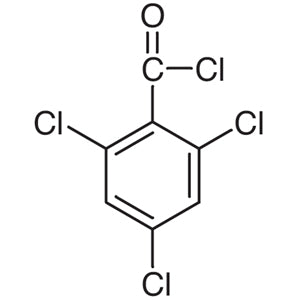
2,4,6-TrichlorobenzoylChloride TCI T1413
Regular price From Rp 2.466.450,00Regular price -
N-(4-Nitrobenzoyl)-beta-alanine TCI N0942
Regular price From Rp 664.650,00Regular price