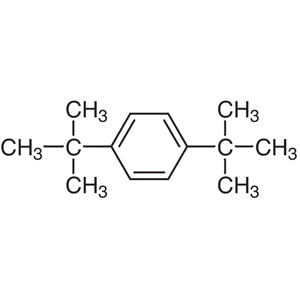
TCI D2111 1,4-Di-tert-butylbenzene is a simple aromatic hydrocarbon carrying two tert-butyl groups at the para positions of the benzene ring, supplied as a non-heterocyclic building block for a broad range of laboratory purposes. Its symmetrical structure makes the compound useful both as a synthetic starting material and as a model compound in studies of aromatic reactivity. Because the tert-butyl groups are very bulky in spatial terms, this compound is frequently taken as a reference point when researchers want to understand the extent to which steric hindrance influences the course of substitution reactions, oxidations, and intermolecular interactions in aromatic systems.
The properties that make it a widely preferred choice are its combination of chemical stability and substantial steric bulk. The two tert-butyl groups donate electrons inductively to the ring while simultaneously shielding the neighbouring ortho positions, so reactions tend to be directed toward the positions that remain open. Its non-polar character means the compound dissolves readily in non-polar organic solvents and remains relatively inert toward many reaction conditions, which makes it safe to use as an internal standard or a comparison compound. Its solid form at room temperature also makes accurate weighing straightforward.
In Indonesian laboratories, this building block is typically encountered in university and institutional research groups working on organic synthesis, physical organic chemistry, and analytical method development. It is handled on the open bench or in a fume hood as part of routine synthetic and instrumental work, weighed out in small portions from the original container, and stored alongside other solid organic reagents. Because it is chemically stable and non-polar, it fits comfortably into teaching laboratories and research facilities where reagents are shared across several projects.
- Organic synthesis starting material — the symmetrical para-substituted ring gives a predictable, well-defined framework for building larger aromatic molecules with controlled substitution patterns.
- Steric hindrance studies — the two bulky tert-butyl groups shield the adjacent ortho positions, making this compound a standard reference for probing how spatial crowding governs reaction pathways.
- Aromatic reactivity model compound — its inductively electron-donating substituents allow researchers to examine directing effects and relative rates in substitution and oxidation reactions systematically.
- Internal standard in analytical work — its chemical stability, inertness toward many reaction conditions, and non-polar character mean it does not interfere with the analyte being measured.
- Comparison compound in intermolecular interaction research — the rigid, symmetrical, non-polar structure provides a clean baseline when evaluating how bulky aromatic systems interact with one another.
| Brand | TCI |
|---|---|
| CAS number | 1012-72-2 |
| Molecular formula | — |
| Purity | — |
| Category | Chemistry > Building Blocks > Non-Heterocyclic Building Blocks |
| Pack sizes | available in the standard TCI catalogue pack sizes; please confirm the size required when ordering |
| Physical form | solid at room temperature |
| Storage | keep in the original tightly closed container, in a cool, dry, well-ventilated place away from heat and ignition sources |
Store 1,4-Di-tert-butylbenzene in its original tightly closed container in a cool, dry, well-ventilated area, away from heat, open flames, and ignition sources, and separated from strong oxidising agents. Glass bottles with chemically resistant closures are suitable, and the container should be reclosed promptly after each use to limit exposure to air and moisture. Weigh and transfer the solid in a fume hood or a well-ventilated workspace to avoid inhaling dust, and use safety glasses, gloves, and a laboratory coat. Avoid skin and eye contact, do not eat or drink in the handling area, and wash hands thoroughly afterwards. Clean up spilled solid mechanically and dispose of residues and contaminated material as organic chemical waste in accordance with your institution's procedures.
—
Produk Terkait
-
1,3,5-Tri-tert-butylbenzene TCI T1633
Regular price From Rp 1.378.650,00Regular price -
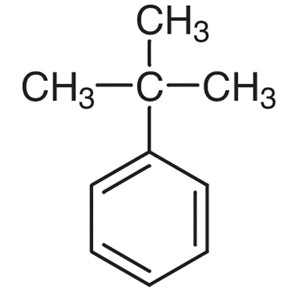
tert-Butylbenzene TCI B0715
Regular price From Rp 505.050,00Regular price -
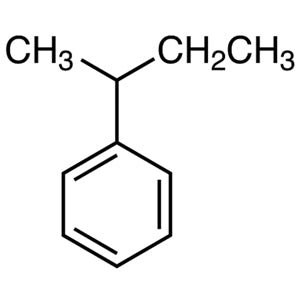
sec-Butylbenzene TCI B0714
Regular price From Rp 637.350,00Regular price -
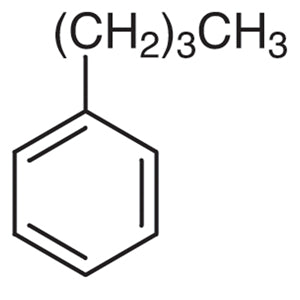
Butylbenzene TCI B0713
Regular price From Rp 875.700,00Regular price -
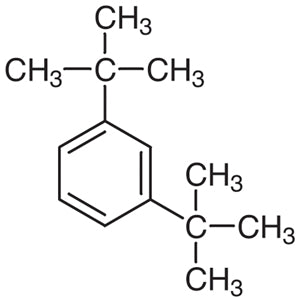
1,3-Di-tert-butylbenzene TCI D2431
Regular price From Rp 2.174.550,00Regular price -
Isobutylbenzene TCI I0097
Regular price Rp 637.350,00Regular price -
1,4-Dibutylbenzene TCI D2781
Regular price From Rp 3.683.400,00Regular price -
4-tert-Butylbenzenesulfonamide TCI B3837
Regular price Rp 1.035.300,00Regular price